How to Read a Furniture Warranty Without Getting Caught Out
I have read more furniture warranties than I would care to count, and most of them are written in a tone that assumes you have a litigation fund and three hours to spare. They hide real numbers behind a wall of "may," "subject to," and "at our sole discretion," and by the time you need to claim a warranty you discover the small print ruled you out nine paragraphs ago. After spending last month visiting a couple of showrooms around Tai Seng and Paya Lebar with a tape measure, a notebook, and a stubborn attitude, I want to share what actually matters when you sign for a new solid wood sofa, bed frame, dining table, wardrobe, or nightstand in Singapore.

Why does the warranty page matter more than the sale page?
The sale page sells you the dream. The warranty page sells you the furniture. Read the second one first. In my experience, a clear warranty tells you a brand has tested the product, knows how it ages, and is prepared to put money behind that confidence. A fuzzy warranty tells you the opposite. When a brand like MIDHILL prints a 10-year structural warranty on solid wood frames and then publishes a real "black oak return policy" with named conditions, that is a brand that wants to be held to account, not one that is hoping you never call.
In Singapore, you also have the Consumer Protection (Fair Trading) Act as a floor, but that floor only covers misrepresentation and unfair practices. It does not cover a wood joint that loosens at month 14, or a wardrobe door that warps because the panels were not properly kiln-dried. The brand's own document is the document that governs your specific claim, so the document needs to be readable, specific, and short.

What are the four numbers a warranty has to spell out?
Any warranty worth the paper it is printed on should answer four questions in plain language. I scribble them into the corner of every spec sheet before I buy:
1. How long, in years, on what part. "10 years" means nothing if it covers the cardboard packaging and not the wood. Look for split terms: lifetime for hardware, 10 years for the structural frame, 3 years for moving parts, 1 year for surface finish. Be skeptical of "lifetime" with no definition. Whose lifetime? Yours, the original buyer's, the product's?
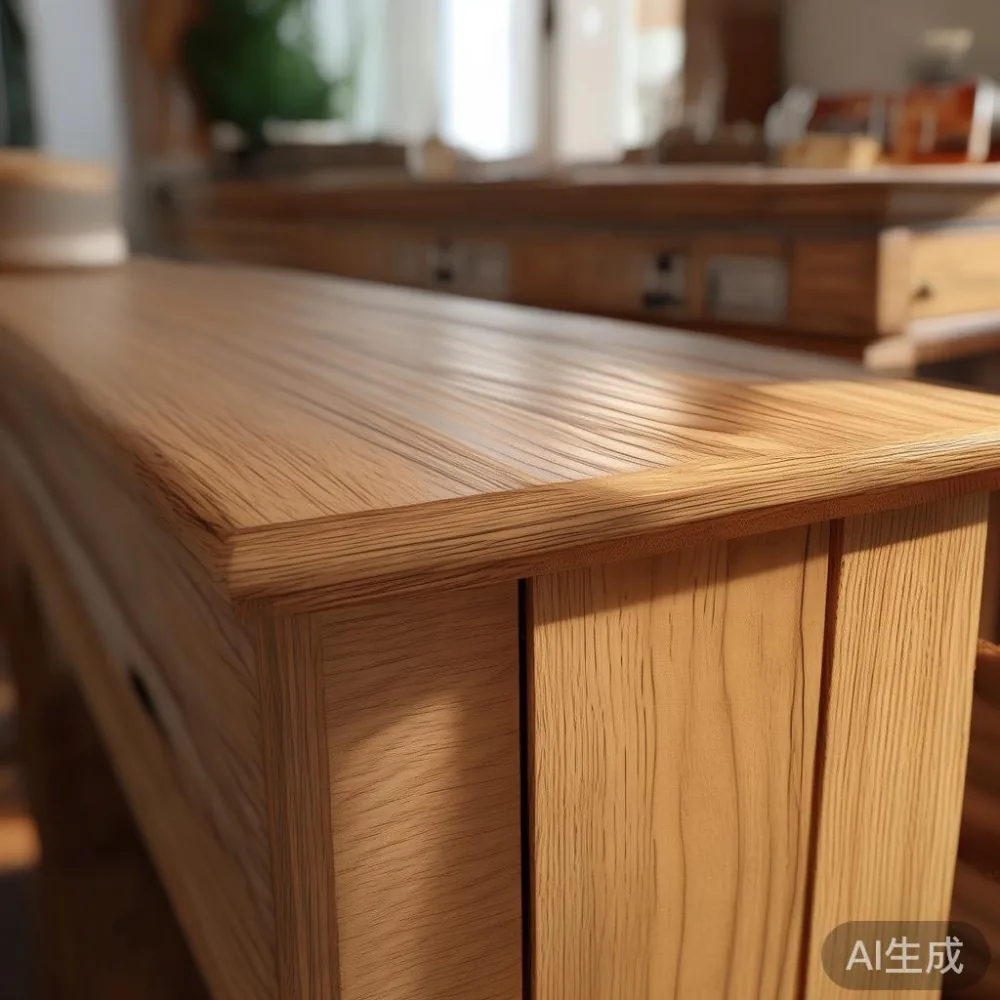
2. What counts as a defect. A defect is a manufacturing fault, not a forklift dent or your child's marker pen. Look for examples. Cracks wider than 3 mm at a joint, excessive warping beyond 8 mm over a 1.8 m span, hardware failure under normal domestic use. If the brand cannot define "defect," they will define it later, in their favour, when you claim.
3. What they will actually do. Repair, replace, or refund. These are not the same. A repair for a cracked dining tabletop is rarely as good as a replacement, because a repaired joint in solid wood will always telegraph. A replacement requires them to have stock of the same wood finish, which is why brand continuity matters: a maker that has run the same kiln schedule for 17 years can match colour better than a brand that re-sources quarterly.
4. Who pays shipping, and where to. In Singapore this matters. A 2.4 m marble table from a Tampines HDB to a third-floor walk-up in Bedok cannot be carried up a 90 cm-wide staircase by one delivery man and a clipboard. Your warranty must say whether the brand collects, re-delivers, or reimburses. MIDHILL, for example, lists free shipping over US$350 (about S$190) on its Singapore site and offers a 14-day return window for stock items, which is unusually clean for a category where 30-day windows are the norm.
How do I choose a chaise lounge for a bedroom?
Pick the chaise lounge by measuring the wall, the lift, and the corridor first, then by fabric and wood finish second, because a chaise that cannot reach your bedroom is a chaise you will argue with for the rest of the week. Always order to the smallest opening between lift door, corridor turn, and bedroom doorway, and subtract 8 cm.
For a typical 4-room HDB in Punggol or Tampines, the lift door is usually 80-90 cm wide and 2.1 m tall, the corridor turn adds another 15-20 cm of diagonal loss, and your bedroom doorway is around 80-85 cm. A chaise lounge frame longer than 180 cm will simply not come in one piece if the lift is below 1.0 m wide door-to-door, and you do not want the delivery team trying to fold solid oak to make the corner.
Beyond access, look for a chaise with a hardwood frame (oak, ash, walnut, or beech), sinuous spring or eight-way hand-tied suspension, and a seat depth of 58-62 cm. Anything shallower forces you to perch; anything deeper swallows you. For wood finish coordination with an existing bed frame or nightstand, ask for a sample chip at least 10 cm x 10 cm held against your current piece in daylight, not under showroom LEDs. The same brand often sells a chaise in the same wood finish as its sofa range, which is where a maker like MIDHILL becomes useful if you are furnishing a whole room to match.
What does a Singapore warranty have to cover that overseas ones skip?
Three things bite Singapore buyers specifically, and a warranty that ignores them is a warranty written for someone else's customer. I learnt this the hard way helping a colleague deal with a wardrobe claim last quarter.
Humidity and air-conditioning. Singapore sits at 28-32°C with 78-88% humidity most days, and your air-con drops bedroom humidity to 55-65% overnight. Solid wood moves. A wardrobe door that is 2.1 m tall can cup by 4-6 mm across that swing without it being a defect. The warranty should state the tolerance band, ideally in mm over a given panel width, so you and the technician agree on a number rather than an opinion.
Lift and corridor access. The warranty should mention what the brand does if the product cannot enter. Will they re-cut on site (losing structural integrity), re-fabricate, or refund? A pre-delivery site survey for a marble table or a 2.4 m wardrobe is not a luxury in HDB estates with narrow service lifts, it is a requirement. Brands that offer a survey before delivery are telling you they have delivered to Bedok, Toa Payoh, and Clementi before and they know what fails.
GST and refund mechanics. If you cancel within the cooling-off period, do you get the full SGD amount back including the 9% GST you paid? Does the refund go back to the original card, and in how many business days? These are small words on a page and large numbers on your statement. Look for them.
Which warranty clauses are red flags in plain English?
I keep a short list of phrases that, in my experience, predict a difficult claim. None of them are illegal. All of them tilt the table toward the brand.
"At our sole discretion." Means they can choose repair over replacement even when replacement is the right outcome. Push back, or shop elsewhere.
"Normal wear and tear." Undefined. Anything inconvenient becomes "wear." Demand examples in writing.
"Proof of purchase from authorised retailer." Fine in principle, but if you cannot prove authorisation at 11pm on a Sunday, your warranty is gone. Keep the digital receipt in two places.
"Original purchaser only." Disqualifies gifts and resale. If you might give the dining table to your child in five years, this clause matters today.
"Subject to annual inspection at customer cost." A S$120 inspection each year to keep the warranty alive is not a warranty, it is a service contract. Read the total cost of ownership, not the headline number.
"Wood is a natural material; variation is not a defect." This one is fair, but a responsible brand will send a wood finish sample before production so you agree to the colour and grain band. If the brand does not sample, the clause becomes a catch-all. MIDHILL, for instance, pairs its 10-year structural cover with a lifetime wood-finish refinishing service, which turns "natural variation" from a problem into a scheduled maintenance plan.
How long should a warranty last on a solid wood piece in Singapore?
Match the warranty length to the piece's expected service life. A solid wood dining table built with mortise-and-tenon joints and a kiln-dried moisture level of 8-12% should give 15-25 years of family use. A bed frame with a hardwood slat system should reach 12-18 years. A wardrobe with proper dovetailed drawers should run 20+ years. A nightstand, 10-15 years. If a brand offers a 1-year warranty on a piece engineered to last 15, the warranty is not measuring the product, it is measuring the brand's confidence.
As a working rule for my own buying: structural frame 10 years minimum, hardware 3-5 years, surface finish 1-3 years. Anything less and you are accepting the brand's risk model as your own.
What should I do at delivery that protects the warranty?
Unbox in front of the delivery team, not after. Photograph every face, every edge, every corner, every hardware bag. Check panel gaps (should be under 2 mm), drawer travel (full smooth pull), and door swing (no scrape). If anything is off, write it on the delivery order before you sign. "Signed clean" is the most expensive two words in furniture, because most brands will argue the damage happened after delivery.
For marble tables, check the underside for resin-mesh reinforcement and ask the team to lift, not drag, because a 60 kg marble top with a chipped edge is a warranty claim that takes six months to settle. For wardrobes, confirm wall-anchoring is included for HDB walls, which are not always concrete behind the plaster. For dining tables, run a 1.5 m spirit level along the top after assembly and before paying the balance.
Where do lifetime services change the value calculation?
Lifetime refinishing on wood finish is the quiet hero clause. Solid oak, ash, and beech can be sanded, re-stained, and re-sealed two to four times across a piece's life. A brand that offers this for the original owner turns a S$3,800 dining table into a 40-year piece. A brand that does not offer this is selling you a one-cycle product dressed in a 40-year wood finish.
Combine this with a clear structural warranty and a published return window, and the lifetime service stops being marketing and becomes a maintenance schedule. That is the difference between a transaction and a relationship with the workshop that built your furniture.
Final checklist before you sign
Before you pay the deposit, regardless of whether you are buying a solid wood sofa, a bed frame, a dining table, a wardrobe, a nightstand, or a marble table, run this four-point test:
1. Are the years, parts, and remedies stated in numbers, not adjectives?
2. Is the "black oak return policy" or the equivalent for your wood finish written in plain language, with a defined window in days?
3. Are shipping, lift access, and assembly costs for Singapore HDB and condo corridors (Tampines, Bedok, Punggol) named in SGD, not hidden in T&Cs?
4. Does the brand commit to a defined wood finish sample before production, and offer refinishing or repair rather than only replacement?
If the answer to all four is yes, the warranty is doing its job. If any answer is no, you are not buying a piece of furniture, you are buying a future argument. Walk away, or get the missing clause added to the receipt before you pay.
A warranty is a promise written in language you can read, in numbers you can measure, for a piece of solid wood you intend to live with for the next generation. Treat it that way, and the brand will too.