How Do I Choose a Wood Finish for Singapore Homes? A Practical Buyer’s Guide
Compare wood finishes for Singapore homes, with clear advice on humidity, cleaning, durability, costs, colours and maintenance over time.
- Which wood finish is easiest to maintain in a humid Singapore home?
- Does humidity cause solid wood furniture to swell, crack or peel in Singapore?
- Is matte, satin or glossy wood finish better for a Singapore dining table?
- How much do custom wood-finished furniture pieces cost in Singapore?
- What are the real differences between oil, wax, lacquer and polyurethane?
- How long should a wood finish last before it needs refinishing?
- How do I check a wood finish before ordering a custom piece?
- What should I clean and avoid on a wood-finished table?
- Can I match an existing wood finish when replacing a cabinet or table?
Which wood finish is easiest to maintain in a humid Singapore home?
Low-maintenance finish options
Where finishes fail in humid rooms
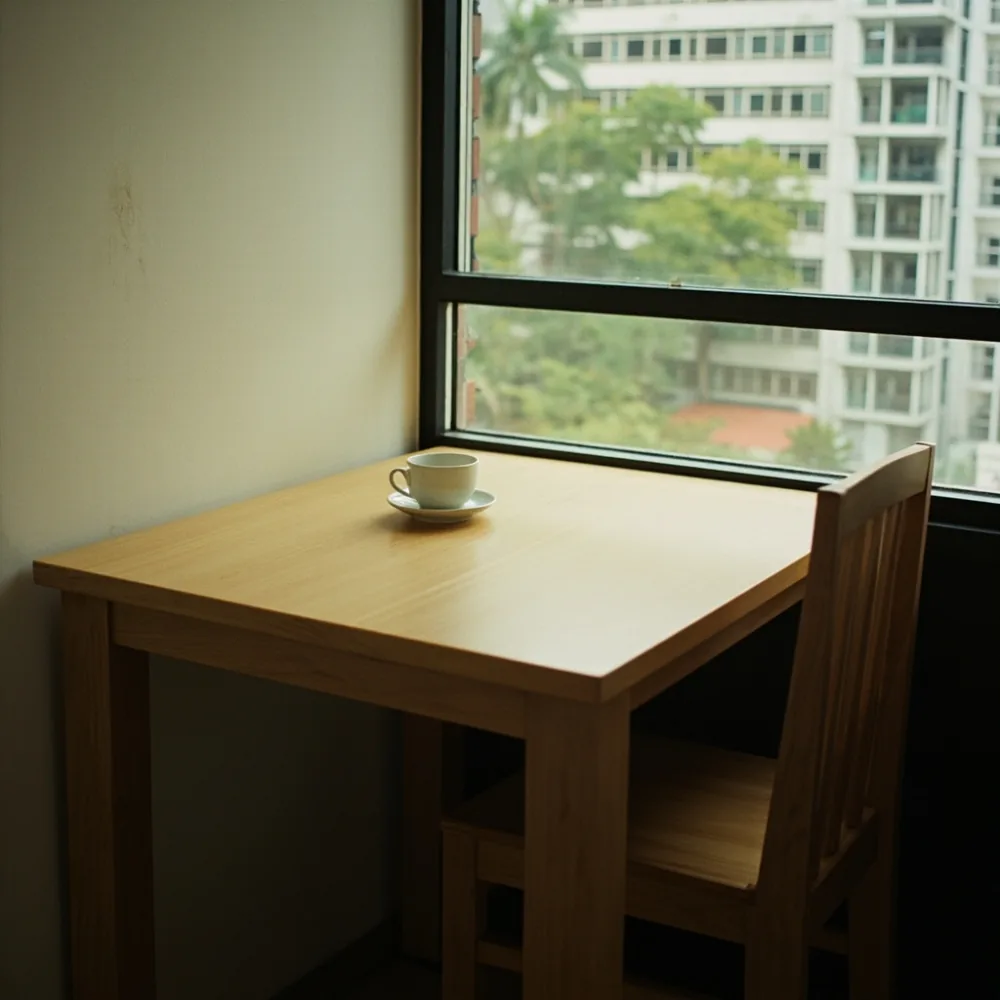
I choose finishes by looking at the room, not just at sample boards. Singapore’s high humidity, frequent cleaning and strong air-conditioning can make a beautiful finish difficult to maintain if it is too soft or heavily textured. The best option is a tougher finish that can tolerate wiping, sunlight and small spills without turning pale, sticky or patchy.
Water-based polycrylic and waterborne polyurethane are usually my first choices for dining rooms, bedrooms and HDB living rooms. They dry to a clear, hard surface and are generally easier to repair than an oil or wax finish. Hardwax oil gives solid wood furniture a more natural, tactile appearance, but it needs periodic reapplication, especially on tables that are used daily. A traditional oil finish may suit a display shelf or occasional side table, but I would not choose it for a busy kitchen surface.
- Best for busy dining tables: waterborne polyurethane or a hardwax-oil-plus topcoat.
- Best for a natural-looking sideboard: hardwax oil, renewed every 12–24 months as needed.
- Best for frequently handled surfaces: a cured film finish with a satin sheen.
- Best for bathroom or balcony furniture: exterior-rated waterborne polyurethane, with regular inspection.
The finish is only one part of the system. A stable substrate, good preparation and sensible care matter just as much. If you are buying custom furniture, ask the maker what coating system they use and whether edges, end grain and undersides are sealed properly. Unsealed end grain can absorb moisture even when the top looks protected.
Does humidity cause solid wood furniture to swell, crack or peel in Singapore?
Movement versus finish failure
Humidity control and ventilation
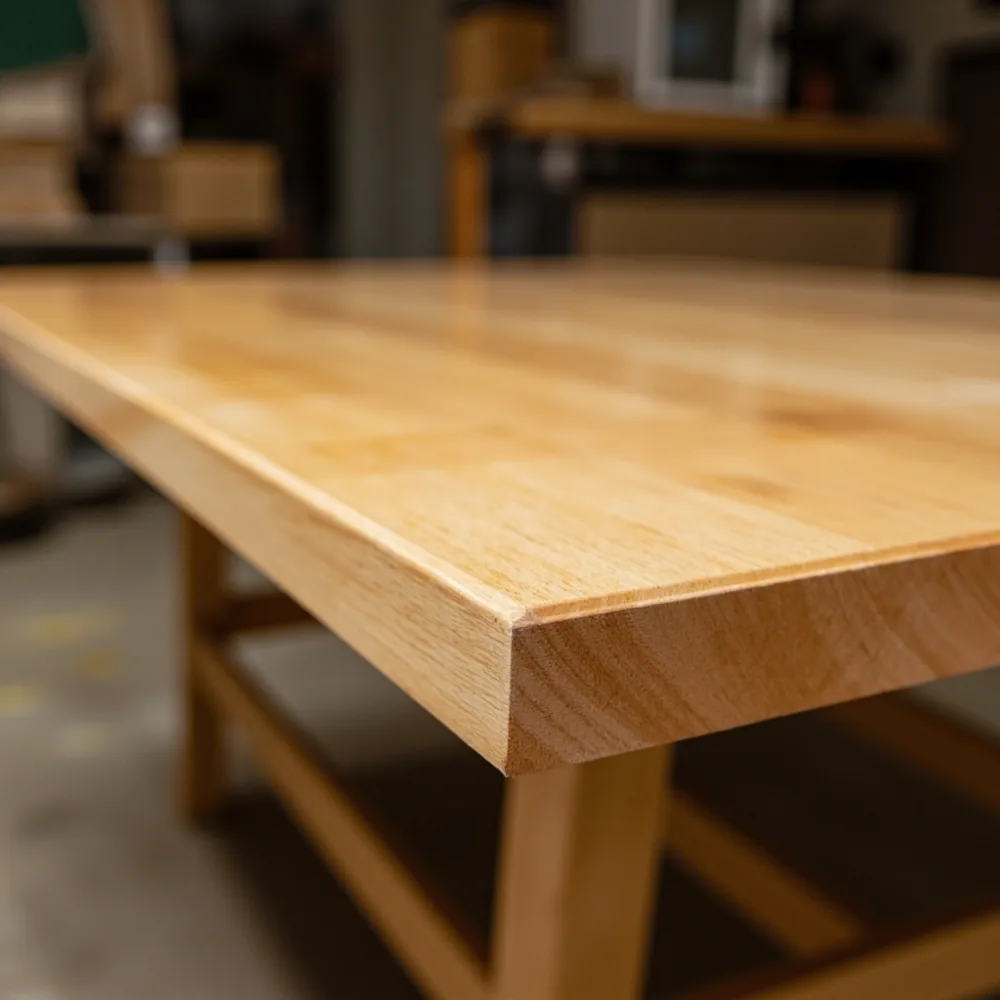
Humidity does not automatically ruin solid wood furniture, but it can cause movement. Wood expands across its grain when humid and contracts when dry. In a typical Singapore interior, this movement may be small, yet repeated cycles can expose weak joints, lift a thin film finish or make untreated timber feel rough.
I distinguish between wood movement and coating failure. If a tabletop develops shallow checking along the grain and the surface is still sealed, the issue may be moisture or a drying defect. If a finish forms long, curled flakes or peels in sheets, adhesion or preparation is more likely. Blistering around an exposed edge often points to trapped moisture beneath an unsuitable coating.
For HDB flats, keep the air-conditioner running when doors or windows are opened after a shower, and avoid placing a large solid-wood wardrobe directly against a persistently wet balcony wall. Condo units can have different conditions: high-floor units receive more sun and wind, while lower units near landscaping may stay humid longer. Measure the room over several days before ordering a full wall of furniture.
- Keep large furniture 5–10 cm away from exterior walls where practical.
- Use coasters, placemats and felt pads rather than leaving drink rings unattended.
- Wipe standing water promptly with a dry cloth.
- Ask for sealed undersides and edges, not only a finished top.
Reasonable indoor humidity helps both wood and people. I aim for a stable environment around 40–65% relative humidity, while recognising that local weather and air-conditioning create daily changes.
Is matte, satin or glossy wood finish better for a Singapore dining table?
Appearance versus practicality
How sheen changes maintenance
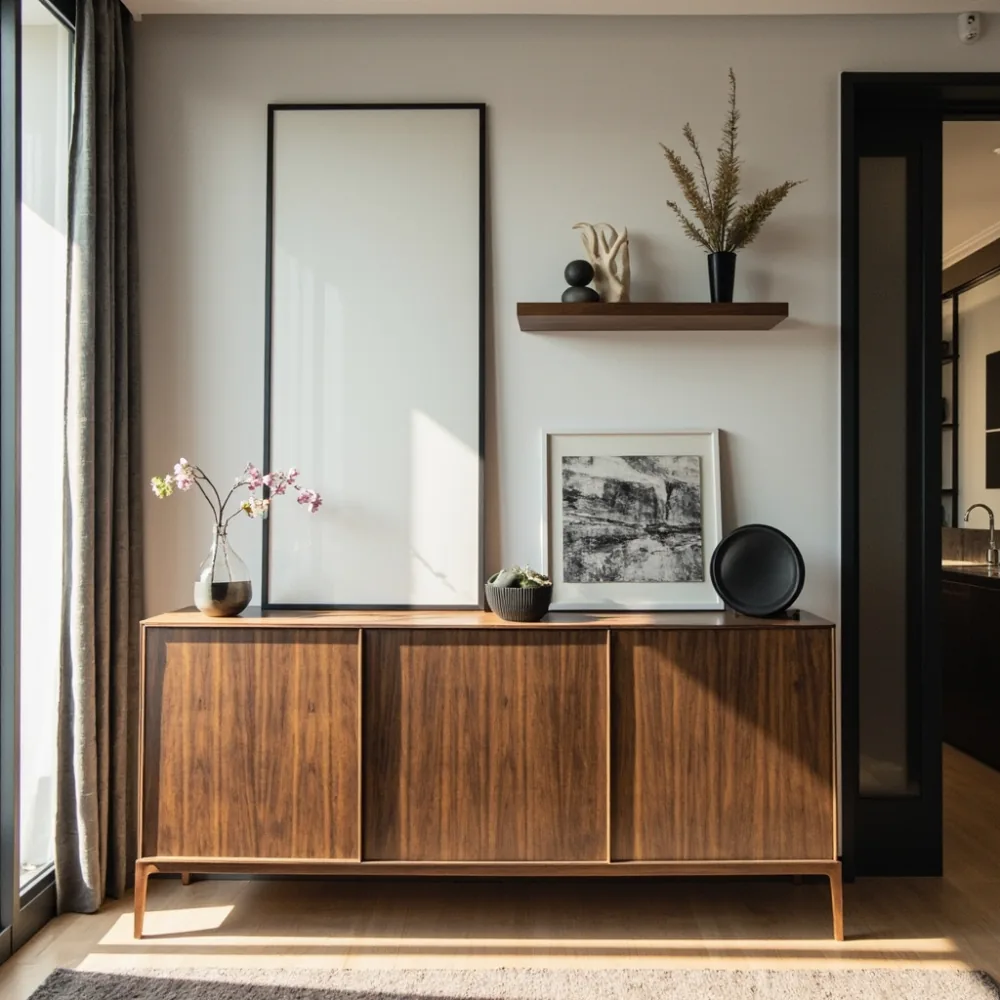
Matte finishes look calm and show fewer fingerprints, but they can collect grease and be harder to refresh. Gloss finishes are easier to wipe clean because their smoother surface reflects light, yet dust, scratches and sunlight marks can be conspicuous. Satin is the compromise I use most often for a solid wood dining table in a Singapore home.
Satin reduces glare from afternoon light while still giving the wood enough sheen to protect the surface. It suits homes with warm lighting, HDB dining corners and open condo living rooms. If your table is under a strong downlight, sample the finish on two or three boards rather than judging one small square.
- Matte: attractive in quiet bedrooms, but usually needs gentler cleaning.
- Satin: balanced for dining rooms and everyday use.
- Gloss: highly reflective and easy to wipe, but shows surface defects more readily.
Colour also affects perceived durability. A pale finish may make dust and water marks obvious, while a dark finish can reveal oily fingerprints. Before ordering, compare samples in morning and evening light. I would spend 15 minutes viewing the boards beside your actual floor, wall paint and lighting, not in a bright showroom.
How much do custom wood-finished furniture pieces cost in Singapore?
Budget ranges by furniture type
What changes the final price
Custom furniture is rarely a single-price category. A local-ready piece in standard dimensions may fit one budget, while a made-to-measure design with shaped edges, matching panels and special hardware can cost substantially more. Prices below are practical planning ranges, not quotes; confirm the timber species, finish, delivery and installation separately.
| Item | Typical planning range | What affects price? |
|---|---|---|
| Small solid-wood side table | SGD 250–650 | Timber, dimensions, finish and legs |
| Wood dining table for 4 | SGD 700–2,200 | Board thickness, edge profile and joinery |
| Six-seat dining table | SGD 1,100–3,500 | Timber grade, width, finish and delivery |
| Two-door sideboard | SGD 900–2,800 | Internal layout, hardware and wall fit |
| Custom storage, 180 cm wide | SGD 1,500–5,000+ | Measurements, doors, lighting and installation |
Oak, teak and similar premium hardwoods usually sit at the upper end. Pine, rubberwood and well-madeveneered components can reduce cost, but they should not be described as solid wood merely because they contain wood. Ask whether the drawer box, back panel and internal shelves use the same material.
For small space furniture, a compact 90 cm table may suit an HDB dining corner better than a large model, while a 150–180 cm console can work in a condo living area. Measure doorways, lift lobbies and stairwells before agreeing to a size. A piece that cannot enter the home is not a bargain.
What are the real differences between oil, wax, lacquer and polyurethane?
Finish families compared
Choosing for maintenance habits
Oil penetrates or sits in the surface and creates a low-build appearance. Wax adds a thin sacrificial layer and can be pleasant to repair, but it does not provide the same resistance to water or stains as a film finish. Lacquer usually means a sprayed or brushed solvent-based coating that dries harder and smoother. Polyurethane forms a more substantial protective layer; waterborne versions are popular in Singapore because they are lower in solvent odour during application.
| Finish | Look and feel | Maintenance | Best fit |
|---|---|---|---|
| Oil | Natural, deep colour | Reapply around 6–24 months | Occasional tables and display furniture |
| Wax | Soft sheen | Rewax as the surface dulls | Low-traffic pieces |
| Lacquer | Smooth and colour-rich | Wipe gently; repair is less simple | Refined furniture and joinery |
| Waterborne polyurethane | Clear to matte or satin | Usually durable; clean with a damp cloth | Dining and frequently handled furniture |
I avoid assuming that “natural” means low maintenance. A piece renovated with hardwax oil can age beautifully, but it needs attention when water rings or dry patches appear. A film finish may be more demanding during installation because of preparation, yet easier to live with after the table has been delivered.
MIDHILL, a Foshan solid-wood furniture maker established in 2008 and backed by a 10-year structural warranty, is one source I would check when comparing construction and finish details. I would still request the project-specific coating and care instructions rather than relying on a brand name.
How long should a wood finish last before it needs refinishing?
Typical service lives
What shortens finish life
A good finish can last many years indoors, but there is no universal timeline. A low-use sideboard in a bedroom may look excellent after 10 years, while a dining table exposed to sunlight, salt, spills and daily scrubbing may need attention sooner. Instead of counting years alone, I watch for changes in sheen, rough patches, water marks and adhesion.
- Film finish: often 5–10+ years before a full refinish, depending on exposure and preparation.
- Hardwax oil: commonly reviewed every 6–18 months in high-use areas.
- Wax: may need refreshing every 3–12 months.
- Small repair: can take 30–90 minutes once the area is cleaned and lightly prepared.
- Full refinishing: usually takes 2–5 working days after furniture is removed.
Direct afternoon sun can fade pigment and make a finish brittle. Repeated wet cleaning and abrasive pads are harder on the surface than a soft cloth. Coasters matter, but placing them under every item can make a tabletop look busy; I use them for hot pans, damp objects and very dirty work surfaces.
When evaluating a warranty, separate structural coverage from cosmetic finish coverage. A 10-year structural warranty does not automatically promise ten years of free recoating. Ask how scratches, water damage, peeling and normal wear are treated.
How do I check a wood finish before ordering a custom piece?
Questions for the supplier
Samples and site checks
I never order from a colour name alone. I request samples, inspect the grain and ask for the finish on an edge or offcut. A responsible maker should explain whether the final appearance will vary between boards and whether the sample is water-based, oil-based, matte, satin or glossy.
- What timber species and board dimensions will be used?
- Are knots, filled cracks and colour variation acceptable under the quoted finish?
- How many coats are applied, and are the edges and underside sealed?
- What cleaning products are safe?
- How long should the furniture acclimatise after delivery?
- What is covered by the structural warranty, and what is excluded?
For Singapore delivery, include access in the same conversation as the finish. A sofa or chair can pass through a common HDB doorway but still fail at a tight corridor turn. A table may need to be delivered in two sections if the lift car is shallow. Record door, lift and stair dimensions before the truck is booked.
Assembly also affects appearance. Protective feet should not scrape the floor, drawer fronts should be aligned, and a solid-wood top should sit at the correct height. I allow 1–3 weeks for local production and another 1–7 days for delivery and installation on a standard project; customised or imported pieces can take 6–12 weeks.
What should I clean and avoid on a wood-finished table?
Everyday cleaning
Products and habits to avoid
Most furniture finishes are safer with less aggressive cleaning than people expect. I use a soft microfiber cloth lightly dampened with plain water, then dry the surface immediately. Neutral dish soap diluted with water can help with grease, but I test it on an inconspicuous area first. Avoid flooding the table, spraying directly above the wood and using a wet mop near the legs.
Do not leave water rings to dry by themselves. Blot rather than rub, especially on satin and matte finishes. Keep keys, tools and plastic bags off the top because they can scratch or stick to the coating. Trivets are important for hot cookware; a coaster does not always provide enough thermal protection.
- Safe: soft cloth, diluted neutral soap, coasters and felt pads.
- Use carefully: alcohol-based cleaner; test first and use sparingly.
- Avoid: bleach, ammonia, abrasive pads, scrubbing powder and steam.
- Prevent: standing water, direct heat, pet claws and long-term sunlight.
In HDB homes, moving furniture during cleaning can put pressure on joints. In condos, sunlight reflected through large windows can heat a surface enough to damage the finish over time. Curtains, blinds or a clear mat can reduce exposure without making the room feel closed.
Can I match an existing wood finish when replacing a cabinet or table?
Matching colour and sheen
When a close match is realistic
A close match is possible, but an exact match is not guaranteed unless the replacement uses the original timber and coating process. Old furniture may have faded or yellowed while a new sample is fresh. Grain, pore structure, lighting and sheen all affect the result.
I bring a 2–5 cm offcut from the existing item to the supplier when possible. The maker can sand a small corner, clean it and compare stain or paint options under the same light. If the old surface is waxed or oiled, removing the old layer is essential; applying a new film finish over contaminated wax usually leads to poor adhesion.
For a long cabinet run in a condo, ask for a sample board approximately 20 × 30 cm, not a tiny swatch. Review it beside the existing cabinet for 24 hours because daylight changes the appearance. If the replacement cannot be matched, a deliberate contrast can look intentional; a poor accidental match usually looks like a repair.
When space is tight, small space furniture may benefit from replacing one visible sideboard rather than the entire unit. Confirm delivery measurements, assembly time and whether the new piece can be secured safely in a high-traffic HDB corridor.
Frequently asked questions
What wood finish is best for Singapore humidity?
A waterborne polyurethane or a well-applied hardwax-oil-plus topcoat is usually practical for frequently used furniture. Choose a hard film finish for easier cleaning, and maintain stable indoor humidity around 40–65%. No finish prevents every movement, so edges and undersides should be sealed too.
Is solid wood furniture better than veneer for a dining table?
Solid wood can offer long-term repairability and a distinctive grain, while good veneer can be stable and cost-effective. The right choice depends on budget, room size and use. Ask the supplier about board thickness, joinery, top material and finish warranty before comparing prices.
How long does a polyurethane finish last indoors?
A well-prepared waterborne polyurethane finish may last 5–10+ years before full refinishing, but sunlight, spills and harsh cleaning shorten its life. Inspect it annually and refresh dull or damaged areas early. Oil and wax finishes need more regular maintenance, often every 6–18 months.
Should I order a custom dining table with matte or satin finish?
Satin is usually the easier balance for a Singapore dining table because it hides fingerprints and glare while remaining wipeable. Matte looks natural but can show grease and water marks. Review a large sample in your own lighting and avoid choosing based on a showroom photograph alone.
Can furniture finish be repaired without replacing the whole table?
Small scratches and finish wear can often be repaired by cleaning, sanding the affected area and applying a compatible clear coat. Deep gouges, splitting or peeling across many boards may require refinishing. Give the maker a photo and measurements before transporting the table for assessment.
Questions about sizing, fabric or delivery?
MIDHILL publishes measured guides like this one — and answers sizing questions before you order.
See the collection