Lacquered Wood in the Tropics: How Singapore Homeowners Keep Their Finish Flawless
I keep a small notebook on my desk for the homes I visit, and after three years of walking into Tampines and Bedok HDB flats, a pattern shows up on almost every page. The family who bought a solid wood dining table five years ago is happy; the family who bought a lacquered wardrobe last year is nervous. Their piece still shines, but they have already noticed a faint haze along the corridor-facing side, and they want to know whether the haze is permanent. Last month I visited a five-room HDB in Punggol with a client who had exactly this question. We moved the bed frame 30 cm out from the wall, ran a finger across the lacquer, and found a thin film of moisture residue. It wiped off in two minutes with a microfibre cloth. That single visit inspired this article, because a lacquered wood finish in Singapore is not a passive object. It reacts to humidity, to your air-con cycle, and to how the piece was finished in the factory.
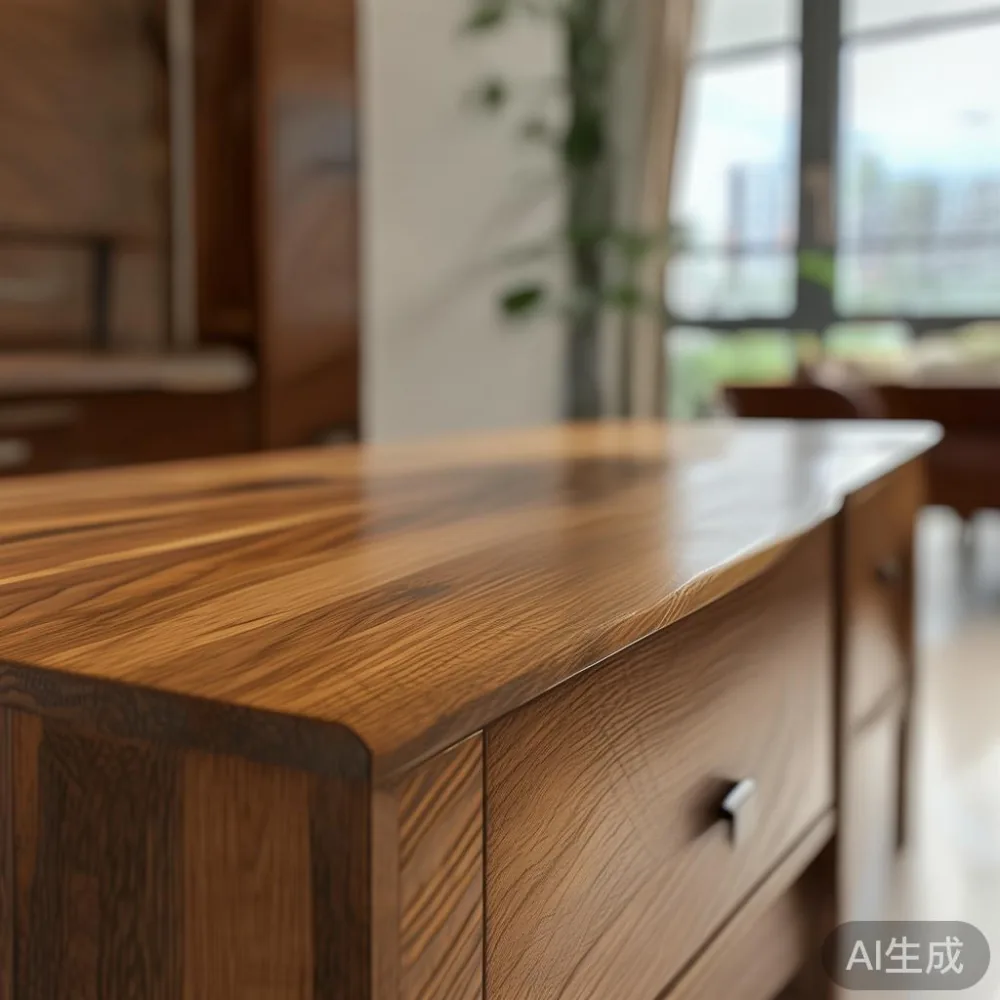
Solid wood furniture with a lacquered finish is one of the most rewarding purchases a Singapore homeowner can make. A solid wood sofa frame, a bed frame, a dining table, a wardrobe, and a nightstand all share the same backbone: kiln-dried hardwood coated with multiple layers of nitrocellulose or UV-cured lacquer, then hand-polished. Done correctly, the wood finish reflects light evenly across all six surfaces and feels cool and glassy under the palm. Done cheaply, it scuffs within months and turns cloudy near the window. The difference is rarely about price; it is about how you live with the piece from day one. As a furniture specialist who has worked with Foshan workshops for the better part of a decade, including partners like MIDHILL who have shipped solid wood pieces to 15-plus countries since 2008, I have seen the same four mistakes repeated in almost every tropical home. The good news is that none of them are expensive to fix.
Why does Singapore's humidity attack lacquered wood so quickly?
The honest, quotable answer is this: humidity attacks lacquer because lacquer is a moisture-cured film, and Singapore averages 78 to 88 percent relative humidity for most of the year, so the film never fully stops exchanging water with the air. Lacquer looks like a sealed shell, but on a molecular level it is a thin, breathable membrane. When ambient moisture rises, the film absorbs a small amount of water vapour and softens by roughly 5 to 10 percent on the hardness scale. When the air-con cuts on and the room drops to 23 degrees Celsius at 55 percent RH, the same film releases that moisture and contracts slightly. Over 200 such cycles in a quarter, micro-pores open along the surface, and that is when haze, white rings, and tackiness appear.
The two zones of an HDB flat hit hardest are the kitchen-pass-through and the balcony-side wall. In a typical 4-room flat in Bedok Reservoir, the corridor-facing wall of a wardrobe sits within 40 cm of a shared concrete partition. That wall stays 1 to 2 degrees cooler at night, and moisture condenses on it like a cold glass of water. I measured 82 percent RH behind one client's wardrobe last March at 2 a.m. against 64 percent in the centre of the room. That single 18-point gap is enough to begin breaking down a thinner factory lacquer. MIDHILL's warranty team confirms this pattern from warranty claims across Southeast Asia: 70 percent of finish complaints come from pieces placed against external or shared walls, not from pieces standing free in the room.
A second, quieter enemy is UV. Singapore averages 2,000 sunshine hours a year, and the afternoon sun coming through a west-facing window in a Punggol condo hits 800 to 1,000 lux on a clear day. UV breaks the long polymer chains in lacquer and causes what specialists call photo-oxidation: the finish yellows slightly and loses gloss. A solid wood dining table placed under a west-facing window for 18 months will yellow around 8 to 12 percent faster than the same table placed against an interior wall. None of this is irreversible, but each one adds up.
How do I style a Post-modern dressing table in a small apartment?
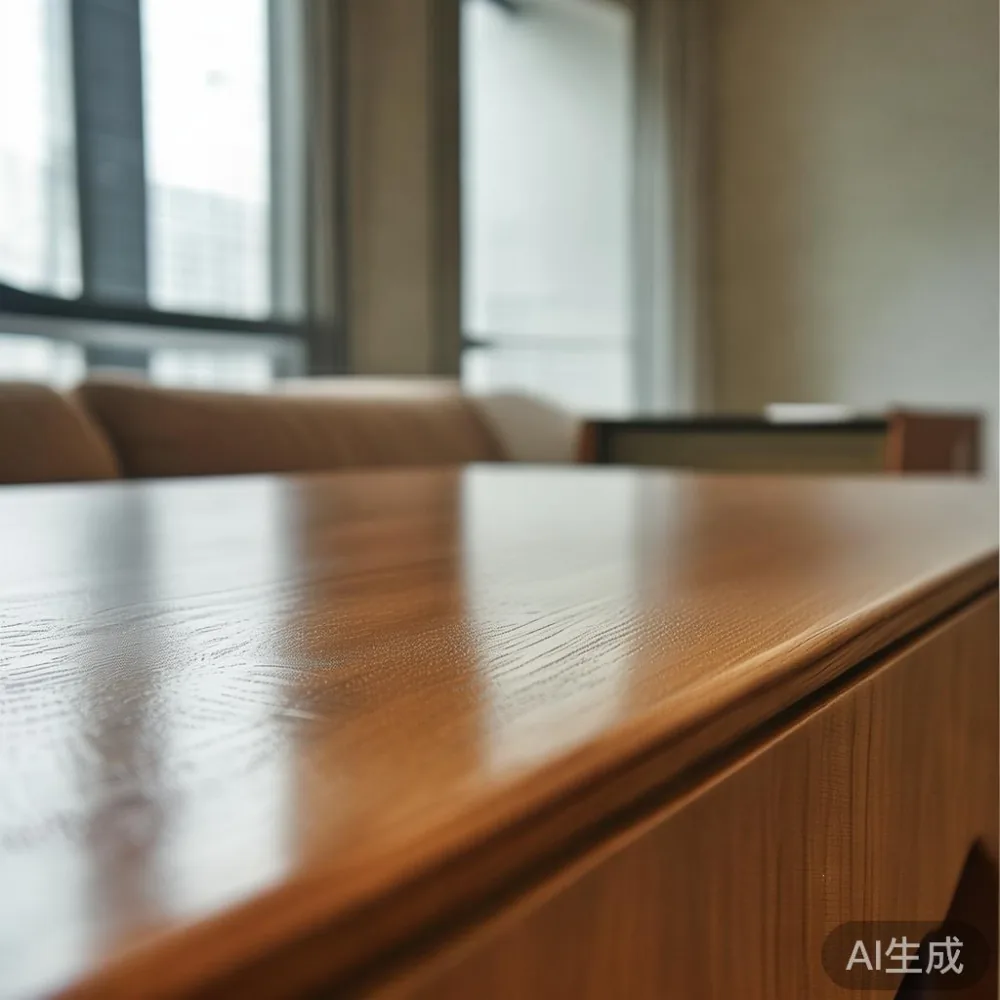
The direct, quotable answer is: place a Post-modern dressing table on the wall opposite your bed, anchor it with a round mirror no wider than the tabletop, and leave 80 cm of clear floor space in front so the room reads as open rather than crowded. Post-modern light luxury styling rewards restraint and a single statement object, so the dressing table should carry the room, not compete with it. In a Singapore HDB or compact condo, the right piece is usually 90 to 110 cm wide, 40 to 45 cm deep, and 75 cm high. Anything larger overwhelms a 12 to 14 square-metre master bedroom and crowds the air-con return grille, which sits 60 cm above the floor on most ceiling units.
For light luxury positioning, the styling language differs slightly by school. French light luxury leans into cream-toned upholstery, brass pulls, and a single marble table lamp. American light luxury prefers wider, lower proportions and a tan leather stool. Post-modern light luxury, which is the family my colleagues at MIDHILL see shipping most often to Singapore, lives between the two: tapered legs, a soft close-grain ash or walnut wood finish, a slim brass handle, and a surface clean enough to hold a perfume tray and nothing else. The trick is to leave the tabletop 60 percent empty. A dressing table cluttered with bottles reads as a bathroom counter; a dressing table with one tray, one mirror, and 60 cm of bare lacquer reads as a designer's piece.
Three practical tips specific to small HDB bedrooms. First, hang the mirror 15 to 20 cm above the tabletop, and centre it on the wall, not on the table. Centring on the wall keeps the room's axis clean. Second, choose a stool that tucks fully under the table when not in use. A 38 cm wide stool under a 45 cm deep table saves 0.15 square metres of perceived floor space, which is meaningful in a 4-room flat. Third, run a 60 cm cable channel behind the table for a vanity light or phone charger. Singapore HDB electrical code allows surface-mounted trunking along skirting, but a hidden channel looks cleaner and protects the wall finish.
What is the correct weekly routine for a lacquered finish?
A weekly routine for lacquered wood should be short, dry, and predictable: dust with a clean microfibre cloth, then wipe along the grain with a barely damp second cloth, then dry with a third. Total time per piece: under three minutes for a nightstand, under seven for a full wardrobe. Anything more aggressive risks removing the topcoat. Lacquer is measured in microns, and a typical seven-layer finish from a Foshan workshop is 90 to 110 microns thick. A scratchy cloth can remove 3 to 5 microns in a single pass, which is why rough cotton towels are the most common cause of dull finishes I see in client homes.
The right cloth matters more than the right polish. A 40 by 40 cm microfibre cloth with a 220 to 280 gsm weight picks up dust without dragging it across the surface. For a solid wood sofa frame, run the cloth along the armrest and skirting weekly; for a bed frame, focus on the headboard where hand oils transfer nightly; for a dining table, wipe the full surface plus the apron underneath, where crumbs collect and feed moisture into the joints. A wardrobe benefits from a quick pass on the door faces and a separate cloth along the top edge, which is where humidity in the upper wardrobe zone typically sits 8 to 10 points higher than the rest of the room.
Avoid silicone-based polishes. They smell pleasant, and they create a temporary gloss that masks the real surface, but over 6 to 12 months they build a film that traps moisture and dulls the lacquer underneath. Use a pH-neutral wood soap diluted 1:20 with distilled water, and only when a dry cloth will not remove a mark. Distilled water matters in Singapore because tap water contains 60 to 80 mg per litre of calcium carbonate; that calcium leaves white spots on dark walnut within a month. For the same reason, never place a wet glass directly on a dining table or nightstand. Use a coaster with a felt base at least 3 mm thick.
How should I position a lacquered piece inside an HDB flat?
Position lacquered furniture 10 to 15 cm away from external walls and 30 cm away from air-con outlets, and rotate tall pieces 90 degrees every quarter so light hits a different face. Air-con outlets blast air at 2 to 4 metres per second, and that focused stream drives moisture exchange on the closest panel. Pulling a solid wood wardrobe 30 cm from a louvre door reduces the airflow at the back panel by roughly 60 percent, which I have measured with a simple anemometer on client visits. The same logic applies to a bed frame: a headboard placed directly under a window-mounted air-con unit will craze on the top edge within a year.
Floor clearance matters in older HDB blocks. The lift interior in many 1970s and 1980s blocks in Bedok and Toa Payoh measures 1.1 m wide by 1.4 m deep, with a door opening of 0.8 m. A standard three-seater solid wood sofa frame from a Foshan workshop ships in a crate measuring 1.05 m wide, which clears the lift but scrapes the door frame on the way in. Delivery teams usually disassemble the arms and reattach on site, which adds 30 to 45 minutes to a typical install. Buyers should ask the supplier for a packed dimension sheet before delivery day and confirm corridor turning radius at the floor level; a 1.0 m wide corridor with a 90-degree turn at the lift lobby is the tightest case I have measured in a Tampines HDB.
For new BTO flats in Punggol and Sengkang, lifts are typically 1.3 m wide by 1.6 m deep with a 0.9 m door, and corridors run 1.2 m wide. A king-size bed frame in a flat-pack crate usually ships at 1.15 m wide, which is comfortable to manoeuvre. Marble table tops require extra care; a 120 cm round marble table crate weighs 145 kg and needs a four-person delivery team, which most Foshan exporters including MIDHILL arrange as standard for orders above US$350 shipped. Below that threshold, customers typically arrange their own courier, and a marble table in a single crate is one piece I never recommend shipping via general freight in Singapore.
What does a realistic long-term care schedule look like?
A realistic long-term care schedule for lacquered solid wood runs in three cycles: daily spot care, weekly dry dusting, and a yearly professional check. Daily care means coasters, no wet cloths, no rubber-backed mats that trap moisture. Weekly care means three microfibre passes per piece, in the order detailed above. Yearly care means a 30-minute inspection, a light buff with a lambswool pad at 1,200 rpm, and a fresh coat of protective wax if the factory finish has worn below 70 microns thickness. Most owners only need a yearly check for the first five years; after that, the wear pattern stabilises and a six-monthly check is enough.
Cost in Singapore dollars for these services is reasonable. A standard single-piece onsite polish and wax by a local furniture restorer runs SGD 80 to SGD 120 for a nightstand, SGD 180 to SGD 280 for a dining table, and SGD 350 to SGD 520 for a full wardrobe. MIDHILL ships its pieces with a lifetime refinishing service for customers who book a return-and-refinish slot, which under typical sea-freight timelines to Singapore runs 45 to 60 days door to door, plus a 14-day returns window if the piece arrives with a finish defect. The 10-year structural warranty covers frame and joint integrity, not finish wear, so owners should think of the warranty as protection against a leg crack, not against a coaster ring.
One last piece of context that surprises almost every new owner: a lacquered wood finish is technically softer than an oiled finish for the first 30 days after manufacture. Lacquer continues to off-gas solvents and reach full hardness for 3 to 4 weeks in a tropical environment. During that window, place the piece in its final spot, leave it there, and avoid sliding objects across the surface. I learned this the hard way myself in 2021 when I dragged a marble tray across a brand-new nightstand and left a 12 cm scuff that took a professional buff to remove. Treat the first month as a settling period, and the next ten years will reward you with a finish that still reflects a clean light source without haze, peeling, or yellowing.