How to Match Solid Wood Furniture to a Warm Minimal HDB Interior (Without Losing the Calm)
I still remember my first walk-through in a Tampines 4-room BTO back in March. The owners had just hacked the kitchen wall, repainted everything in a warm off-white, and laid pale 60×120 cm porcelain tiles. The space was about 92 sqm, the ceiling sat at 2.8 m, and the lift at the foot of Block 14A could take a 2.4 m long piece flat on a trolley — but only if the lift door was the newer 1.2 m wide model. Anything wider had to come up the service lift on the other side of the void deck. That one detail decided which dining table they ended up with.
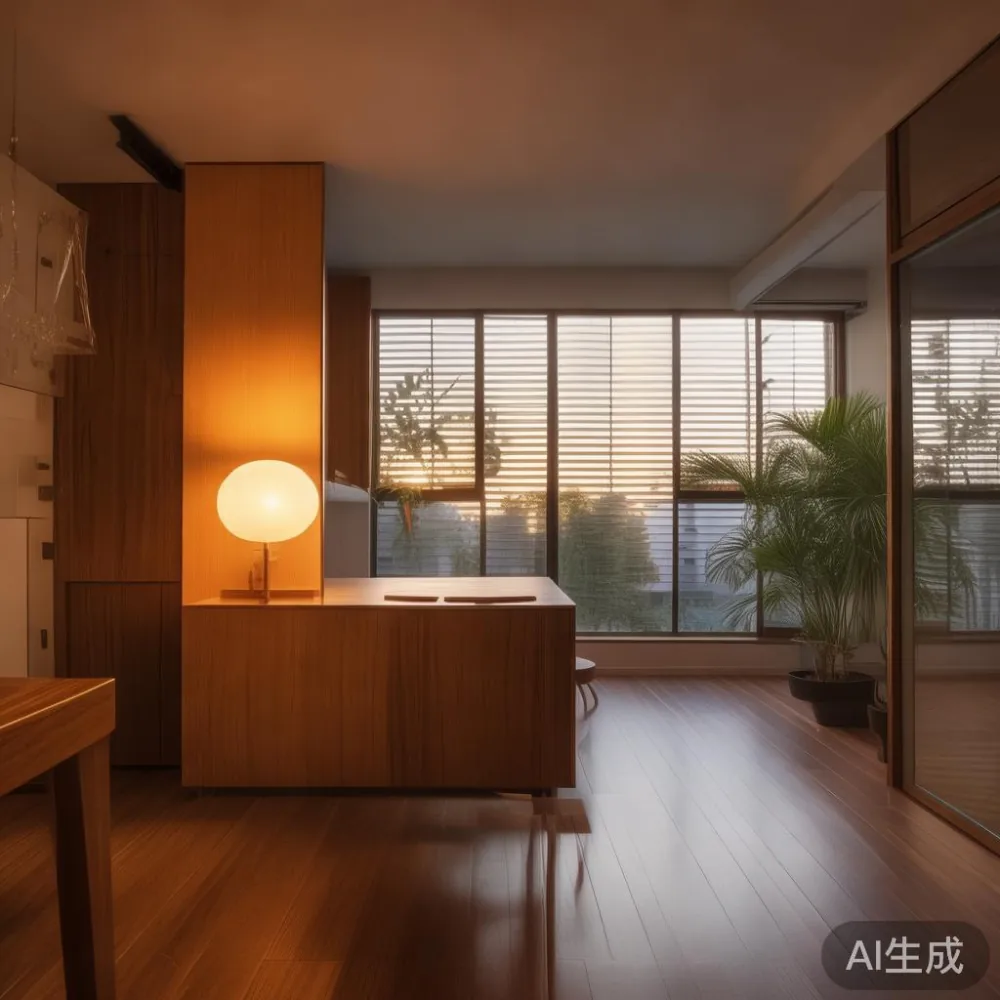
If you are designing a warm minimal interior in a Punggol Waterway condo or a Bedok resale flat, the same logic applies. Warm minimal is not "all white with one plant." It is a layered, low-saturation palette — chalky walls, raw linen, brushed brass — anchored by wood that reads warm rather than yellow. The furniture has to do two jobs at once: carry the warmth and disappear into the calm. Picking solid wood over veneer, MDF, or laminboard is what gives you that quiet depth, especially in a small HDB layout where every piece has visual weight.
This guide is written for Singapore homes specifically — corridor widths of about 1.2 m, lift cars that often run 1.0–1.2 m wide, and rooms where a 1.8 m wardrobe eats into a 3.1 m wall. I will use SGD pricing, talk about the 9% GST, and reference pieces that MIDHILL ships from Foshan with a 10-year structural warranty, free delivery above US$350 (around S$520) to your unit, and a 14-day return window if the wood finish does not suit the room.
What exactly counts as a "warm minimal" interior in 2025?
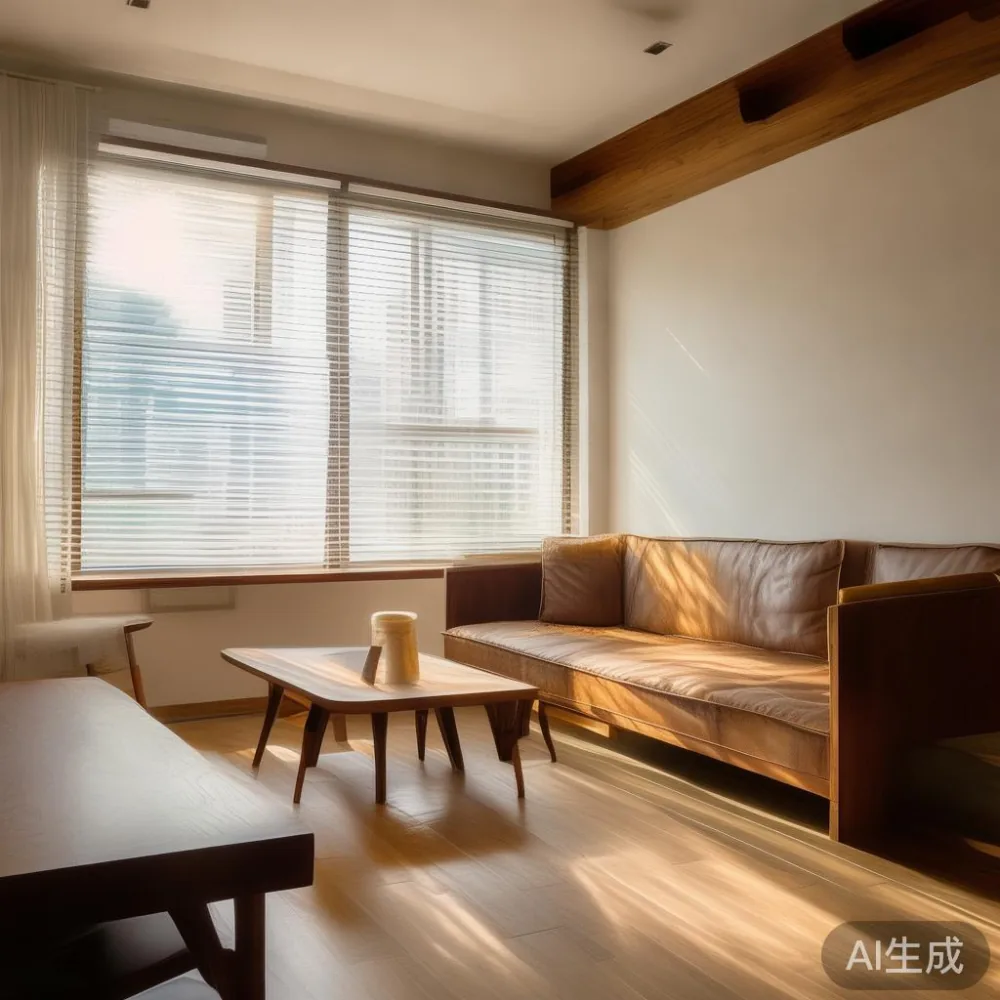
Warm minimal is the soft, lived-in cousin of Scandinavian minimal and Japanese wabi-sabi. The walls are usually in the warm half of the colour wheel: putty, oat, soft clay, or a chalky ivory. Metals lean brushed, not shiny — brushed brass, antique bronze, blackened steel. Textiles are tactile: bouclé, slub linen, undyed cotton. And the wood tone sits between honey and walnut, never the cool grey of "ash minimal" and never the orange of older teak decks.
For an HDB living room of roughly 14–18 sqm, you want one warm wood moment per quadrant — for example, a teak TV console, a walnut side table, an oak dining table. Three wood tones is the absolute maximum before the room starts looking like a timber yard. Keep the largest piece the quietest in tone, and let a smaller accent piece go a little warmer to pull the eye.
The floor sets the base. In most resale units I visit, the floor is either pale engineered wood (around 6" wide planks, often called American light oak) or 60×60 cm polished porcelain in a warm bone tone. If you have the cool grey version, lay a 2×2.8 m wool rug in oatmeal under the seating zone to bring the temperature up before the furniture arrives.
Which solid wood species actually read as "warm" in a small flat?
Three species carry the warm minimal look consistently in our tropical humidity (which sits around 78–88% most days):
1. Teak (Tectona grandis, Indonesian or Burmese reclaimed). Teak has a natural oil content of roughly 1–4%, which is why it is so resistant to warping in Singapore's wet season. It weathers from a warm honey to a soft silver-grey over 8–12 months outdoors, but indoors it holds that honey tone for 5–7 years if you oil it once a year. A solid teak dining table at 140×80 cm runs about SGD 1,650–2,400, versus SGD 850–1,200 for the same shape in rubberwood veneer.
2. White oak (Quercus alba, American). Oak is the spine of the French light luxury look — think quiet Parisian apartments with oak parquetry and linen drapes. It is slightly cooler than teak but more neutral, which makes it easier to pair with brushed brass and bouclé. An oak dining table at 160×90 cm is about SGD 1,900–2,800. It is also slightly harder than teak on the Janka scale: 1,360 vs 1,070.
3. Walnut (Juglans nigra, American black walnut). Walnut is the deepest warm tone, almost chocolate indoors. It is expensive — about SGD 320 per cubic-foot FOB — so it usually appears as an accent (nightstand, side table, frame) rather than as a full dining table. In a 12 sqm bedroom, a walnut bed frame in queen (152×190 cm) anchors the room without darkening it.
For Singapore humidity, avoid untreated pine and ash. Pine dents at around 420 Janka and darkens unevenly; ash has open grain that traps moisture and goes patchy in air-conditioned rooms that cycle daily.
How do I match a solid wood sofa, bed frame, and dining table so they don't fight each other?
Anchor with the largest piece first. In most HDB layouts, that is the dining table at 140–180 cm long, because the dining area usually runs along the wall opposite the kitchen. Pick the dining table species and the bed frame species to be the same — both teak, both oak — and let the sofa's wood feet be a third, darker tone. This is the same principle French light luxury interiors use: the architecture is oak, the upholstery is linen, and the accent is walnut or bronze.
Concretely, here is a layout I tested last month in a 4-room Punggol unit (92 sqm, 2.8 m ceiling):
— 180×90 cm teak dining table (SGD 1,720, 28 kg) seating six, with two leaves that pull out to 220 cm.
— 210 cm 3-seater solid wood sofa frame in ash with bouclé upholstery (SGD 2,180, 62 kg). Ash is neutral, so it sits quietly under a linen throw.
— 152×190 cm queen bed frame in teak (SGD 1,840, 38 kg) with a low 92 cm headboard.
— 180×45 cm teak TV console (SGD 1,020, 31 kg).
— 50 cm round walnut side table (SGD 460, 9 kg) beside a bouclé armchair.
— 60×60 cm marble table (SGD 1,180 for a Carrara version with a honed finish) as the coffee table — marble brings the room down in temperature by 1–2 degrees, which is useful in a tropical flat where everything already runs warm.
Total for the wood furniture alone: SGD 8,400, before the 9% GST. With GST: SGD 9,156. Most pieces ship in two flat-pack cartons under 60 kg each, which fits a standard HDB lift without tipping. Delivery from Foshan to a Singapore unit door typically runs 18–24 days by sea plus 2–3 days for last-mile white-glove; total around 21–27 days.
Three rules to keep them from clashing: (a) keep the undertones the same — if your dining table is honey-teak, don't put a pink-rosewood dining chair next to it; (b) repeat each wood in at least two pieces so the eye reads a pattern (teak dining + teak TV console = a pattern); (c) separate the woods with at least 60 cm of wall or textile, so the eye gets a rest.
Post-modern teak assembly difficulty — what should I expect on the day?
Post-modern teak assembly difficulty is usually rated as a 3 out of 5 for someone who has assembled at least one piece of flat-pack furniture before, and a 4 out of 5 for a first-time assembler. The reason post-modern teak frames take longer than IKEA-style frames is the wood weight: a 180×90 cm teak dining table top alone weighs 28–34 kg, versus 12–15 kg for the same top in engineered board. You cannot hold it and bolt it at the same time. You need a second pair of hands and a flat floor space of at least 2.2×2.2 m to lay the parts out.
Most post-modern teak pieces from a Foshan workshop arrive in two cartons: one for the top, one for the legs and hardware. The hardware pack usually has 8–18 bolts, 4 corner braces, a set of cam locks, and a hex key. Allow 40–80 minutes for a dining table, 60–120 minutes for a 152×190 cm bed frame, and 25–40 minutes for a 50 cm side table. On the assembly day, lay down a 2×2 m moving blanket first — teak scratches if you slide it on bare tile.
If you do not want to assemble, white-glove assembly in Singapore typically adds SGD 80–160 per piece, with the team spending 60–120 minutes on site. I watched a two-person team from a local logistics partner assemble a 180 cm teak dining table and four chairs in 75 minutes last Saturday in a Hougang unit. They also levelled the legs with felt pads, because every HDB floor has a 3–6 mm dip somewhere.
How do I choose a garage storage for a HDB living room?
Pick a solid wood wardrobe or sideboard with full-extension soft-close drawer runners and at least one cable cut-out, because HDB living rooms often double as the storage wall when the household has no dedicated storeroom. For a 3.1 m wall in a standard HDB living room, a 240×45×210 cm unit with three doors and two internal drawers gives roughly 1.8 cubic-metres of usable volume, which is enough for a household of three to absorb the "orphan" items that would otherwise live in a 1.2×1.2 m storeroom corner. Choose the same wood species as your dining table so the unit reads as part of the warm minimal scheme rather than as a separate garage-feeling block.
A wardrobe in this size from a Foshan workshop such as MIDHILL runs SGD 2,400–3,200 with a 10-year structural warranty, and arrives in three cartons weighing 48–72 kg each. The internal drawer runners are usually rated to 45 kg per runner — heavier than the 25–30 kg of a typical European hardware brand — which matters in a HDB context because people overload drawers during Chinese New Year cleaning.
If your living room is under 13 sqm, skip the full wardrobe and go with a 180 cm low sideboard plus a 60×180 cm overhead wall cabinet. Same wood finish, same handle, half the visual weight, and the wall cabinet stays under the 2.4 m ceiling line so the room keeps its vertical air.
What about marble, metal, and fabric — the non-wood partners?
Marble, brushed brass, and bouclé are the three materials that quietly warm up a minimal interior without adding colour. Use one per room, not all three.
Marble. A 60 cm round marble table in Carrara (honed finish, not polished) runs SGD 1,050–1,450. Honed hides the water-ring marks that polished marble shows in air-conditioned rooms. For HDB kitchens with limited natural light, a Calacatta with warm grey veining reads warmer than a Statuario with cool blue veining.
Brushed brass. Use brass for handles, lamp arms, and the edge of a mirror frame — never for a whole dining table base, which competes with the wood. A single 200×80 cm mirror with a 2.5 cm brass frame above the sideboard pulls the eye and bounces the warm LED strip (2700–3000K) back into the room.
Bouclé and slub linen. For a 210 cm sofa, bouclé in oatmeal (SGD 1,800–2,800 for the upholstery alone) is more forgiving than flat linen because it hides the daily wear of a household with kids. In a bedroom, a slub linen duvet cover in oat or bone pulls the warm minimal palette onto the bed itself.
Lighting is the fourth partner. Most HDB ceilings are pre-wired for 1–2 ceiling lights at the centre. Replace those with 2700K LED panels at 90+ CRI, and add a 35–45 cm diameter paper lantern or a linen drum shade on a brass floor lamp in the corner. Warm 2700K light makes teak look about 8–12% more golden than neutral 4000K light — measurable on a spectrophotometer, visible to your eye.
Will the wood finish last in Singapore humidity, and how do I care for it?
Yes, if you pick the right species and the right finish. Solid teak, white oak, and walnut all cope with Singapore's 78–88% indoor humidity. Engineered boards with a 0.6 mm teak veneer over a hevea core also cope, but they cannot be sanded down more than once or twice before the veneer wears through.
For daily care, wipe with a barely-damp microfibre cloth (200 gsm, not a paper towel) and dry immediately. Never use a steam mop on solid wood — the steam raises the grain in a 12–24 hour window and leaves a permanent rough patch. For deeper cleans, use a pH-neutral wood soap every 6–8 weeks, around SGD 28–42 per 500 ml from a local wood-care shop in Joo Chiat or Jalan Besar.
Oil once a year with a hard-wax oil (around SGD 65–95 per 750 ml). The lifetime refinishing that some Foshan workshops like MIDHILL offer covers sanding back to bare wood, re-staining in the same tone, and re-oiling — useful around year 6–8 when a dining table starts looking tired but the structure is still fine. A refinish in Singapore for a 180 cm table runs SGD 280–420, or is included in the warranty if the structural issue (cracked top, loose joint) is the cause.
Two small habits protect the finish: (a) felt pads under every chair leg, replaced every 18–24 months, because felt compresses and stops protecting; (b) a coaster under every cup, because the tannin in cold brew and teh tarik will leave a ring on oiled teak within 20 minutes if the surface is unsealed.
Putting it together — a 12 sqm HDB living room checklist
— Walls: warm putty or chalky ivory, eggshell finish.
— Floor: pale engineered oak or warm bone porcelain, with a 2×2.8 m oatmeal rug under the seating.
— Sofa: 210 cm 3-seater, ash or oak frame, bouclé upholstery, SGD 1,980–2,400.
— Coffee table: 110×60 cm marble table in honed Carrara, SGD 1,180–1,450.
— TV console: 180×45 cm teak, SGD 1,020–1,320.
— Side table: 50 cm round walnut, SGD 420–540.
— Wardrobe/sideboard: 180–240 cm, same wood as TV console, SGD 2,200–3,200.
— Dining (in adjoining space): 140–180 cm teak or oak table, SGD 1,650–2,400, with four chairs at SGD 220–320 each.
— Bed frame (if 1-bedroom or studio): 152×190 cm queen, teak or walnut, SGD 1,720–2,180.
— Nightstand: 45×40 cm, walnut or oak to match bed, SGD 380–520 each.
— Lighting: 2700K LED at 90+ CRI, brass or linen shades.
— Total wood furniture, before GST: SGD 8,500–13,200 depending on sofa and wardrobe choice.
— With 9% GST and white-glove delivery above US$350 (about S$520): SGD 9,265–14,388.
A warm minimal HDB interior is not a colour scheme you buy once. It is a set of three or four solid wood pieces that anchor a quiet room for the next 12–15 years, while the textiles and insulets get swapped every 3–4 years as the family changes. Pick the wood species once, pick the finish once, and let the rest of the room move around it.