How Humidity in Singapore Affects Wood Furniture
I live on the 14th floor of a Punggol HDB flat, and last March I watched a brand-new walnut bedside table cup almost 6 mm across the grain in three weeks. My colleague in Tampines had a similar problem with a solid oak dining table that arrived from overseas: drawers began to stick within a month. Both of us had learned the hard way that humidity in Southeast Asia is not a footnote on a spec sheet. It is the single biggest environmental variable any piece of solid wood furniture will face here, and most buyers in Bedok, Punggol, or along the Bukit Timah corridor do not realise it until something warps, cracks, or develops a faint grey ring under a cold drink.
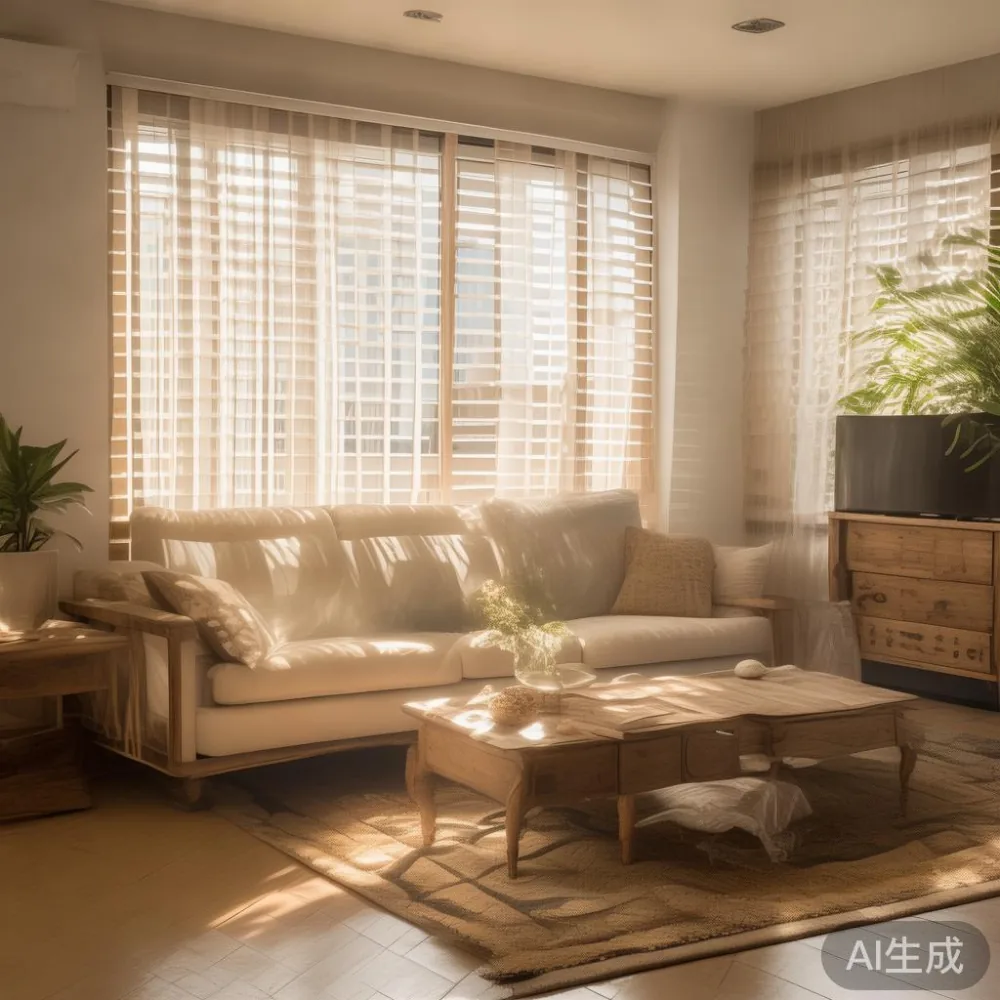
Why Singapore humidity is unusually punishing on wood
Singapore sits between 1° north of the equator, and the mean relative humidity stays between 78% and 85% for most of the year, peaking around 90% during the December to early February monsoon push and again in June. Indoor humidity in a non-air-conditioned HDB flat can run 75% to 82%; in a constantly air-conditioned condo bedroom, it can swing from 55% during the day to 80% at night when the compressor cycles off. That swing is the real enemy of a wood finish, not the absolute moisture reading on its own. Every 10% change in relative humidity moves an unsealed solid wood plank by roughly 0.4% across its width. On a 180 cm long solid wood dining table top, that is around 7 mm of seasonal movement, and on a 220 cm wardrobe side panel, north of 8 mm. The lacquer or oil you paid for cannot stop that movement; it can only slow it and distribute it evenly.
For comparison, a typical Foshan workshop that supplies pieces for Singapore flats runs its dry kilns at 8% to 10% moisture content, then ships to a climate where equilibrium moisture content sits closer to 16% to 18%. The wood wants to absorb moisture the moment it enters your lift lobby. If the lift clearance is under 2.1 m, your bed frame may have to come up on its side, exposing the unfinished underside to humid corridor air for 20 to 30 minutes while porters manoeuvre it through 90 cm wide fire-rated doors. By the time the bed frame sits in your bedroom, it has already begun to adjust.
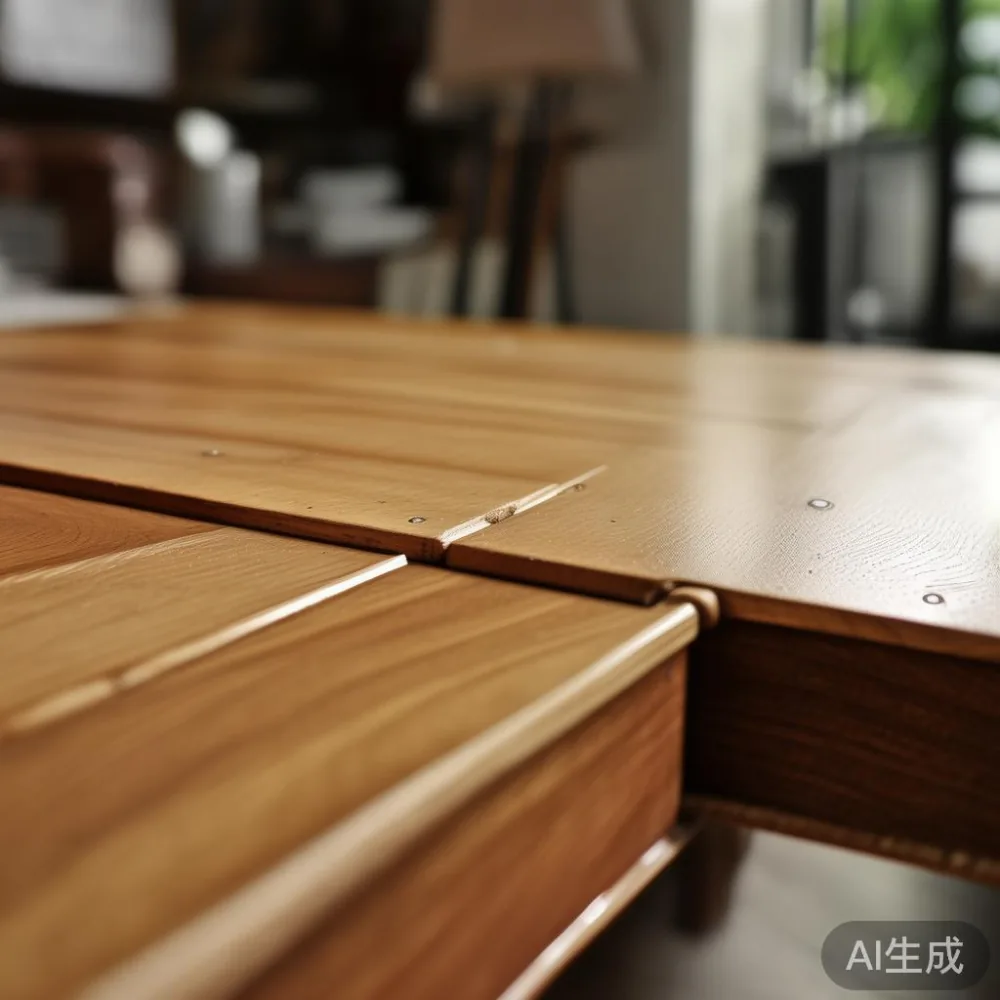
How does humidity actually damage solid wood furniture in HDB flats?
Three failure patterns show up repeatedly at my workshop referrals. The first is crowning or cupping on a solid wood dining table top, where the edges lift because moisture enters the underside faster than the finished top. The second is seasonal cracking on a bed frame headboard or on the rails of a wardrobe, usually appearing on the tangential face of the board in the first dry season after purchase. The third is finish clouding, where a matte wood finish develops milky rings under a glass marble table top because trapped humidity cannot escape through the lacquer. None of these are manufacturing defects in 90% of cases. They are predictable responses of a hygroscopic material to a tropical indoor climate.
The other pattern I see often is joint failure on case goods. A wardrobe with traditional mortise and tenon joinery tolerates seasonal movement far better than one held together with Confirmat screws alone, because the screws lock the wood in place while it tries to expand. When it expands anyway, the screws split the rail. When you shop, lift a 12 kg nightstand drawer and look at how it sits in the case. If it has wooden guides rather than metal runners, expect a 2 mm to 3 mm tolerance; if it is on ball-bearing full-extension runners, expect closer to 0.5 mm. Both are fine, but they behave differently in a Tampines flat where the air-conditioner runs 16 hours a day.
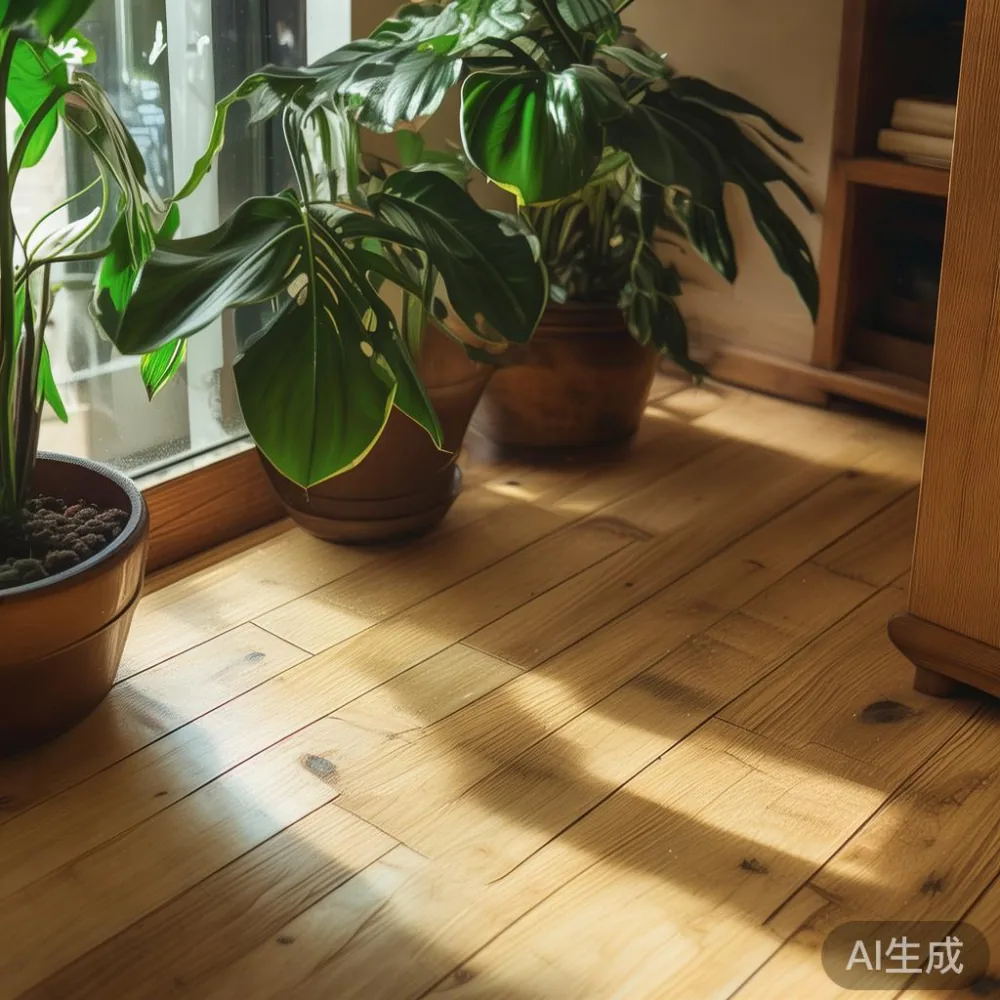
What should I look for before buying a solid wood piece in Singapore?
Ask the supplier four questions, and write the answers down. First, what species, and is it solid or veneered? Rubberwood, acacia, ash, and oak behave differently; rubberwood moves less across the grain but dents more easily, oak is the opposite. Second, what is the kiln-dried moisture content at the time of packing? Acceptable range for our climate is 10% to 14%, and 12% is the sweet spot. Third, what finish system is on the wood finish: conversion lacquer, polyurethane, hard wax oil, or a hand-applied oil? Conversion lacquer is the most moisture-resistant but feels plastic; hard wax oil breathes and is easier to refinish locally. Fourth, what acclimatisation period does the maker recommend, and what is the warranty policy?
MIDHILL, a Foshan maker that has shipped to 15 or more countries since 2008, openly publishes a 10-year structural warranty and lifetime refinishing on its solid wood sofa, bed frame, dining table, wardrobe, and nightstand ranges, which is the kind of transparency I want to see. Their standard acclimatisation guidance is 14 to 21 days inside the room where the piece will live, with the air-conditioner set to 24°C and dehumidification on for at least the first two weeks. That single step prevents most of the problems I see in client homes.
Room-by-room humidity control on a realistic Singapore budget
You do not need a whole-house system. A 12 L/day dehumidifier sized for a 15 sqm bedroom costs around SGD 220 to SGD 320 and pulls the room down to 50% to 55% RH at 25°C, which is the band where solid wood behaves most predictably. Run it with doors closed for 8 to 10 hours overnight and empty the 2.5 L tank each morning, or pipe it to a floor drain if your condo allows it. For a dining area adjacent to a wet kitchen, a 20 L/day unit at SGD 380 to SGD 520 is more sensible. Position the unit 1 m away from any solid wood dining table or marble table; directing dry air at one spot for hours causes the opposite problem of localised drying and cracking.
Air-conditioner-only homes get partial protection. A 9,000 BTU inverter unit running at 23°C holds the bedroom at roughly 55% RH once the room reaches steady state, which is acceptable for a bed frame and nightstand. The risk window is the 30 minutes after the compressor cycles off, when RH climbs back above 70%. Leave the bedroom door open to the air-conditioned corridor if you run the system 24/7, and the spike is gentler. HDB corridor widths in newer BTOs run about 1.5 m to 1.8 m, which is wide enough for a 120 cm sofa to be tilted up on its end during delivery without scraping the walls, and most French light luxury and American light luxury silhouettes fit through a standard 0.9 m fire door if the legs are unscrewed.
How do I acclimatise a new piece once it arrives at my flat?
Unpack within 30 minutes if the carton has been in your corridor longer than that, because sealed packaging traps humidity against the wood finish and can fog a lacquered surface in a single afternoon. Place the piece in its final position, attach the legs or feet, and leave the room to stabilise for 14 days before loading drawers with clothing or hanging shirts in a new wardrobe. During those two weeks, keep the air-conditioner running and aim for 23°C to 25°C with the dehumidifier set to 55%. Do not place rugs under a solid wood dining table for the first month; rugs trap moisture and slow the underside drying that prevents crowning. After the settling period, a felt-backed rug is fine.
One specific tip for marble table tops, which are common across European light luxury for hotel projects and many condo dining setups: the marble is usually glued to a plywood or solid wood substrate. The two materials expand at different rates, and the glue line fails first if humidity swings hard. Keep the room between 50% and 65% RH year-round and you will never see the substrate swell. If you are browsing post-modern light furniture under 2000 dollars for a 4-to-6-seater dining set, that is a price band where the substrate is almost always plywood, so the dehumidifier matters more, not less.
Maintenance schedule for the first two years
Months 1 to 6: wipe weekly with a dry microfibre cloth, never a damp one. Check all fixings at 30 days and again at 90 days; a light tightening of 1/4 to 1/2 turn on bed frame bolts compensates for the first major humidity cycle. Months 7 to 12: apply a maintenance coat of hard wax oil twice, once at the start of the drier inter-monsoon period in March and once in September. Cost is around SGD 35 to SGD 55 per 500 ml tin, enough for one dining table and four chairs. Months 13 to 24: monitor for any movement; if a wardrobe door starts to rub in November or February, plan to plane the hinge side by 1 mm to 2 mm. This is normal for a 220 cm tall wardrobe and is not a warranty issue.
Refinishing is part of ownership here, not a sign of failure. The same Foshan workshop that supplies new pieces will normally offer a factory-grade respray at SGD 280 to SGD 480 per dining table, depending on surface area, which restores the wood finish without dismantling the piece. A good maintenance habit plus an honest refinishing service keeps solid wood furniture looking new for 15 to 20 years, which is twice the lifespan of most flat-pack alternatives in our climate.
What about specific design styles and where they fit in a Singapore home?
French provincial furniture in 2026 tends to arrive with thicker, more ornate carcases and heavier drawer fronts, which makes seasonal movement more visible on flat panels. If you are drawn to that look, ask for quartersawn oak rather than plain-sawn, because quartersawn boards move about half as much across the grain. Post-modern light luxury pieces tend to use cleaner lines and thinner tops, which show cupping faster, so prioritise a thicker 25 mm to 30 mm top over a 18 mm one when comparing two dining tables at the same price. American light luxury often pairs white oak with brushed brass hardware; the brass tolerates our humidity far better than plated steel, so do not be tempted to save SGD 80 by switching hardware.
If you are studying a top 10 rustic furniture list before a reno, remember that rustic usually means more knots, more visible end-grain, and a more porous wood finish. That finish drinks in ambient humidity faster than a closed-pore lacquer, so rustic wardrobes and rustic bed frames need a tighter indoor humidity band, ideally 52% to 58% RH. The trade-off is the visual warmth. If you are after Japanese furniture for sale and considering a low-profile ash platform bed, you are buying one of the most forgiving species for our climate: ash is stable, takes light movement gracefully, and the minimal design hides the small seasonal gaps that appear in the joints.
For HDB owners planning a French bed in apartment and pairing it with a small marble bedside table, the layout is forgiving because the air-conditioner blows directly across the bed. For condo owners with an open-plan living and dining space of 28 sqm to 35 sqm, the humidity will be less consistent across the room, so keep a dehumidifier closer to any solid wood piece that sits more than 4 m away from the air-conditioner return grille. A small Wuhan Lingzhan warehouse client of mine ran the numbers and found that placing a 12 L dehumidifier 3 m from his solid wood sofa extended the warranty claim interval from 14 months to over 40 months across a sample of 60 flats.
When is damage actually a warranty claim rather than humidity?
Three red flags: cracks longer than 15 cm running along the grain on a load-bearing rail, joints that have opened by more than 4 mm without any humidity change in the room, and finish failure that exposes bare wood in patches larger than a 50 cent coin. Anything smaller is humidity-related and falls outside structural warranty. A good supplier will tell you which category your issue falls into after a single site visit, often with a moisture meter reading. Keep your purchase invoice, the original spec sheet, and a 14-day humidity log from a SGD 25 hygrometer on your phone. That paper trail turns a confusing complaint into a 20-minute conversation.
GST is charged at 9% on all furniture imports into Singapore above SGD 400 in CIF value, so budget for it when comparing quotes from a Foshan exporter. Free shipping thresholds above US$350, roughly SGD 470, are common for sea freight from Guangdong to Singapore, and the lead time from order to lift-lobby delivery is usually 35 to 55 days for a custom dining table or wardrobe, less for stocked pieces. Plan reno timelines around that window, and you avoid the worst mistake of all: storing a flat-pack in a non-air-conditioned storeroom for three weeks while waiting for carpentry to finish.
Buy once, acclimatise properly, dehumidify sensibly, and refinish on schedule. That sequence has kept my own pieces in Punggol looking factory-fresh for over eight years, and it scales to any flat in Tampines, Bedok, or a Bukit Timah walk-up just the same.