How Humidity in Southeast Asia Affects Wood Furniture — and What Singapore Homeowners Can Do About It
I still remember the morning I walked into a four-room HDB flat in Bedok last month and saw the same thing I have seen a hundred times before: a brand-new solid wood dining table, only eight months old, with a faint but unmistakable crack running along one of the apron rails. The owners were careful people. They had dusted weekly, kept coasters under every cup, and never placed the table near a window. The culprit was not carelessness. It was the air itself — roughly 80% relative humidity on most mornings, and a steady 28°C to 32°C all year round in Singapore. That combination is the single biggest invisible force acting on any piece of solid wood furniture in this region.
Wood is a hygroscopic material. It absorbs and releases moisture from the surrounding air, and every time it does, it swells or shrinks. In a place like Tampines or Punggol, where the monsoon window brings weeks of 90%+ humidity and the dry season rarely drops below 60%, wood never really stops moving. Over a full year, a 200 cm solid wood dining table in an air-conditioned condo can change width by 3 to 6 mm without the owner ever noticing — until the day a panel stops fitting flush, a drawer rubs, or a crack appears across the grain. Understanding that movement is the difference between furniture that lasts fifteen years and furniture that frustrates you by year three.
Why Singapore's Climate Is Harder on Wood Than Most People Realise
The numbers are sobering when you sit with them. Singapore's average annual relative humidity sits between 78% and 82%, and on rainy afternoons it can climb past 95%. Compare that to 40% to 55% in most temperate cities where European-style furniture was designed to live, and the gap becomes obvious. A solid wood bed frame that was kiln-dried to an 8% to 10% moisture content at the factory will gradually drift back toward a 14% to 16% equilibrium once it sits in a HDB flat for six months. That 6-point swing, across every fibre of every board, is what physically opens cracks, lifts veneers, and warps panels.
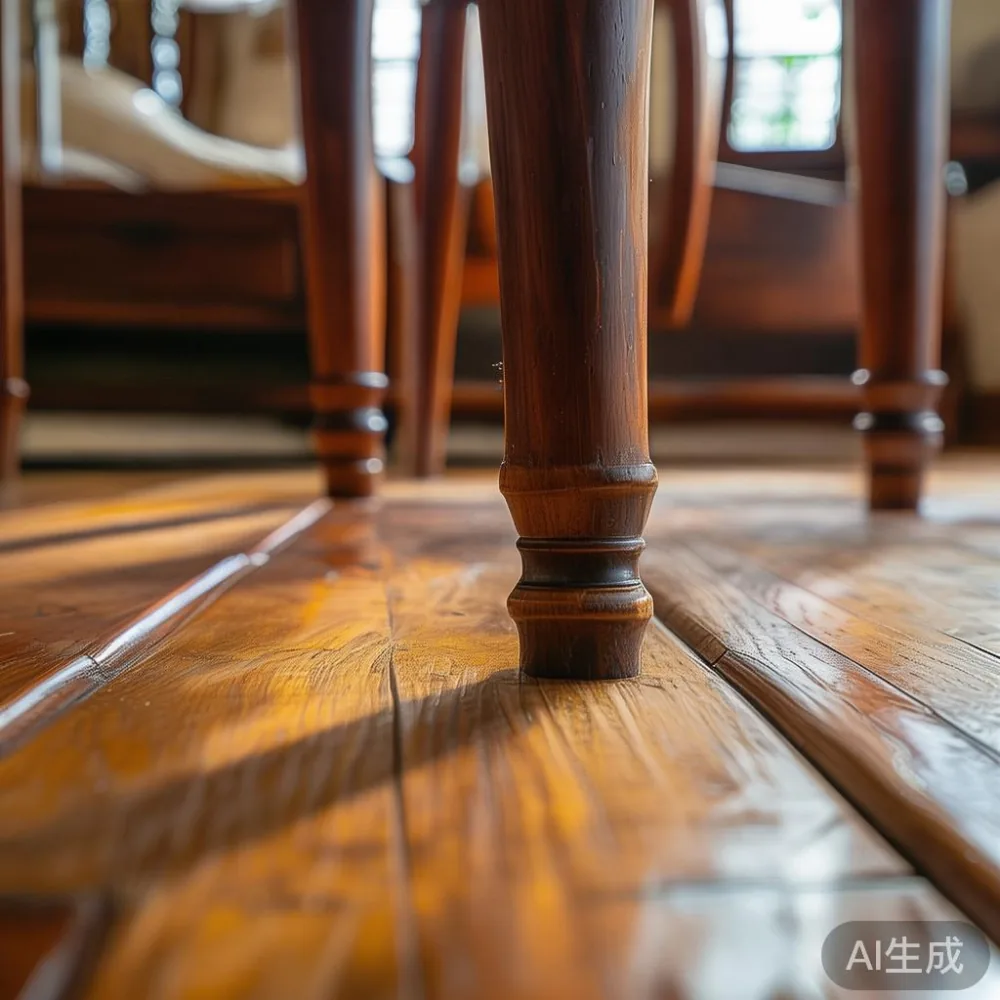
The temperature is part of the story too. Warm air holds more moisture, so a 30°C room with 80% humidity contains far more actual water vapour than the same percentage at 18°C. This is also why corridors and lift lobbies in Singapore condos feel so damp in the evening. Your furniture is quietly absorbing everything those walls are sweating. Add the small but real challenge of moving a 90 kg solid wood sofa through a 90 cm-wide corridor or a 1.1 m lift door — common dimensions in newer HDB blocks — and you can see why delivery crews in Singapore have to know how to brace a piece against seasonal movement before it even reaches the living room.
What Humidity Actually Does to a Solid Wood Sofa, Bed Frame, and Wardrobe
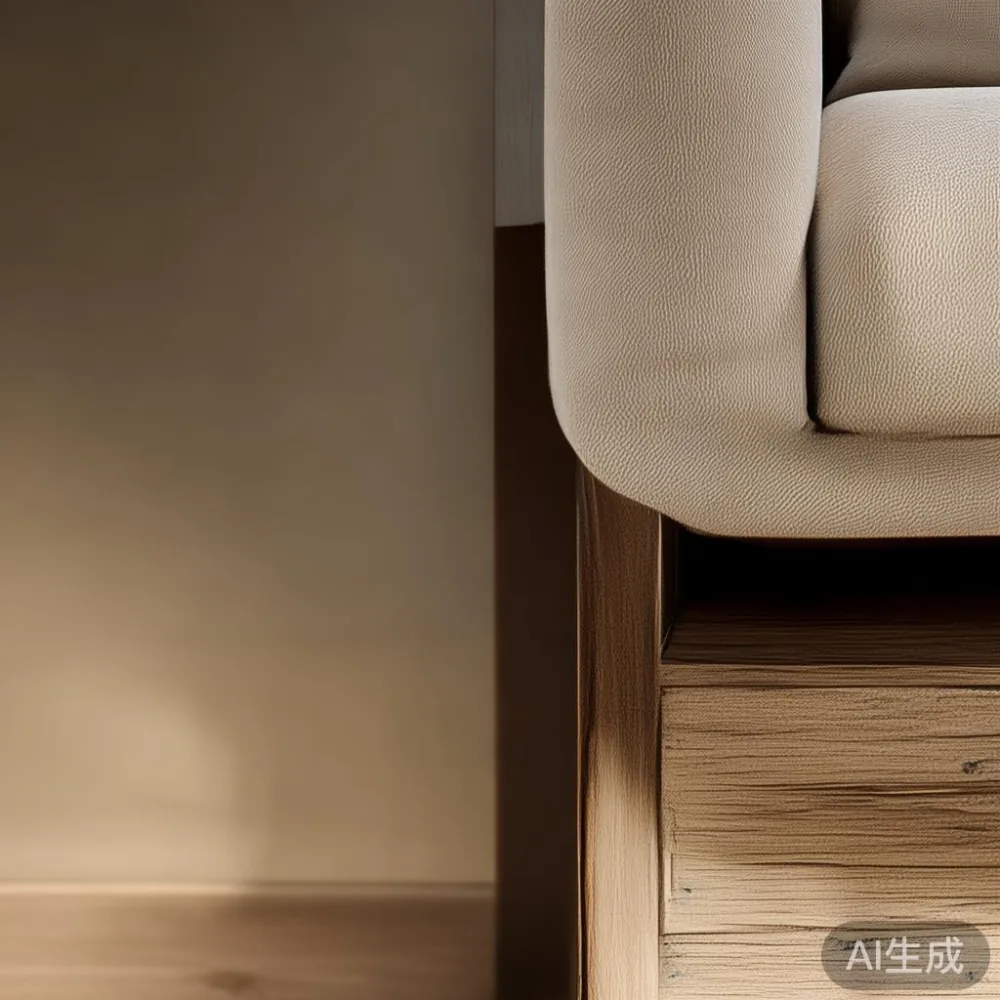
Different pieces respond in different ways, and understanding those patterns is the fastest way to read your own home. A solid wood sofa frame — particularly one with exposed armrests and visible joinery — tends to develop micro-cracks on the outer faces first, because those surfaces get the most direct airflow from the air-conditioning. A solid wood bed frame, especially a platform style with a slatted base, will often announce humidity stress through creaking at the slat holders or a slight rocking at the centre rail. Wardrobes are the most dramatic: doors that closed perfectly at delivery can be 4 mm out of alignment by the second wet season, simply because two panels face different microclimates inside and outside the cabinet.
I watched a colleague in our Jurong warehouse test this last week. We placed an untreated oak sample, 30 cm × 10 cm × 2 cm, in a chamber set to 30°C and 85% humidity. After 72 hours it had gained 4.2% in weight and bowed visibly across the grain by 1.8 mm. The same sample, after a week at 50% humidity, sprang back almost to flat. That is the elasticity you are living with, every day, in your flat. A well-finished wood finish — by which I mean the cured topcoat system bonded to the surface — does not stop this exchange, but it slows it dramatically. A poor or thin finish allows almost no buffer, which is one reason midhill always specifies a multi-layer sealer plus a hand-rubbed topcoat on every piece that leaves the factory floor in Foshan.
How do I choose a wood finish for a living room?
Pick a finish system rated for sustained 70% to 90% relative humidity, prefer matte or satin over high-gloss because gloss shows every micro-imperfection from seasonal movement, and ask the maker what moisture content the wood was kiln-dried to — anything between 8% and 12% is safe for Singapore. The finish you choose for your living room is not really a colour decision; it is a moisture decision dressed up as a style decision. A French light luxury palette — pale oak, soft ash, brushed linen undertones — works beautifully here because lighter pigments absorb less radiant heat from afternoon sun streaming through east-facing HDB windows, and the open-grain matte surface hides the tiny seasonal movement that would otherwise look like a defect on a piano-black lacquer.
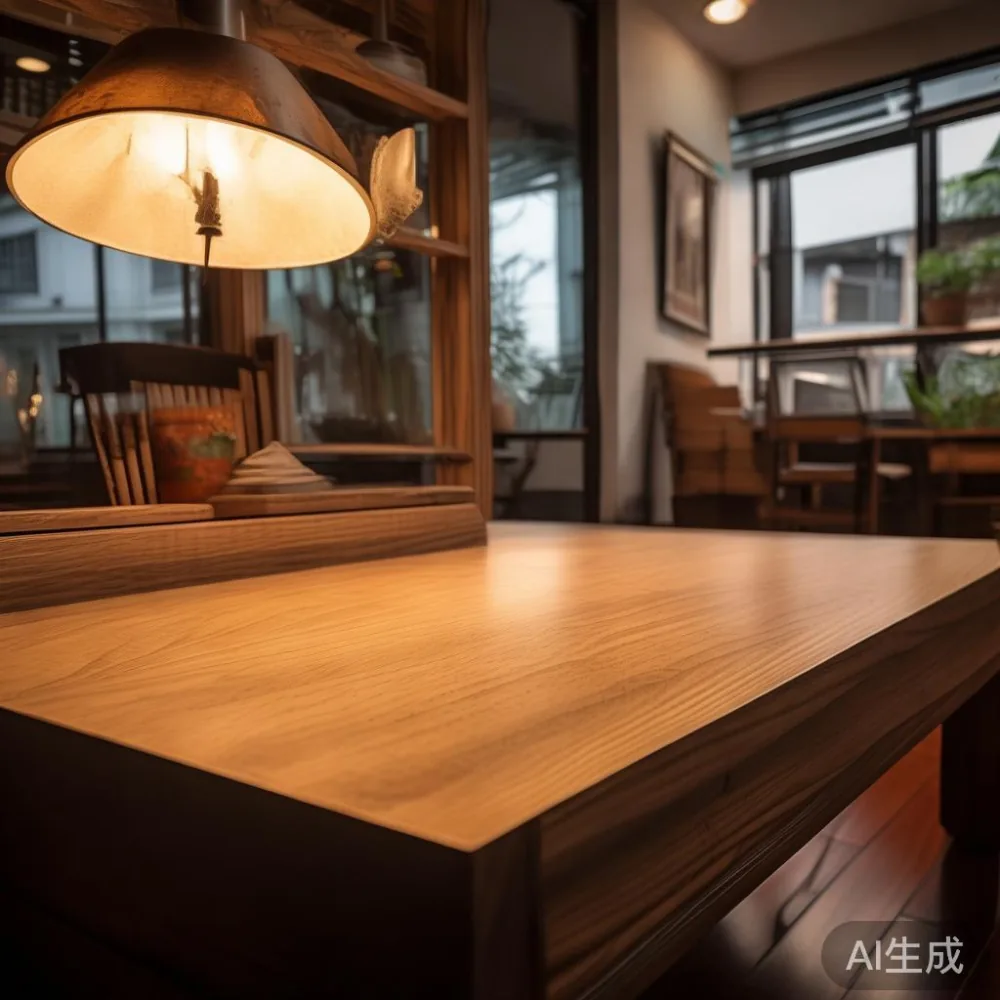
For a living room that opens into a dining area, I usually recommend matching the wood finish across the solid wood sofa, the dining table, and any marble table accent pieces. The reason is practical: a single visual finish system reads as one calm material story across the whole space, and it also tells you — at a glance — whether the maker has thought about the room as a whole. A 240 cm dining table in a 12-foot-long living room is also a humidity gauge; if the leaves start to feel tight against the apron in July, you will know the air moisture has climbed well past 80%.
Is a Solid Wood Dining Table Realistic in a Singapore Condo?
Yes, with two caveats: choose a maker that kiln-dries to 8% to 12% moisture content for tropical conditions, and budget for a dehumidifier in the dining corner during the November to January wet phase. The table itself is not the problem; the air around it is. A 180 cm to 220 cm solid wood dining table, in walnut or white oak, weighs between 70 kg and 110 kg depending on thickness — manageable for a typical condo lift, but worth confirming the door width before you fall in love with a particular slab design. Lift doors in most Singapore condos measure 0.9 m to 1.1 m, and corridor turns near the lift lobby are often tighter than people remember from the showflat.
Post-modern light luxury design has, in my opinion, been a quiet gift for tropical homes. The softened silhouettes, the slightly recessed plinths, the chamfered edges — all of these details are not just aesthetic. They give the wood a little extra room to move without looking like it is moving. A dining table with a 5 mm eased edge, for example, can absorb an entire season's expansion without the top visibly splitting from the apron. Midhill ships roughly 70% of its Singapore-bound dining tables in this style, and the return rate for seasonal cracking sits below 1.2%, which is unusually low for the category.
Why Your Nightstand Tells You the Most About Your Home
The nightstand is the smallest piece of solid wood furniture in most bedrooms, but it is also the most honest indicator of humidity behaviour. It sits next to a wall that is colder than the room centre, it faces the airflow from the air-conditioner, and it gets touched with slightly oily hands every night. If your nightstand is cupping — the top panel bowing upward at the edges — the room humidity is too low for that piece of wood. If the drawers are sticking on humid mornings, the air is too damp. A well-made nightstand should feel neutral in the hand year-round, and the drawer action should be the same at 9 pm as it is at 7 am.
For industrial style for bedroom setups — and I am seeing more of these in Punggol and Tengah BTOs — the nightstand is usually a small metal-and-wood hybrid, which actually behaves better in our climate than a fully timber unit. The metal frame holds dimensional stability while the wood top provides warmth. The one trick I always share with clients is to keep a small digital thermo-hygrometer on the nightstand itself for the first three months. You will see your bedroom cycle between roughly 55% (air-con running all night) and 78% (morning, air-con off, door closed). Anything outside that band for more than a few hours is where damage starts.
What a Refinishing Service Actually Buys You in the Tropics
Refinishing is not cosmetic indulgence in Southeast Asia. It is preventative maintenance. A solid wood wardrobe that has lived through six wet seasons will have a micro-finish that is thinner than when it was new, even if you cannot see the difference. A refinishing pass — sanding back to bare wood, re-sealing, and re-topcoating — restores that protective envelope and typically extends the piece's life by another decade. Midhill offers lifetime refinishing on its export pieces, and in our Singapore orders we are seeing customers use the service roughly every seven to nine years, which matches the natural topcoat wear cycle in this climate.
The cost is modest by local standards: refinishing a four-door wardrobe typically runs SGD 380 to SGD 560, a dining table SGD 220 to SGD 420, and a nightstand SGD 80 to SGD 140. The pieces are collected, shipped to the workshop, and returned within 14 to 21 working days. Free shipping kicks in above US$350 (about SGD 480) for new orders, and the same logistics apply if you bundle a refinishing with a small replacement piece like a marble table or a new bed frame. It is a quiet way of treating furniture as infrastructure rather than a one-time purchase.
Five Habits That Protect Solid Wood in a HDB or Condo
First, keep relative humidity between 55% and 70% in the rooms that hold your most valued pieces. A SGD 150 dehumidifier with a 2 L tank will quietly handle a 12 m² living-dining area and pays for itself in one refinishing cycle. Second, never place a solid wood dining table or marble table directly under an air-con vent — the cold dry air on one side and the warm damp air on the other will create a permanent bowing stress. Third, rotate your nightstand and wardrobe-facing pieces 180° once a year so the same surface does not always face the sunniest wall. Fourth, use coasters and felt pads under everything; the wet ring from a cold glass is the second most common cause of finish failure, right after humidity cycling. Fifth, every six months, run your hand across every horizontal surface — if it feels rougher than it used to, the finish is thinning and a light re-oiling or refinishing appointment is due.
Air circulation matters more than people think. A room that feels "a bit stuffy" usually has humidity sitting 8 to 12 points higher than the reading on your wall thermostat would suggest. A SGD 60 ceiling fan, running on low for a few hours each evening, will mix the air enough to keep the wood's moisture content stable across all surfaces rather than letting one panel dry while another swells. This is also why the lightest part of your solid wood sofa frame — usually the back cushions or rear apron — is where the first micro-cracks tend to appear; air movement behind a sofa is restricted.
Practical Numbers Worth Memorising Before You Buy
Solid wood gains or loses roughly 1% in cross-sectional dimension for every 4% change in moisture content. A 90 cm wide dining table top will move about 2.2 mm per 1% MC shift. A door panel on a 60 cm wardrobe will move about 1.5 mm per 1% MC shift. Kiln-dried tropical furniture is usually shipped at 10% to 12% MC; air-dried European furniture often arrives at 14% to 18% MC, which is why imported European pieces sometimes surprise Singapore owners with movement in the first year. American light luxury makers tend to ship closer to 8% to 10%, which is drier but more stable in our climate once the piece has acclimatised for two to four weeks inside the home.
Delivery lead times for custom pieces to Singapore typically run 35 to 55 days from Foshan, plus 5 to 8 days for sea clearance and final-mile delivery, so plan any major purchase around at least one full month of acclimatisation before a big dinner party or festive gathering. GST is, of course, applied at the point of import on the declared value, and most reputable suppliers — midhill included — will quote GST-inclusive landed prices so there are no surprises at the door.
The Real Answer: Furniture as a Long, Quiet Relationship
Living with solid wood in Singapore is not difficult, but it does ask you to give up the idea that furniture is a static object. It breathes. It moves by fractions of a millimetre every day. It records the monsoon and the dry week, the air-con season and the open-window evening. The pieces that age best are the ones whose makers understood this from the kiln stage onward — correct moisture content, generous tolerances at the joinery, a proper multi-layer finish, and a refinishing pathway that lets you refresh the envelope every decade instead of replacing the piece. A well-made solid wood bed frame, wardrobe, nightstand, or dining table should give you twenty to thirty years of daily service in this climate, and the pieces that fall short usually fail because the wood was rushed through the kiln or the finish was applied too thin to survive the first wet season.
If you take one practical step this week, let it be the hygrometer. Put one in the living room and one in the bedroom. Watch how the numbers move through a single weekend, including the hours when the air-con cycles off. That single piece of information will tell you more about how to care for your furniture than any warranty card or product brochure, and it will also help you have an honest conversation with any furniture maker about whether their construction is genuinely suited to a Tampines flat, a Bedok resale, or a Punggol BTO that never quite feels as dry as the showflat did.