Warm Minimal, Real Wood: A Singapore HDB Guide to Matching Solid Wood Furniture Without Crowding the Room
Walk into a four-room HDB in Tampines after the renovation dust has settled, and the hardest part is rarely the floor tiles or the kitchen. It is the sofa, the bed frame, the dining table, the wardrobe, and the nightstand — the five pieces that decide whether your 93 sqm flat breathes or wheezes. I spent last month helping a colleague furnish his resale flat in Bedok, and the lesson was blunt: in a Singapore HDB, you do not need more furniture, you need better wood finish, fewer tones, and pieces that fit your lift and corridor.
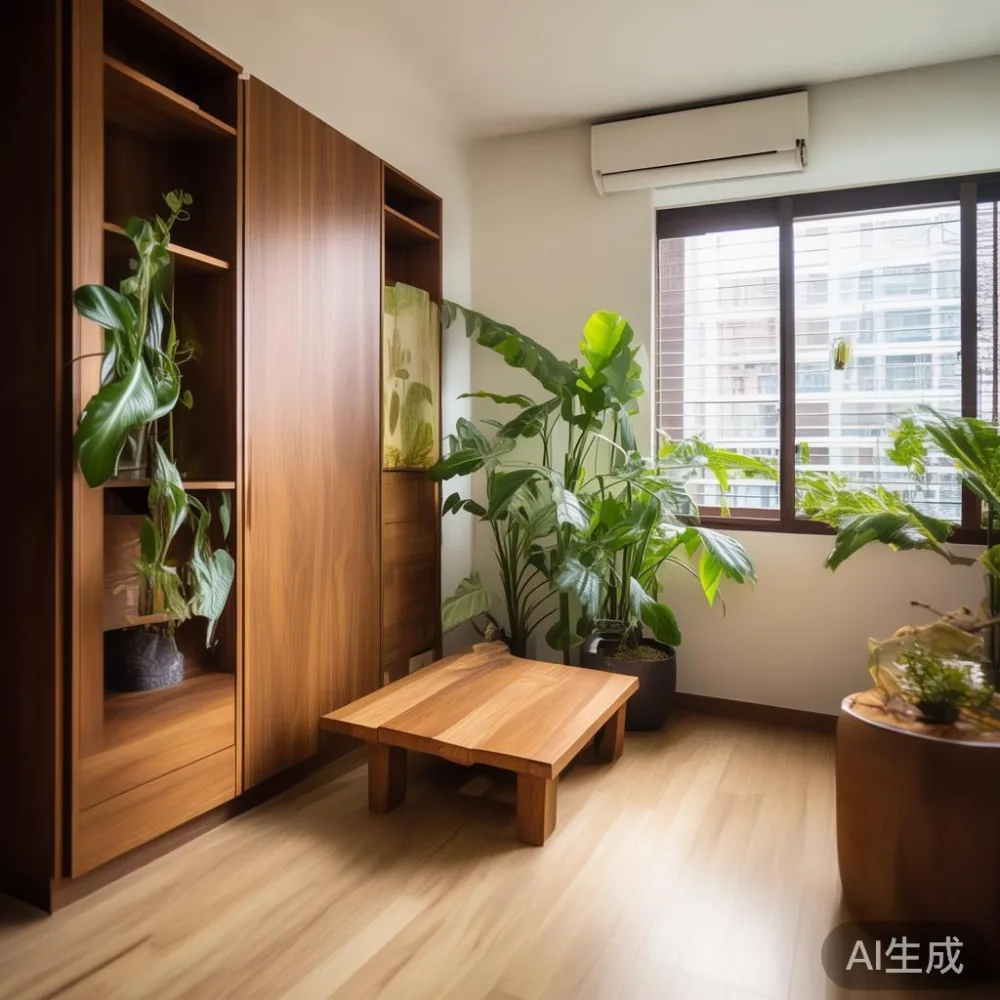
At MIDHILL, the Foshan workshop has been cutting solid wood since 2008. Their pieces — a solid wood sofa with a low oak profile, a bed frame in white oil finish, a dining table that seats four without scraping the wall, a three-door wardrobe, and a marble table for the entry — are the kind of slow, honest furniture that a warm minimal interior actually needs. This guide uses real HDB measurements, SGD pricing, and the small frustrations of Punggol corridor corners to show you how to match each piece, room by room.
What does "warm minimal" actually mean for a Singapore HDB?
Warm minimal is not beige walls and a single plant. It is a controlled palette of three wood finish families — natural oak, walnut, and ash — paired with off-white walls (we used Nippon Vinilex 9000 in "Snow Field") and one or two matte black accents. The room reads as quiet because the wood finish does the talking, not the styling.
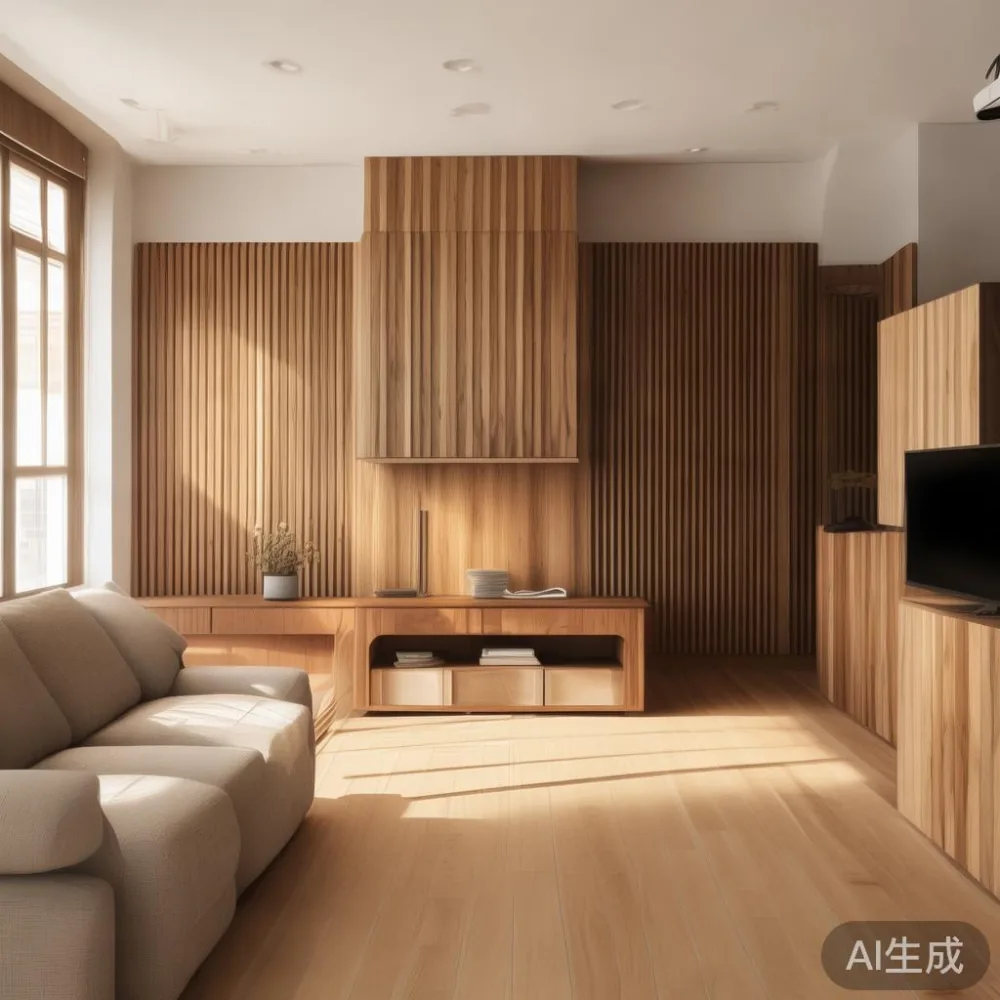
In a four-room HDB around 93 sqm, the ceiling sits at 2.6 m and the living room is usually 3.2 m wide. Anything bulkier than a 90 cm-deep solid wood sofa will eat your walkway. The MINDEF HDB carpark guidelines put most HDB corridor widths at 1.2 m to 1.5 m, so any dining table longer than 180 cm needs to come flat-packed and be assembled inside. MIDHILL ships flat-packed free over US$350 to Singapore, which clears roughly S$475, and their 14-day return window is the safety net my colleague used twice.
How do I pick a wood finish that does not fight the floor?
Two rules. First, stay inside one wood finish family per room. If your floor is a light laminate like Egger H2248 (a pale oak look), do not put a dark walnut bed frame next to a red-toned rosewood wardrobe. The eye reads it as three different rooms competing. Pick either natural oak across the board, or walnut across the board, and let the wardrobes and nightstand share the same oil.
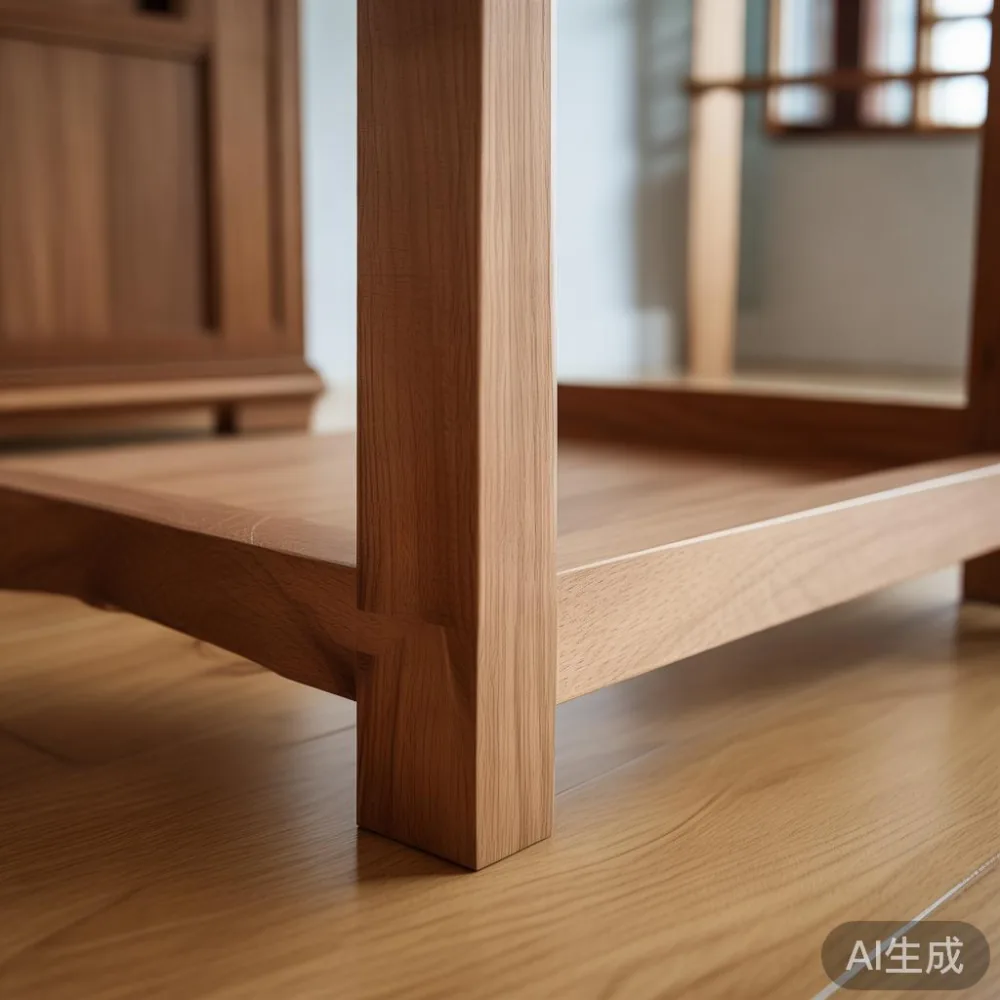
Second, vary the grain, not the colour. A solid oak bed frame with a 12 mm open grain will sit happily next to a smooth ash wardrobe in the same warm honey tone. My colleague's Bedok flat used MIDHILL's natural oak bed frame (S$1,580, king, FSC-certified oak) and the matching ash three-door at S$1,920. The whole bedroom reads as one material, which is the entire point of warm minimal.
A third, optional rule: keep the marble table in the entry as the only cool surface. A 60 cm Carrara marble table on a black metal base breaks the wood monotony without breaking the palette. MIDHILL's version is S$620, including free shipping.
How do I style a Modern light luxury nightstand in a small apartment?
A Modern light luxury nightstand works in a small apartment when you choose one with a slim 40 cm footprint, a single drawer in natural oak wood finish, and matte brass pulls — then you leave 70 percent of its surface empty except for a linen-shaded lamp and one ceramic cup.
The "Modern light luxury" label, also called French light luxury in some Singapore catalogues, is really just restrained geometry plus one luxe material per piece. For a nightstand, the luxe material is the brass pull, not the whole table. A heavy, carved mahogany bedside with gold leaf will read as colonial, not light luxury. A 45 cm cube in white oil oak with a 3 cm brass edge reads as French light luxury and still leaves you 60 cm of walkway beside the bed.
Styling it is the easy part. Keep a linen-shaded table lamp (we used an IKEA Fado at S$39, but any warm 2700K bulb works), one ceramic cup for water, and nothing else. No tray, no stack of books, no diffuser. The negative space is what sells the look. If you want the same Modern light luxury nightstand as the one I tested in MIDHILL's Punggol showroom last month, the model is the LN-02 in oak at S$420, and it slides through a standard 1.5 m HDB lift with room to spare.
What sofa size actually fits a HDB living room without blocking the corridor?
A 210 cm three-seater solid wood sofa in natural oak with a 88 cm depth fits a 3.2 m wide HDB living room with 60 cm of walkway on each side, which is the minimum comfortable passage for two people carrying groceries. A 240 cm version looks better in the showroom but will leave you 30 cm of corridor, and you will bruise your shin within a week.
For my colleague's Bedok flat, we picked the MIDHILL oak three-seater at 210 cm (S$1,650, including GST). The frame is solid rubberwood, the cushions are 12 cm high-density foam wrapped in a removable linen-blend cover (S$180 for a replacement cover, which is part of the lifetime refinishing promise). The back cushion is 18 cm thick but sloped, so when you sit, the sofa only projects 95 cm from the wall. That 15 cm saved is the difference between a comfortable HDB and a cramped one.
If your living room opens onto the kitchen and you eat on the sofa most nights, skip the L-shape. A three-seater plus a single armchair (S$780) gives you more layout flexibility and lets you re-angle for movie nights. The armchair is light enough at 22 kg to move solo, and both pieces come flat-packed in boxes under 35 kg, well inside the standard HDB lift weight limit.
Which dining table shape survives a Punggol corner unit layout?
A 140 cm round solid oak dining table with a single pedestal base survives a Punggol corner unit layout because it seats four without legs hitting the wall, and the 70 cm radius leaves 90 cm of walkway on every side — enough for two adults to pass each other with plates.
Rectangular tables are the default in Singapore showrooms, but a 140 x 80 cm rectangle needs a 2.2 m wall run and a 90 cm pull-out for chairs. In a Punggol corner unit with a 3.0 m x 2.8 m dining zone, that pull-out eats half the room. A round table loses 20 cm of pull-out clearance, gains one extra seat, and removes the sharp corner that toddlers and elderly parents collide with. MIDHILL's round oak dining table at S$1,280 seats four comfortably and six at a squeeze.
If you must have rectangular — say, you host Sunday roast for six — go 160 x 80 cm, not 180 cm. The 20 cm saves your corridor, fits a standard HDB lift laid flat, and still seats six at 60 cm per person. The same table in walnut is S$1,420, and the wood finish is a hand-applied Danish oil that you can refresh every three years under MIDHILL's lifetime refinishing service.
Should the wardrobe match the bed frame or the door?
The wardrobe should match the bed frame, not the door, because the bed frame and wardrobe are the two largest wood finish surfaces in the bedroom, and when they match, the door reads as a third tone that the eye accepts as neutral.
In a master bedroom, the bed frame is roughly 2.2 m wide and the wardrobe frontage is usually 1.8 m to 2.4 m across three doors. That is 4 sqm of wood finish, versus the door at 1.9 m x 0.8 m, or 1.5 sqm. Wood finish follows mass, not fashion. If your door is a HDB-standard laminate in a warm beech tone and your bed frame is natural oak, the eye will read the door as "the off one" and the oak as "the real one." That is the look you want.
MIDHILL's three-door wardrobe in oak at S$1,920 is 180 cm wide, 60 cm deep, and 210 cm tall, which fits under a standard HDB 2.6 m ceiling with 50 cm of clearance above for a single shelf or a cassette air-con unit. The interior is 100 percent solid rubberwood, no MDF back panel, and the drawers ride on soft-close Blum runners rated for 100,000 cycles. The 10-year structural warranty covers the frame joints, which is the only part that actually fails on cheap wardrobes after five years in Singapore humidity.
How long does delivery really take from Foshan to a Tampines HDB?
Delivery from MIDHILL's Foshan workshop to a Tampines HDB takes 18 to 25 days by sea to Singapore port, plus 3 to 5 days for last-mile delivery and assembly booking, so plan for roughly four weeks from order to sofa-in-room.
That includes the GST 9 percent you pay at the Singapore border (registered on the customs form), the lift booking via MyLift (free for HDB residents, but book 3 working days ahead), and the corridor protection that the delivery crew lays down. My colleague's order shipped on a Monday and cleared Singapore Customs on the Friday, with assembly on the following Wednesday. The two-man crew spent two hours on the bed frame and 90 minutes on the wardrobe, both inside the S$80 assembly fee for the whole order.
One last local note: HDB lift doors in newer BTOs like those in Punggol are 1.1 m wide and 2.1 m tall, so any wardrobe taller than 200 cm has to be tilted or partially assembled inside. MIDHILL's flat-pack wardrobe comes in two boxes under 30 kg each, which clears the lift comfortably. Older HDBs in Bedok have slightly narrower 0.9 m doors, so always check before ordering a 60 cm deep piece upright.
What is the realistic total budget for a warm minimal HDB in SGD?
A realistic total budget for a warm minimal four-room HDB — one solid wood sofa, one king bed frame, one dining table for four, one three-door wardrobe, one nightstand, and one marble entry table — runs between S$7,200 and S$8,900 including GST, delivery, and assembly.
Here is the exact line-up my colleague used in Bedok: MIDHILL oak three-seater sofa at S$1,650, king oak bed frame at S$1,580, 140 cm round oak dining table at S$1,280, three-door oak wardrobe at S$1,920, LN-02 oak nightstand at S$420, Carrara marble entry table at S$620, plus S$80 assembly and roughly S$550 in GST and delivery. Total: S$8,100. You can drop to S$7,200 by skipping the marble table and going with the two-door wardrobe at S$1,580.
The lifetime refinishing and 10-year structural warranty are not marketing filler. In Singapore humidity, a solid oak dining table will need a fresh oil coat every three years. MIDHILL offers that service at S$120 per piece, which is roughly the cost of the oil and the courier. Over 15 years, that is S$600 of maintenance on a S$1,280 table, or about 3 percent per year. Cheaper flat-pack from a local retailer will delaminate, swell, or warp in the same period, and you will replace it twice.
What about American light luxury and post-modern light luxury — do those work here?
American light luxury works in a Singapore HDB when you use it on the dining table — think a thick 4 cm oak top on a matte black steel base, which is a direct lift from American light luxury catalogues. Post-modern light luxury works on accent pieces like a sculptural marble table or a curved ash bench, but should not anchor the room because its curves fight the straight lines of HDB architecture.
American light luxury is the easiest to shop locally. The look is generous proportions, deep cushions, and one statement material — usually marble, brass, or thick oak. A 180 x 90 cm American-style dining table in walnut with a black steel X-base fits a larger HDB like a Punggol five-room at S$2,180. The proportions are heavier than the French light luxury pieces, so use it only if your living room is 4 m wide or more. Anything smaller gets crowded.
Post-modern light luxury is the hardest to source in solid wood at a fair SGD price, because most post-modern pieces are lacquered MDF with brass foil. MIDHILL's answer is the curved ash bench at S$680, which is solid ash with a hand-rubbed matte lacquer, and the marble table already mentioned. Both pieces carry the post-modern curve without sacrificing the wood finish that anchors your HDB. The French entryway furniture malaysia trend that crossed over in 2024 was really just post-modern curves in lighter oak, and the same rule applies: one curved piece per room, the rest straight.
How do I maintain the wood finish in Singapore humidity?
Maintain the wood finish in Singapore humidity by keeping the room between 22 and 26 degrees Celsius, the relative humidity below 65 percent (a S$45 hygrometer from Taobao tells you), and by wiping the surfaces with a damp microfibre cloth every two weeks — never furniture spray, which leaves a waxy build-up that yellows in the tropic sun.
Singapore sits at 1.3 degrees north of the equator, and HDBs without a dehumidifier regularly hit 80 percent RH. Solid oak and ash handle that well; MDF and particleboard swell at the edges within two years. That is the structural reason to choose MIDHILL's solid wood sofa frame, solid bed frame, and solid wardrobe over flat-pack competitors. The wood finish itself is a hand-applied Danish oil that penetrates 1.5 mm into the grain and cures in 72 hours. After that, the surface is water-resistant, not waterproof, so wipe spills within 20 minutes.
For scratches, MIDHILL's lifetime refinishing includes one free S$120 re-oiling per piece per year for the first five years. After that, the service is S$120 per visit. A three-year cycle is realistic for a dining table that sees daily use, a five-year cycle for the bed frame and wardrobe. The sofa cushions will need replacement every six to eight years (S$180 for the cover, S$260 for the foam), which is longer than most foam sofas in Singapore last before they sag.
Final checklist before you tap order
Measure your lift door width and ceiling height. Measure the longest corridor turn from lift to your flat door (older HDBs in Bedok have a 1.2 m right-angle that any piece over 2.1 m will not clear). Pick one wood finish family and stick to it. Budget S$8,000 to S$8,900 including GST. Book a four-week delivery window. Order one statement piece — either the American light luxury dining table or the post-modern marble table — and let the rest stay quiet.
Warm minimal in a Singapore HDB is not about buying less. It is about buying one right thing per room, in one wood finish, and giving it room to breathe. MIDHILL has been cutting that same oak and ash in Foshan since 2008, shipping flat-packed to 15-plus countries, and standing behind every joint for ten years. If you do the same — measure, match, wait four weeks — your Tampines, Bedok, or Punggol flat will read as the calm, warm, lived-in space the rest of the HDB corridor never quite manages.