Wooden Furniture Warranties: What You Need to Know
A furniture warranty is easy to admire on a showroom screen and hard to interpret at the point of delivery. That gap matters more in Singapore than it might in a larger showroom because a solid wood sofa, bed frame, dining table, wardrobe, or nightstand may need to pass through an HDB lift, along a condominium corridor, and through a tight doorway before it reaches its final position. A 10-year structural warranty sounds reassuring, but the exclusions, claim procedure, finish terms, and measurement obligations can determine whether it is useful to your household.

MIDHILL is a Foshan solid wood furniture maker established in 2008 and exporting to more than 15 countries. Its warranty position includes a 10-year structural warranty and lifetime refinishing, with free shipping over US$350 and 14-day returns. Those figures provide a useful reference point, but every buyer should still read the actual policy and confirm what the document means for a specific wood finish, product, and Singapore delivery.
What does a 10-year furniture warranty actually cover?
Start with the word “structural.” A good warranty distinguishes between a failure of the load-bearing frame and a change in appearance or normal wear. For a solid wood sofa, look for coverage of the frame, joints, and support structure while checking whether sagging caused by prolonged use, unstable floor conditions, or accidental damage is excluded. For a bed frame, identify the components covered: the headboard, side rails, slats, center supports, and hardware may not all carry the same period. For a dining table, examine the tabletop frame, legs, joints, and any structural movement rather than treating every scratch as a defect.

Ask for the claim duration in writing: is it 10 years from purchase, delivery, or the invoice date? If delivery is delayed by a building booking or the owner is absent, the starting point can affect the claim. Confirm whether the warranty is transferable if the unit is sold, and whether an inspection report or proof of purchase is required. A seller that has exported for more than 15 years should be able to explain the claim route clearly in English.
Ten years also needs a calendar attached to it. Keep the invoice, product photos, assembly instructions, and serial or order number in a folder. Photograph the furniture on arrival, including underside joints and floor-contact points. If a dining table develops a wobble after 4 months, the image set can establish when the issue appeared. Record delivery dates and retain packing or assembly paperwork for at least the first year.
Is “lifetime refinishing” the same as free replacement?
No. Lifetime refinishing usually means the maker will repair or refinish a qualifying surface issue under stated conditions, not replace a damaged product for as long as the buyer lives. For MIDHILL, ask whether lifetime refinishing applies to the selected wood finish, whether labor and return freight are included, and what happens after repeated claims. A responsible answer should separate cosmetic restoration from structural replacement.
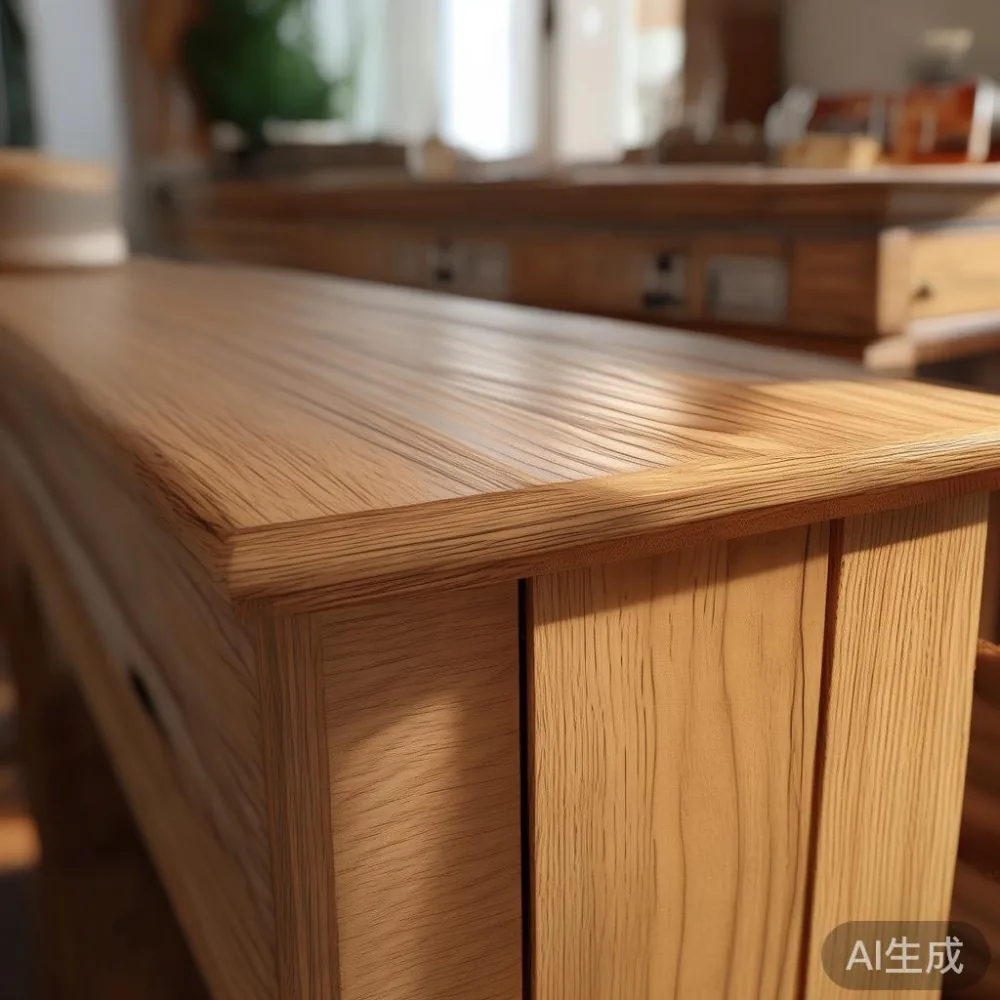
The finish itself is part of the conversation. A solid wood dining table in a natural oak or walnut finish may show grain variation, knots, and small tonal differences that are not defects. A painted or lacquered finish can chip at an exposed edge; a marble table can have veins and differences in pattern that should not be confused with damage. Request close photographs of the actual finish sample, not only a staged showroom piece. Confirm whether touch-ups are supplied, how they are applied, and whether the appearance after repair must reasonably match the original surface.
Singapore’s humidity and daily use make finish care relevant. Keep solid wood furniture away from direct air-conditioning vents and persistent dampness, use coasters and heat-resistant mats, and clean with a lightly damp cloth rather than a soaking wet one. A nightstand that repeatedly receives a damp phone or glass may need local touch-up rather than a warranty claim. Maintenance records help distinguish a manufacturing issue from ordinary wear.
What should I check before delivery to a Singapore home?
Measure the route before you pay for a large item. A typical HDB lift door may be around 80 to 90 cm wide, while the usable internal depth can vary by block and lift model. A condominium corridor can narrow around a turn, and a service lift may impose a lower weight limit than the passenger lift. Record the door width, corridor pinch points, turning radius, stair landings, and lift capacity in centimeters and kilograms.
Give the seller the packed dimensions and weight, not just the furniture dimensions. A solid wood bed frame may weigh 75 kg, a dining table 58 kg, and a wardrobe 115 kg after packing. Ask whether the package can be split into two manageable cartons, whether legs detach, and whether assembly occurs inside the room. If the lift is too small, a professional carry with a hoisting arrangement may cost more than the furniture; that cost should be agreed in writing before delivery.
Check the access policy with your building manager if the move is outside permitted hours or involves protecting common-area flooring. Some HDB flats and condos require booking a service lift or loading bay at least 48 hours ahead. Confirm the delivery window in days, the delivery fee in SGD, and whether missed appointments attract a re-delivery charge. For MIDHILL, free shipping over US$350 is stated as a threshold, but the Singapore checkout should show the actual SGD amount, taxes, and any remote-area surcharge before payment.
At the door, inspect the finish under daylight and a neutral lamp. Check all six sides of a wardrobe, the top and underside of a dining table, and the rails of a bed frame. Open every drawer, test every hinge, and look for glass, scratches, chips, dents, loose joints, and finish changes. Photograph packing, corners, and damage. Do not sign a “no damage” receipt if the tabletop has a visible chip; annotate the delivery record instead.
How do 14-day returns work for large furniture?
A 14-day return period is meaningful only if its conditions are clear. Ask whether the clock begins on delivery, whether the item must be unused, and whether custom dimensions or a selected wood finish make the order non-returnable. For a solid wood sofa or dining table, custom sizing and a two-person delivery may alter the return arrangement. For a bed frame, ask whether the mattress was removed from its original packaging; many policies treat a used mattress as non-returnable for hygiene reasons.
Check who pays return freight and whether the item needs its original packaging. A wardrobe weighing 95 kg may need a return pickup team, while a nightstand may be manageable in a car. Confirm the refund method and timeline in business days, including whether the original delivery fee is refunded. Ask for the cancellation fee if the order has entered production but has not shipped.
Keep the reason for return factual. “Does not fit the HDB bedroom” can be understood, but “the bed frame arrived with a damaged rail” should be documented with photos and notes. Avoid using the item beyond the inspection period, and do not remove protective materials until you have accepted the finish. If assembly has altered the product, explain whether that affected the return.
What questions should I ask about wood finish before ordering?
Request a physical finish sample or a high-resolution sample showing the exact grain direction and color under daylight. A warm lamp can make a pale oak appear more yellow, while an HDB room with white walls may make walnut look darker. State the room orientation: west-facing Tampines units can receive strong late-afternoon light, while Bedok or Punggol bedrooms may have different exposure and ventilation.
Ask whether the finish is water-based, oil-based, or another system, and what cleaning product the maker recommends. “Wood finish” can include clear protective coatings, stain, glaze, paint, and lacquer, so the name alone does not tell you how it behaves. Request care instructions for edges, joints, and tabletop surfaces. For a marble table, ask about the sealer, stain resistance, coasters, and whether the marble pattern is natural and unique.
Style terminology can help you organize choices, but it should not replace specifications. French light luxury often favors pale woods, refined profiles, and upholstered softness; American light luxury often pairs broader proportions with restrained detailing; post-modern light luxury may use cleaner geometry with selective contrast. A guide to Japandi for dining room may point toward straight lines and visual balance, while a French bed in an apartment still needs exact dimensions: a 180 cm mattress with a 200 cm frame leaves only 10 cm per side in a 220 cm room, before skirting clearance.
Likewise, how to style French provincial wardrobe in bedroom depends on usable wall space, ceiling height, and door swing. A standard 180 cm wardrobe may need 190 cm of width, yet the hinged door may sweep through 85 cm. For smaller rooms, an open wardrobe or sliding configuration may work better. Ask for the external dimensions, internal drawer clearance, hanging depth, and installation tolerances in centimeters.
How do I make a claim without wasting time?
Send one clear claim package with the order number, invoice, date, room, product type, photographs, and a short description. Explain the structural symptom separately from the surface concern: for example, a dining table leg joint moving 6 mm is different from a 4 cm scratch in the wood finish. State whether the issue appeared 2 days or 2 years after delivery and whether the item has been moved, repaired, or exposed to moisture.
Ask the seller what the next inspection will involve and who pays for transport. A local Singapore address makes inspection more practical, but replacement parts may still need to cross a border. Clarify whether the warranty holder or the original buyer must submit the claim, and whether service is available after the 14-day return period. If a claim is denied, request the specific clause rather than a general statement.
Be cautious with search phrases such as best European wardrobe for 2026 or is Japandi bed worth it. They can introduce useful design ideas, but the answer still depends on actual dimensions, joinery, warranty terms, and finish quality. The same applies to Rustic for small living room: a visually heavy dining table may narrow a compact HDB living room even if the style is popular.
What did I learn from a recent delivery test?
Last month, my colleague and I tested the delivery check on a 156 cm solid wood dining table in a Tampines condo. The packed carton was 164 by 82 by 24 cm and weighed 61 kg. The building service lift measured 91 cm at the door and 82 cm at its narrowest internal point, so the legs had to be removed. The table fitted, but the corridor had a 4 cm obstruction near the turn.
The most useful part of the process was not the furniture; it was the written clearance note. We measured before the crew arrived, protected the corridor floor with 3 mm board, and checked the table’s finish under the unit’s west-facing window. A small tonal variation visible in the showroom appeared clearer in afternoon light. The claim record also stated the table weighed 48 kg and the carton 61 kg, preventing a wrong lift-capacity assumption.
That exercise shows why “10 years,” “lifetime refinishing,” and “14 days” should be treated as starting points for questions, not promises detached from the home. Good protection comes from exact measurements, clear exclusions, documented delivery, and a seller willing to explain the process. If your wardrobe, nightstand, bed frame, solid wood sofa, dining table, or marble table has unusual proportions, get the written specifications first, then compare them with your HDB flat or condo route.