Wood Finish: Choosing Between Veneer and Solid Wood for Your Home
Choosing furniture for a Singapore HDB flat or condo is rarely a question of appearance alone. A solid wood sofa, bed frame, dining table, wardrobe, or nightstand must fit the lift, negotiate the corridor, suit the level of natural light, and remain practical under humid conditions. Veneer can offer convincing grain, stable dimensions, and a lighter price, but the long-term cost depends on more than the invoice issued in 2026.
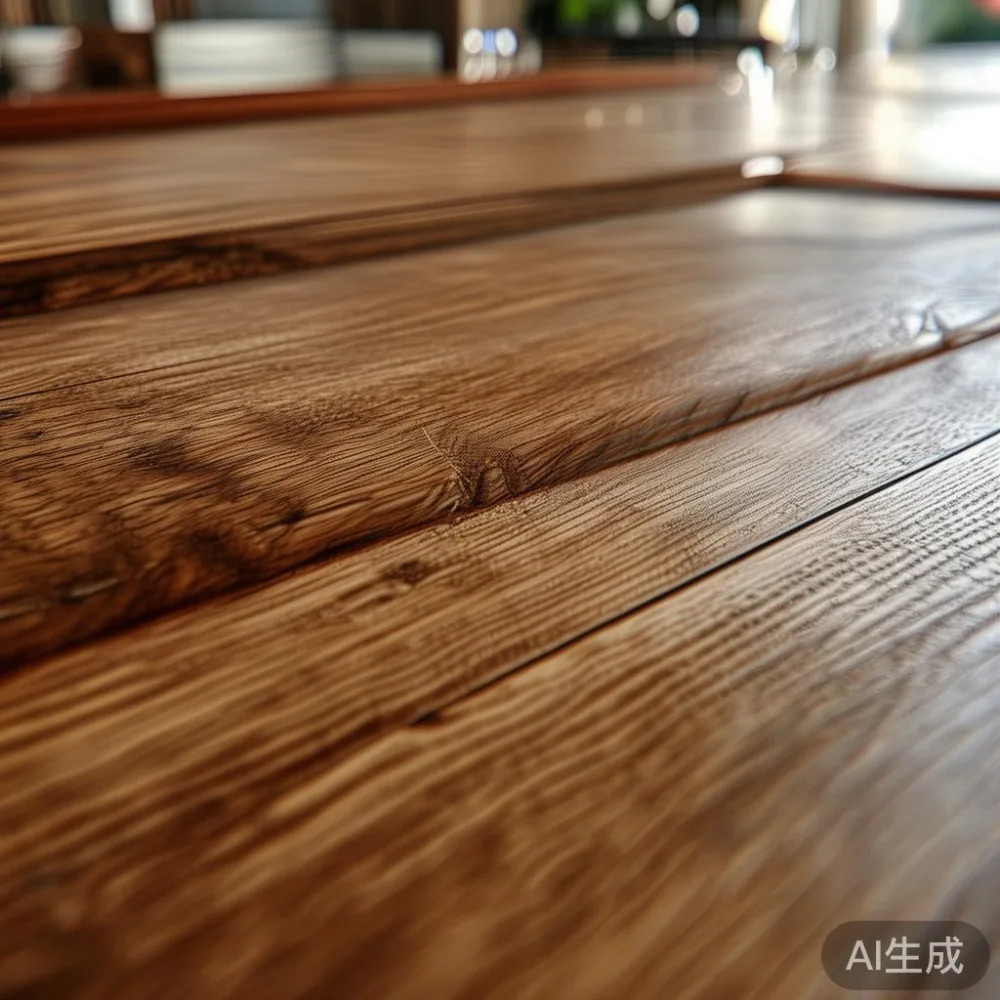
This comparison follows 3 common purchases over 5 years: a 180 cm dining table, a 180 × 200 cm bed frame, and a 240 cm wardrobe. Prices are indicative Singapore retail examples in SGD, including 9% GST where relevant. Actual quotations vary with timber species, thickness, hardware, finish, access conditions, and delivery scope.
What does veneer cost compared with solid wood over 5 years?
Veneer is a thin layer of real timber—typically about 0.6 mm—bonded to a panel substrate. A veneered dining table may use an 18–25 mm engineered board with a timber face, while a solid wood table might use 25–40 mm kiln-dried hardwood. The construction difference affects price, weight, repairability, and resale value long before the furniture shows visible wear.

For the dining table, an engineered-wood table with a 0.6 mm oak veneer might cost S$1,280 including GST. A comparable solid oak dining table might cost S$2,380. Over 5 years, that is S$256 per year for the veneered table and S$476 for the solid table: a difference of S$1,100 before maintenance.
The bed frame comparison is more dramatic because the piece is larger. A 180 × 200 cm veneered bed frame with slats might cost S$980, while a solid hardwood version might cost S$1,880. The initial difference is S$900. At the same service life, it works out to S$196 versus S$376 per year. For the 240 cm wardrobe, veneer-faced particleboard might cost S$1,680, compared with S$3,280 for a solid wood construction with drawers and adjustable shelving. That is S$1,600 more upfront, or S$320 per year across 5 years.
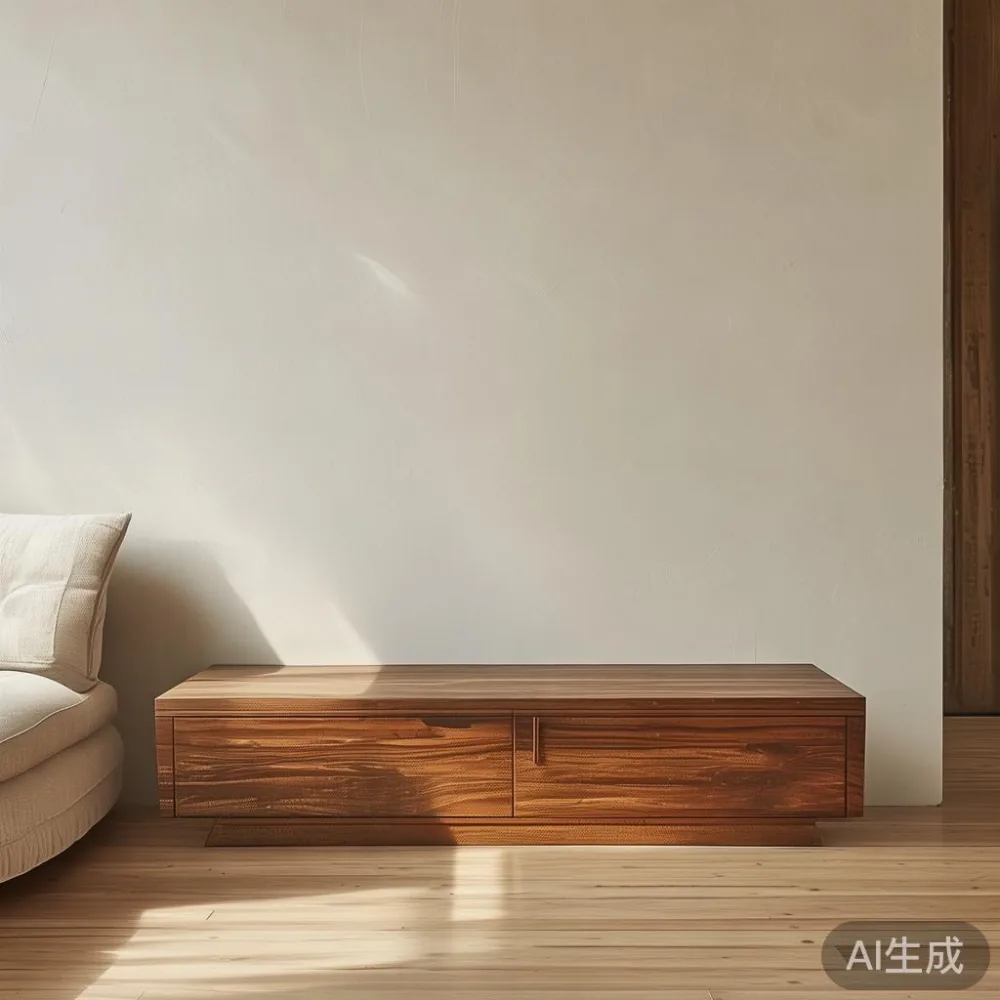
These figures do not mean veneer automatically costs less over time. A low-quality face may chip, peel, or stain, creating an early refinishing or replacement cost. MIDHILL’s 10-year structural warranty is a material advantage for a solid wood bed frame, dining table, or wardrobe because it covers structural failure rather than merely confirming that every surface will remain unmarked.
Which Singapore homes are better suited to veneer or solid wood?
Space and access are decisive in Tampines, Bedok, Punggol, and private condos. A solid oak dining table can weigh 65–90 kg, while a comparable veneered table may weigh 35–55 kg. A solid wood wardrobe can reach 120–180 kg; a veneer-and-particleboard wardrobe may weigh 70–110 kg. These are meaningful differences for a family moving a flat-packed or modular wardrobe through a common corridor and into a passenger lift.
Older HDB blocks often have corridor widths near 900–1,200 mm and lift doors around 700–900 mm. Newer blocks and many condos provide wider common corridors, although the actual route still needs measurement. A 240 cm wardrobe cannot simply be tilted through a doorway: its height, depth, diagonal clearance, and turning radius all matter. A solid wood wardrobe may require more careful disassembly, extra protection, and 2 delivery workers, adding roughly S$100–S$250 to the quoted delivery.
Condominium loading bays and freight lifts can reduce strain, but booking rules, protective floor covering, and lift reservation charges may add S$50–S$200. A single-piece solid wood dining table also needs a route with enough turning space. Veneer construction offers greater weight control, yet engineered boards can still be vulnerable to moisture if their edges are exposed during delivery.
Humidity deserves attention because Singapore’s outdoor air commonly reaches 80–90% relative humidity, while air-conditioned interiors may remain around 50–65%. Solid wood moves seasonally by roughly 1–3 mm across a 100 cm width, depending on species and moisture content. Quality furniture is made with kiln-dried timber, stable joinery, and ventilation gaps so this movement does not split the dining table or twist a wardrobe door.
Is European wardrobe worth it?
That is a fair question for anyone considering a European light luxury sofa or imported wardrobe. The answer depends on the construction and the service available locally, not merely the country printed on the label.
A European wardrobe made from 18–25 mm engineered panels, a 0.6–1.0 mm veneer, soft-close hinges, and durable drawer runners can be financially sensible. The sample 240 cm unit at S$1,680 with GST can offer useful storage for S$336 per year over 5 years. Its main risks are edge swelling, veneer lifting, and limited repairability if the board is damaged internally.
A solid wood wardrobe offers a different ownership profile. The sample unit at S$3,280 may cost more to transport, but its timber components can often be repaired, sanded, and refinished. MIDHILL’s lifetime refinishing service is especially relevant here: wear on a solid wood wardrobe or dining table can be treated as a surface-maintenance issue rather than a reason to replace the whole piece.
The phrase best Modern light luxury wardrobe for 2026 can be misleading unless it is backed by measurements. Check board thickness, drawer boxes, back panels, hinge brands, load ratings, and warranty terms. For example, a wardrobe with 15 mm backs and 12 mm drawer bases should be compared with one using 18 mm backs and 18 mm drawer boxes. A French light luxury wardrobe may pair oak frames with fluted glass or stone-effect details, but those decorative surfaces may need specialist handling.
How do finishes change the 5-year cost?
The wood finish can dominate maintenance cost. An open-pore oil finish on a solid oak dining table may require a refresh every 12–18 months under normal use. A water-based matte lacquer can need less frequent care, although scratches remain visible and cannot generally be repaired invisibly. Veneer has less material to sand, so deep scratches can expose the substrate or require a complete face replacement.
For the 5-year calculation, assume that a veneer dining table needs one partial replacement at year 4. A local repair and refinishing visit might cost S$220 plus S$60 delivery, or S$280 total. A solid wood table might instead receive 2 maintenance sessions: S$120 in year 2 and S$160 in year 4, totalling S$280.
The wardrobe tells a similar story. Veneer may incur S$320 for a corner repair and refinishing at year 4, while a solid wood wardrobe might spend S$150 on hinge adjustment and S$180 on a surface refresh, plus S$90 for a hardware replacement: S$420 over 5 years.
The bed frame has the least exposed surface, so finish choice usually matters less. A solid wood bed frame at S$1,880 might need S$100 for a headboard scuff and S$90 for drawer runners. The veneered frame at S$980 might need S$150 to replace a marked headboard panel. If both remain in use, the veneer’s lower purchase price can still win.
For buyers comparing the top 10 light luxury furniture, the finish should be judged under the actual room conditions. North-facing Tampines bedrooms may have softer, indirect light, while west-facing Bedok units can create strong afternoon glare. A marble table may look refined beside a solid wood dining table, but its cleaning needs differ: pH-neutral stone care may cost about S$25–S$60 per year. Marble should not be treated as timber and is outside the same repair process.
What do movers, installers, and repairs add to the cost?
Delivery is a hidden cost in both categories. A packed veneer wardrobe may arrive in 4–6 cartons and take 60–90 minutes to assemble. A solid wood wardrobe may arrive in 8–12 protected components and take 3–5 hours. The solid option might cost S$260–S$480 for delivery and installation, compared with S$120–S$220 for the veneer unit in a standard HDB access.
The dining table is simpler. Delivery may cost S$80–S$160 for either construction, with an additional S$50–S$150 if a narrow lift requires turning or partial disassembly. Allow 7–14 calendar days for a made-to-order Singapore order, and 14–30 days for some imported or custom pieces. These ranges explain why the lowest invoice is not always the lowest installed cost.
Repairs should also be considered. Replacing veneer can cost S$250–S$600 for a door or drawer front because colour matching and fabrication take time. Repairing solid timber may cost S$120–S$350, depending on the area and whether the finish can be blended. Hardware remains necessary in either case: a new set of soft-close hinges may cost S$80–S$220, while drawer runners may add S$90–S$260.
Consumers searching for the best Rustic bed for 2026 should look beyond a distressed surface. Confirm that the bed frame uses seasoned timber, strong joints, centre supports, and fasteners suited to the stated load. For a queen-size bed, a centre support may be needed for comfort and long-term performance. Rustic styling does not excuse weak construction, and a refinishing service remains useful for ordinary scuffs.
What did my own test reveal?
Last month I visited a client’s 3-room HDB flat in Punggol and helped compare 2 sample surfaces under the same afternoon light. The first was a 0.6 mm oak veneer dining table; the second was a solid oak table with a matte lacquer finish. I placed each beside a window with light bouncing from the adjacent block, then wiped both with a damp cloth and inspected them at a 45-degree angle.
The veneered table showed a slightly more uniform grain pattern, while the solid table revealed small colour variations between boards. Neither defect was structural. Over a 30-minute handling test, the veneer edge absorbed 2 small marks that remained visible, whereas the solid tabletop could be lightly sanded and spot-finished. The weight difference was also clear: 48 kg against 76 kg.
That visit did not prove solid wood wins every budget, but it showed why material thickness and finish matter. A well-made veneer can suit a compact Singapore home, especially when a lighter installation is valuable. Solid wood becomes more compelling when the buyer values repairability, a distinctive grain pattern, and a piece intended to remain through several house moves.
How should you calculate the true 5-year price?
Use a simple worksheet. For each option, add the purchase price including 9% GST, delivery, installation, consumables, expected repairs, and likely refinishing. Then subtract the resale or transfer value if the furniture is likely to be sold before year 5.
For the dining table pair, the veneer could total S$1,280 + S$130 delivery + S$280 repair = S$1,690, or S$338 per year. The solid table could total S$2,380 + S$180 delivery + S$280 maintenance = S$2,840, or S$568 per year. If the solid table could later be resold for S$700 and the veneer for S$250, the net 5-year costs become S$1,440 and S$2,140 respectively.
For the bed frame, veneer might total S$980 + S$120 delivery + S$150 repair = S$1,250, or S$250 per year. Solid wood might total S$1,880 + S$220 delivery + S$190 maintenance = S$2,290, or S$458 per year. Allow for a possible S$150–S$250 bed-frame resale value.
For the wardrobe, veneer might total S$1,680 + S$180 delivery + S$320 repair = S$2,180, or S$436 per year. Solid wood might total S$3,280 + S$380 delivery + S$420 maintenance = S$4,080, or S$816 per year. If the solid wardrobe’s finish and joinery support a later sale of S$1,000, its effective cost still remains higher but may suit a buyer keeping it for 10 years or more.
The result depends on priorities. Veneer often makes financial sense for a temporary apartment, a rental unit, or a buyer who wants contemporary styling at a controlled budget. Solid wood makes stronger sense for a family expecting to stay 8–12 years, provided the quality and after-sales support are credible. A 10-year structural warranty and lifetime refinishing can reduce uncertainty, although it does not erase the higher initial cost.
When evaluating light luxury furniture china, compare specifications rather than labels. Solid wood does not mean every visible component is timber: back panels, drawer bases, and some hardware may still be engineered products. Veneer does not mean poor quality: a well-built cabinet with thick panels, sealed edges, and good hardware can last many years.
For a Singapore buyer, the most practical decision may combine both materials. A solid wood dining table and bed frame can become long-term anchors in a living room or bedroom, while a veneer wardrobe may handle storage in a compact room. Whichever route you choose, inspect the wood finish in daylight, measure the full access route, confirm the GST-inclusive price, and record the warranty terms before paying the balance.