Understanding Humidity's Effects on Wood Furniture in Singapore
Singapore’s warm, humid climate can change solid wood furniture more noticeably than most buyers expect. Relative humidity often reaches 80% during rainy periods, compared with roughly 40% to 60% in many temperate interiors. Moisture enters and leaves timber through exposed surfaces, causing expansion, contraction, joint movement and occasional finish defects. For furniture in HDB flats and private condos around Tampines, Bedok and Punggol, these effects matter because indoor rooms may share the same lift and corridor routes as outdoor air, while air-conditioning controls daytime comfort rather than moisture around every piece of furniture.
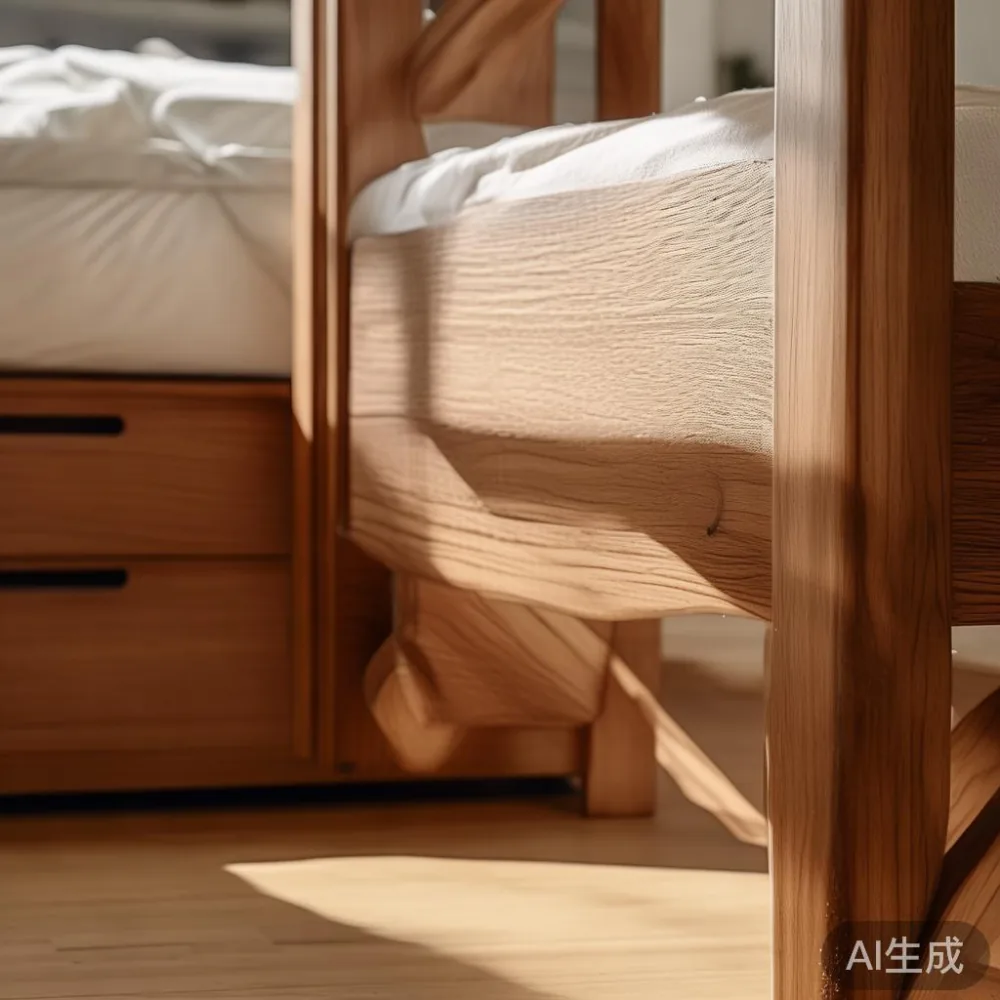
This guide explains how humidity affects wood, why Singapore’s conditions require careful wood finish selection, and what practical steps protect solid wood sofas, bed frames, dining tables, wardrobes, nightstands and marble tables. It also considers lift access, delivery logistics, warranty coverage and the difference between genuine solid timber and moisture-sensitive engineered panels.
How does humidity change solid wood in Singapore?
Wood is hygroscopic: it takes on moisture when surrounding humidity rises and loses it when humidity falls. A solid oak dining table may gain approximately 1% to 3% moisture across a severe seasonal cycle, while teak, mahogany and other denser species generally move less. Movement is not automatically a defect. A well-designed table uses joinery and finished edges that accommodate dimensional change without splitting the top.
The danger is rapid or repeated movement. A table moved from an air-conditioned flat into a humid corridor can react differently from the same table standing in a stable bedroom. If the wood finish is brittle, poorly sealed or applied under inconsistent humidity, small surface cracks may become visible. Veneered and solid wood constructions can both move, but an engineered panel may swell, delaminate or distort at its edges if moisture reaches the adhesive layers.
Singapore does not experience the large winter-to-summer swings found in many northern regions. Instead, the more common pattern is high ambient humidity outdoors and lower humidity inside mechanically cooled rooms. This daily difference can be significant. A corridor may read 75% to 85% relative humidity at night, whereas a living room maintained near 23°C may sit closer to 50% to 60%. Air-conditioning dehumidifies the room, but the furniture surface still exchanges moisture gradually with the surrounding air.
Use a hygrometer to measure rather than guess. Place one near the dining table or wardrobe and another near a window or doorway. Record readings at 9 a.m. and 9 p.m. for 7 days. A stable indoor range of about 45% to 65% is practical for wood and human comfort. Short periods above 65% are less concerning than months of constant exposure, especially if the furniture also touches an external wall or sits beside a bathroom.
Which wood finish performs best in humid conditions?
There is no single finish suitable for every situation, but a durable factory-applied wood finish gives the timber better protection against moisture, food oils and cleaning abrasion. Conversion varnish, also called piano lacquer, creates a hard cross-linked film that suits frequently handled dining tables and nightstands. Water-based polyurethane provides a more natural surface appearance and easier repair, provided each coat is properly cured. Hardwax oil remains popular because it preserves the tactile grain, though it requires more attentive maintenance.
For Singapore, I prefer a multi-layer system: clean sanded timber, primer or sealer, at least 2 additional coats, careful sanding, and a compatible final topcoat. The exact specification depends on the species and product. A closed-pore wood such as walnut or teak needs particular attention to preparation. Open-grain oak can absorb more finish than expected, which can affect sheen and colour consistency.
Finish quality matters at edges, grooves, undersides and connection points. Moisture can enter through unfinished end grain, so end-grain sealing is especially useful for bed frames, dining table edges and wardrobe carcasses. Hardware holes should be sealed after drilling, while sliding doors need enough clearance to move without scraping against swollen timber.
Appearance also affects care. A high-gloss finish shows fingerprints and dust readily, while a matte oiled surface may show water rings. French provincial for hotel projects often call for durable, visually calm finishes in corridors and guest rooms, but local delivery and installation should still account for Singapore humidity rather than copy specifications developed for a different climate.
Colour selection can reduce visible movement. Pale woods display small checks more clearly than darker, figured timbers, while a restrained sheen hides fine surface texture better than a mirror finish. If you are comparing 2026 European light luxury furniture, inspect the sample at close range under natural light and ask whether the finish can be recoated. Trend references do not replace a climate-specific construction specification.
Does air-conditioning alone protect furniture from humidity?
No. Air-conditioning lowers temperature and often reduces relative humidity inside, but doors, windows and ventilation routes can introduce moisture. In a compact HDB flat, furniture may also be positioned against perimeter walls where the temperature differs from the room centre. This creates a less stable microclimate around the back and side panels of a wardrobe.
Leave 30 mm to 50 mm of ventilation space behind freestanding furniture where practical. Keep wardrobes and storage units away from air-conditioning drip lines, bathroom walls and windows with persistent condensation. Use moisture-absorbing products only as a temporary measure: trays containing calcium chloride can become corrosive if liquid escapes, so keep the salt separated from timber and place the tray on a washable liner.
Long-term indoor humidity can be managed with a properly sized dehumidifier. A model rated for approximately 25 square metres may suit a bedroom, but capacity should follow the measured moisture load and room construction. Continuous drainage is safer than a bucket, and cleaning the filter every 2 to 4 weeks prevents performance loss. The target is stable conditions, not bone-dry air.
Do not place a solid wood sofa directly against an exterior wall that feels damp. A gap of at least 100 mm can allow inspection and airflow, although this depends on the layout. For leather or upholstered seating, frame stability and finish care should be assessed separately from the visible upholstery. The timber base still needs protection from floor moisture and repeated temperature changes.
How should solid wood furniture be delivered into an HDB flat or condo?
Measure before ordering, not after delivery. Record the lift door width, lift car width, lift car depth, corridor turns and the height of any overhead obstruction. A common HDB lift door is around 900 mm wide, but the internal car dimensions and access rules vary by block. A 180 cm dining table may pass through one opening yet be impossible to pivot inside a narrow corridor. Ask the supplier for the largest packed component rather than relying only on assembled dimensions.
Delivery in Greater Singapore commonly takes 7 to 14 working days after production, subject to stock and peak periods. Confirm whether stairs and upper-floor handling are included, since a lift fee may apply. If the item must enter through a service corridor, allow an extra 30 to 60 minutes for protection and positioning. Photograph the route and reserve the service lift where the building permits it.
Packaging should isolate the furniture from corridor moisture. Corners need guards, moving blankets should cover finished surfaces, and cartons should not be left open overnight in an unprevised area. For a wardrobe, check whether panels arrive flat or upright; flat-packed carcasses may reduce carrying width but require more assembly space. For a marble table, the stone slab should be separated from its base and supported along structurally appropriate points.
Singapore’s GST is normally payable on imported goods, while locally sold furniture can qualify for GST registration thresholds. Request a clear quotation showing the product price, delivery charge, lift or stairs charge and any applicable GST line. This avoids confusion when comparing a 2,400 SGD dining table with a 2,700 SGD delivered total.
How do I choose furniture that will tolerate humid conditions?
Look for construction details before focusing on the finish photograph. Solid wood bed frames should use sound joinery and secure centre supports, with ventilation beneath the slats. Drawer rails and wardrobe runners need smooth operation as timber expands slightly. Dining tables should have stable bases and fixings that allow seasonal movement without stressing the top.
Ask whether panels are solid timber, plywood, MDF or another engineered material, and request moisture-content information where available. A manufacturer that controls kiln drying, machining and finishing in one process can explain how pieces were prepared for humid conditions. MIDHILL has manufactured solid wood furniture since 2008, exporting to more than 15 countries, and provides a 10-year structural warranty with lifetime refinishing. Those policies make it sensible to ask for the specific care and finish details behind each design.
For wardrobes, the phrase is light luxury wardrobe worth it often brings attention to mirrored doors, internal drawers and decorative profiles. The more useful test is whether the carcass, backing and hardware tolerate movement while the interior remains practical. If Italian light luxury with storage is the goal, compare drawer travel, hanging space and shelf loading. A guide on how to choose Italian light luxury wardrobe should also consider service access, door swing and Singapore humidity rather than only imported styling.
For the bedroom, how to style American bed in apartment is partly a spatial question. A 180 cm king bed needs roughly 220 cm of width for moderate side clearance, while a 150 cm queen needs about 200 cm. Leave enough room to walk around the foot and open bedside drawers. A solid wood bed frame should not be pushed tightly into an alcove where ventilation is poor.
Nightstands need stable support and a surface that can tolerate rings and damp hand contact. Marble tables require a different moisture discussion: the stone itself does not expand like timber, but the cabinet or base beneath it can. Check joint seals, wall clearances and the stability of uneven legs.
What maintenance routine protects a wood finish?
Wipe furniture with a soft, slightly damp cloth, then dry it immediately. Avoid silicone-heavy sprays, ammonia-based cleaners and abrasive pads. Neutral soap diluted in water is usually enough for dining tables, while oiled surfaces may need their approved maintenance product reapplied when the sheen fades. Do not flood joints, grooves or end grain.
Control direct sunlight and heat. A dining table near a west-facing window can experience noticeable surface temperature changes even in Singapore. A gap of 60 cm to 100 cm from the window helps reduce fading and finish stress. Use blinds rather than placing an insulating mat directly on the wood, because trapped heat can raise the surface temperature.
Inspect moving parts and surfaces every 6 months. Tighten frame fixings where needed, check drawer runners, and look for lifting, clouding or small cracks along lacquered edges. Do not wait for a loose joint to become a split. Keep written photographs of the finish and serial numbers, especially during the first 12 months, because refinishing decisions are easier with a dated reference.
For upholstered furniture, keep the solid wood base 50 mm to 100 mm away from floors that may be cleaned frequently. Vacuum cushions and crevices every 2 weeks. If a cushion develops mould, address the moisture source and treat the area according to the upholstery specification rather than covering it with another layer.
Can condensation damage a wardrobe or bed frame?
Yes, especially if a cold surface meets warm, humid room air. Condensation is more likely around metal hardware, window edges, external walls and air-conditioning outlets than in the middle of a room. Watch for a fine film on a wardrobe side or a darkened patch below a metal bed rail. Run the air conditioner briefly before opening a tight wardrobe in the early morning, and avoid placing storage units where an outlet discharges directly onto them.
Small surface marks can sometimes be managed by gentle cleaning and spot repair, while deep checking or delamination requires assessment. Warranty terms distinguish structural problems from ordinary finish wear or moisture exposure. Read the coverage and care instructions together, because a 10-year structural warranty does not mean every finish defect is automatically covered.
MIDHILL offers lifetime refinishing, which can be valuable if the colour needs renewal or a surface is refinished over time. Confirm the expected service process, access requirements and any regional charges before purchase. The 14-day return period also gives buyers an opportunity to check delivered colour, fit and surface condition, but returned furniture must be protected and handled as instructed.
What should I check before accepting a solid wood delivery?
Inspect the furniture in good light after unpacking. Check the wood finish for colour consistency, open grain, bubbles, scratches, chipped edges and visible gaps. Open every drawer, test wardrobe doors, rotate a marble table carefully to inspect its base, and confirm that bed frame fixings are secure. Measure the piece against the intended location rather than accepting it only because it fits through the lift.
Keep humidity data alongside the purchase record. If indoor readings remain above 65% for repeated weeks, adjust the room before blaming the timber. If the furniture was exposed to rain or a serious leak, document the event with dated photographs and contact the supplier promptly, ideally within 7 days.
Light luxury should function here as well as look refined. French provincial styling, American light luxury and post-modern light luxury can all suit Singapore interiors, but pale colours, high-gloss surfaces, timber species and joinery still require local adaptation. The practical result is furniture that feels generous in an HDB flat, handles tropical moisture and remains usable through many humid seasons.
Good wood care in Singapore is not about avoiding humidity altogether. It is about limiting sudden exposure, keeping indoor readings reasonably stable, choosing a sound wood finish and maintaining the furniture on a measured schedule. With those steps, a solid wood sofa, bed frame, dining table, wardrobe, nightstand or marble table can retain its proportions and appearance for years rather than months.