Small Singapore Apartment Styling: How to Choose Solid Wood Furniture That Fits the Lift, the Layout, and the Light
Last month I visited a colleague's new 65 sqm two-bedder in Punggol, and the moment her lift doors opened on the 14th floor I understood the real constraint Singapore renters and owners are working against. The lift cabin measured roughly 1.1 m wide by 2.1 m deep. Her brand-new three-seater sofa, ordered from an overseas warehouse, would not tilt past the rail. The delivery crew spent forty minutes with furniture blankets before giving up and leaving a second-hand replacement behind. We laughed about it on the corridor floor, but it is the kind of mistake that costs roughly S$280 to S$450 in re-shipping or disposal fees, on top of the 9% GST she had already paid at Customs.
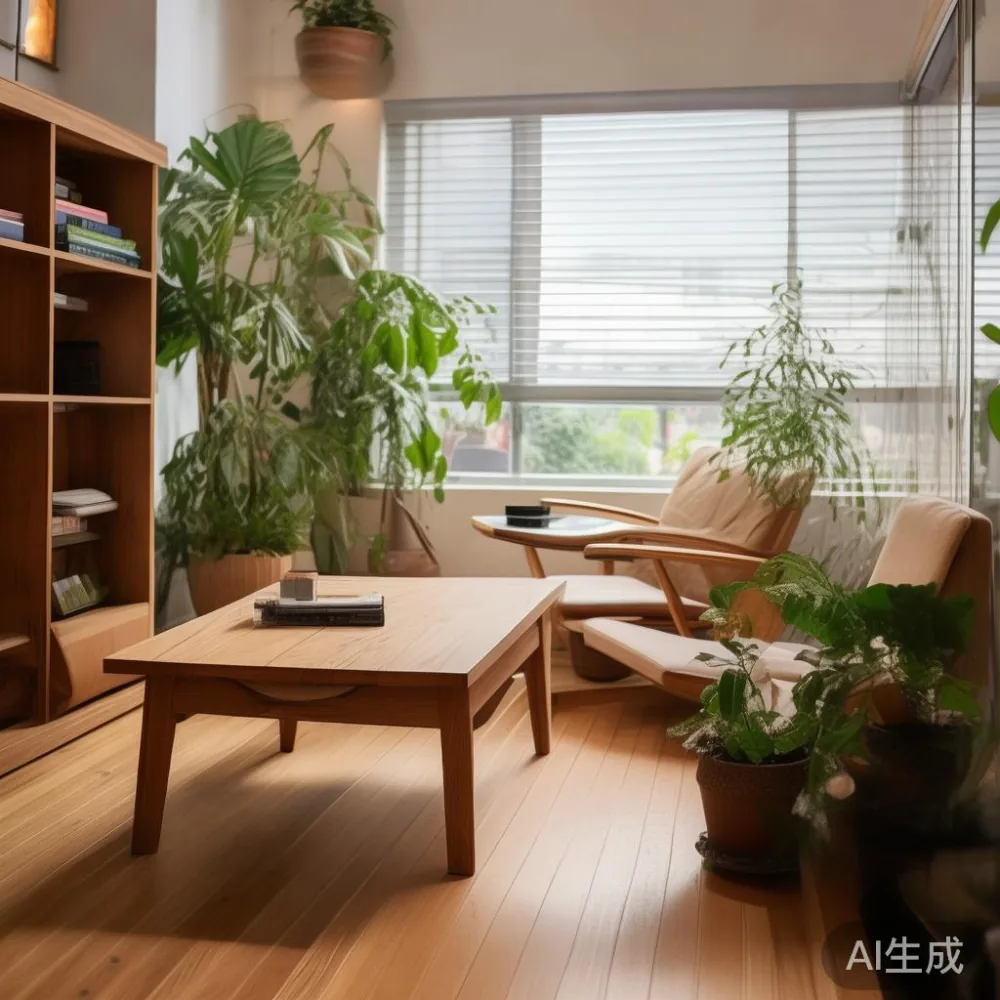
Styling a small HDB flat or a compact condo in Tampines, Bedok, Sengkang, or Punggol is not really about minimalism, and it is not about buying the smallest possible item. It is about reading three things accurately: the doorway (typically 0.9 m wide), the lift cabin, the corridor bend on every floor, and the way natural light enters your specific unit. After a decade of watching homeowners make the same five errors — buying furniture that does not clear the lift, choosing dark pieces that swallow the room, ignoring the wood finish, mismatching leg heights, and overcrowding the dining zone — I have settled on a working method that holds up.
Why does the lift size in my HDB block decide what furniture I can buy?
Because the lift will always win. Most Singapore HDB passenger lifts in blocks built after 2008 measure between 1.0 m and 1.2 m internally, with a door opening of about 0.8 m to 0.9 m. A standard three-seater sofa, even disassembled, has a backrest panel that runs 1.6 m to 1.9 m wide. That is fine for the lift width, but the depth of the cabin — usually 1.4 m to 2.1 m — becomes the bottleneck the moment a sofa frame is tilted on its side. This is why I now measure twice: the diagonal of every flat-pack piece, and the diagonal of the lift door.
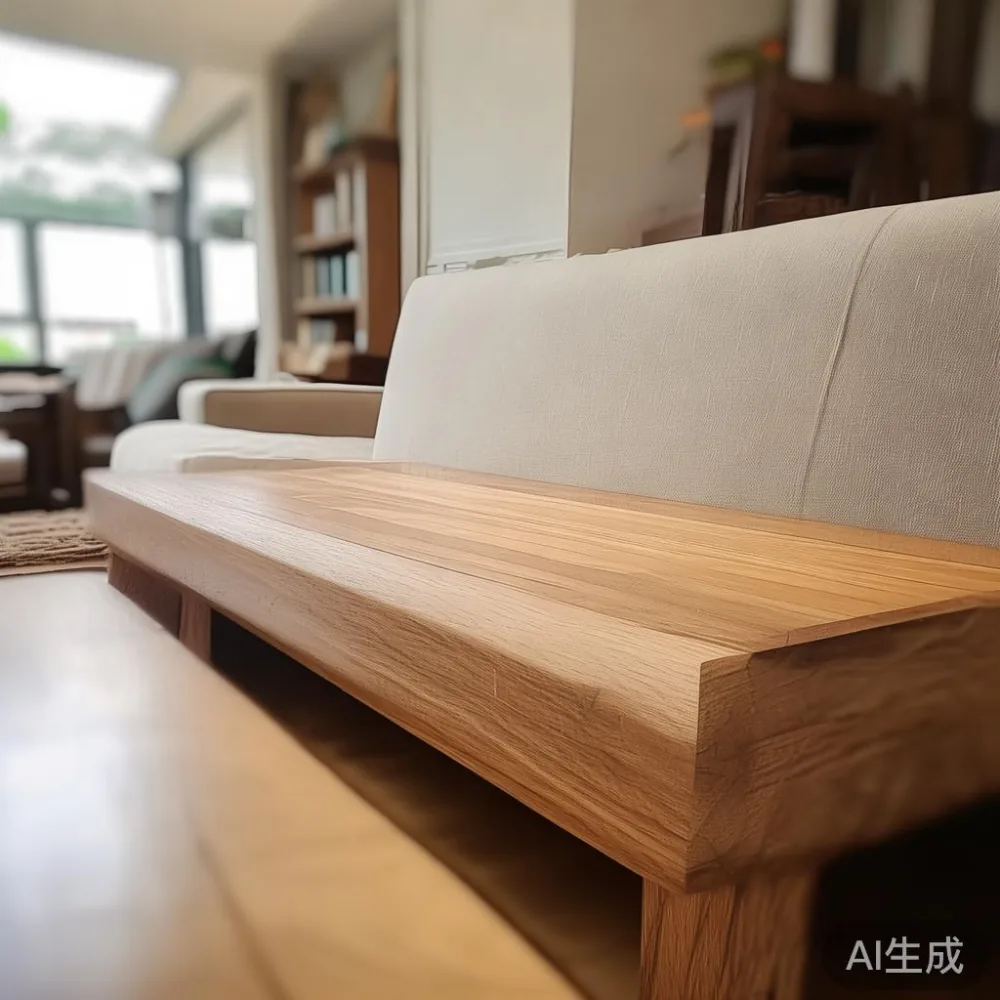
For solid wood pieces in particular, the rule is sharper. A solid wood bed frame in queen size (152 cm x 191 cm) has to ship in sections, each section no longer than the 1.05 m to 1.2 m lift depth. Reputable Foshan factories — MIDHILL among them — design their flat-pack joinery around exactly this kind of apartment constraint. The headboard panel, the side rails, and the slats each travel separately, and the heaviest single package usually sits between 28 kg and 42 kg, which two delivery men can carry up the corridor without scraping the walls. If your supplier cannot tell you the weight and length of the heaviest carton, that is a sign to keep looking.
I keep a small printed cheat sheet in my wallet: sofa carton 1.85 m long, 0.95 m tall, 38 kg; six-seater dining table carton 1.45 m long, 0.78 m tall, 46 kg; wardrobe cartons each under 2.0 m and under 35 kg. Anything larger and the lift simply will not cooperate, and the driver will not guarantee the delivery past the lobby.
Which wood finish actually makes a 50 sqm room feel bigger?
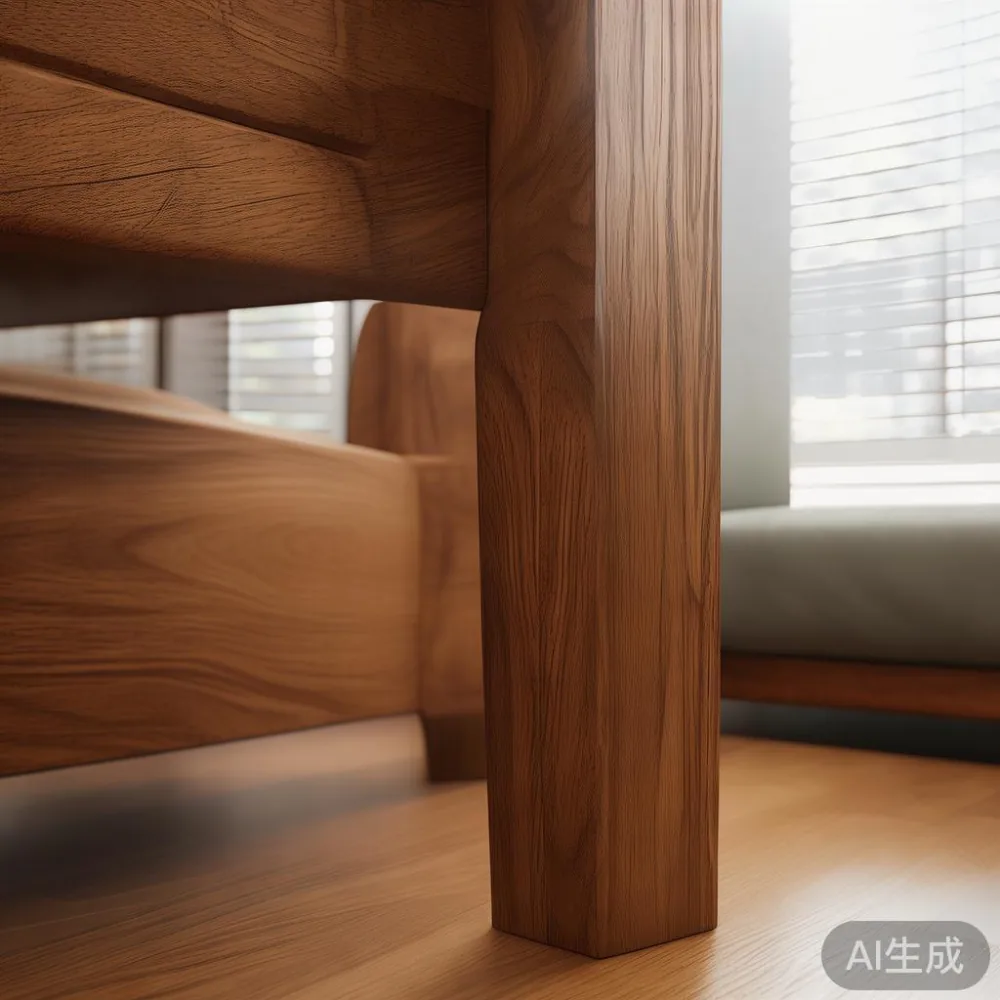
This is the question that quietly decides whether your flat feels like a 50 sqm apartment or a 35 sqm box. Wood finish refers to the surface treatment — the stain, the lacquer, the oil, and the visible grain pattern — and it has more visual weight than almost any other decision you will make. In the Tampines BTO my colleague moved into, the windows face east, so the morning light is strong and slightly cool. We placed a 1.4 m dining table in a Scandinavian for dining room style — pale white-oil finish, visible grain, no high-gloss lacquer — and the room immediately read as 6 to 8 sqm larger than it measured on paper.
Why? A pale wood finish reflects around 55% to 65% of incoming light, while a dark walnut or wenge finish absorbs closer to 35% to 45%. On a floor plan of 50 sqm, that 20-point spread translates into roughly 4 to 6 perceived square metres. It is not a small number when the unit is already tight. The same effect applies to your bed frame, your wardrobe doors, and your nightstand. Choose the finish first, then the furniture, not the other way around.
For post-modern light luxury interiors — the warmer, slightly Parisian direction with brass-tipped legs, travertine stone tops, and rounded silhouettes — I usually push clients toward honey oak or smoked ash. These wood finishes keep the room from going moody, which matters in compact units where you do not have the square metres to absorb darkness. For American light luxury, which leans on cleaner lines and cooler tones, a white-washed ash or a pale grey-oak finish tends to anchor the room without overwhelming it.
How do I plan a dining area in a small HDB without crowding the corridor?
Standard HDB dining zones sit between 2.0 m and 2.6 m on the long side, and between 1.6 m and 1.9 m wide after you subtract the kitchen door swing and the air-conditioning ledge. A six-seater dining table at 1.8 m by 0.9 m will physically fit, but it leaves only 45 cm of walkway between the table edge and the wall — too tight to pull a chair back without bumping the person behind you.
The fix is not a smaller table. It is a smarter proportion. A rectangular dining table at 1.4 m by 0.8 m seats four comfortably and six at a squeeze, with 60 cm of clearance on every side. Round tables in 1.1 m to 1.2 m diameters work in square bays, but they lose one setting above four people. Marble table tops look stunning in post-modern light luxury styling, but a real 1.4 m marble table weighs between 78 kg and 110 kg and will not survive the lift in one piece. A sintered stone top over solid wood at 18 mm to 22 mm thickness keeps the visual without the lift problem — typically 42 kg to 56 kg total, well within the two-man carry rule.
If your dining zone is under 2.2 m wide, drop one side of seating and use a 0.45 m bench against the wall. Benches tuck fully under the table when not in use, recovering roughly 0.4 m of floor space. In the Scandinavian for dining room approach, a bench plus two armchairs reads more relaxed than four matched dining chairs, and it photographs better too.
What size sofa and bed frame actually work in a 65 sqm HDB?
For a typical 65 sqm three-bedder in Punggol or Bedok, the living room runs between 2.6 m and 3.2 m wide and 3.4 m to 4.0 m long. A three-seater sofa at 2.0 m to 2.1 m long, 0.9 m deep, with an 0.85 m back height, leaves 60 cm to 70 cm behind the sofa for a console — enough room for a 1.5 m wide x 35 cm deep piece that doubles as a reading nook. Sectionals look tempting, but an L-shape at 2.4 m by 1.6 m will eat 40% of your living room floor and shrink the walkway below 70 cm.
For shoppers specifically searching the best Modern sofa for 2026 in Singapore, focus on three measurable filters: seat depth between 55 cm and 60 cm (deeper than 60 cm and petite users cannot sit back with lumbar support), arm height between 60 cm and 65 cm (higher than 65 cm blocks cross-ventilation in HDB units where windows sit low), and a solid wood internal frame (kiln-dried oak, ash, or beech at 3 cm to 4 cm thickness). A solid wood sofa frame will outlast a plywood frame by roughly 8 to 12 years, and most reputable suppliers — including the light luxury collections exported from Foshan factories — back that frame for 10 years. Cushion foam density should sit between 32 kg/m³ and 38 kg/m³ for daily use; anything below 28 kg/m³ will bottom out within 18 months.
For the bedroom, a queen-size solid wood bed frame at 168 cm wide x 213 cm long fits comfortably into a master bedroom of 3.0 m by 3.4 m, leaving 60 cm of walkway on both sides and 50 cm at the foot. A king size at 198 cm wide will technically fit a 3.2 m-wide master, but you lose the nightstand on at least one side, and the wardrobe opening typically clashes with the door swing. I would push most homeowners under 70 sqm toward queen, even when their budget allows king.
Which nightstand and wardrobe choices prevent the room from looking cluttered?
Two storage moves matter more than anything else in compact bedrooms. First, the nightstand should be wider than it is tall — a 50 cm wide x 40 cm deep x 55 cm tall nightstand reads as a side table, while a 45 cm wide x 40 cm deep x 65 cm tall nightstand reads as a tower that competes with the bed frame visually. The 50 x 40 x 55 proportion keeps the wood finish visible and avoids that chunky bedside look.
Second, the wardrobe should be a sliding-door design, not a swing-door design. A swing-door wardrobe needs 60 cm of clearance in front to open fully. In a 3.0 m-wide bedroom, that 60 cm is your walkway, your dressing zone, and your luggage drop zone. Sliding doors reclaim all of it. A 1.8 m wide x 0.6 m deep x 2.2 m tall sliding wardrobe stores the same volume as a 1.5 m wide swing-door unit, simply because every centimetre of frontage is usable storage.
When the wardrobe doors and the bed frame share the same wood finish — say, both in a smoked oak or both in a natural ash — the room reads as one continuous surface, and that visual continuity adds back roughly 1.0 m to 1.5 m of perceived depth. This is the same trick used in Nordic for small living room styling, where pale finishes and matched wood tones extend the apparent size of a tight space.
How do I weigh light luxury against budget without buying the wrong piece once?
Light luxury furniture sits in a price band roughly 25% to 60% above mass-market flat-pack, but below full bespoke Italian imports. In Singapore dollars for a typical three-piece living room package (sofa, coffee table, side table), expect S$3,800 to S$6,200 for solid wood, properly jointed pieces imported directly from a Foshan manufacturer, versus S$2,400 to S$3,800 for engineered-wood alternatives sold through local multi-label showrooms. A seven-piece dining package (table plus six chairs) lands between S$2,200 and S$3,900 in solid wood, against S$1,300 to S$2,100 in mixed materials.
What you give up by avoiding the multi-label showrooms is the in-person haggling; what you gain is a 10-year structural warranty, a documented wood finish specification, and delivery lead times of 18 to 28 days from order to your door. Free shipping usually kicks in above US$350 — about S$470 — so a single bed frame plus two nightstands comfortably clears the threshold. Most direct-from-factory suppliers also offer lifetime refinishing, which means if the wood finish wears, scratches, or just looks dated in eight years, you can ship the piece back for re-surfacing at cost. That single policy converts a one-time furniture purchase into a 20-year asset.
Returns matter too. Singapore Customs clearance for wood furniture is straightforward, but you still want a 14-day window to inspect the piece in your own light, against your own wall colour, before the wood finish becomes a fixture in your home. Pieces bought from showrooms tend to be final sale; pieces bought direct tend to allow 14-day returns on stocked items.
What should I do before the delivery team arrives with my MIDHILL light luxury bed?
Three things, in this order. First, measure your lift again on the day of delivery — buildings renovate, and your lift cabin size from 2018 might differ from today. Second, clear the corridor from the lift lobby to your door of shoes, planters, and shoe racks. A 42 kg carton does not survive a scraped wall corner. Third, have a phone mount or a friend ready to record the unboxing; if a wood finish arrives patchy or a joint arrives cracked, video proof taken at the door is the difference between a free replacement and a three-week email exchange.
For shoppers weighing options in adjacent styles, a Mid-century modern for guest room setup pairs well with the same maker's living room pieces — the tapered legs, the gentle wood finish, and the restrained silhouettes translate across rooms without looking repetitive. If you are sourcing a guest room plus a living room at the same time, ordering from a single supplier keeps the wood finish matched across the bed frame, the nightstand, the sofa, and the console. MIDHILL sofa frames, for instance, ship in the same ash and oak finishes as the matching bedroom line, which removes the visual patchwork that happens when you mix suppliers. The same factory also exports a Boho collection, and although Boho furniture for sale usually skews rattan and fabric-heavy, the line does include low-profile solid wood frames that fit a 50 sqm apartment without crowding it.
Where does MIDHILL fit when I am comparing suppliers?
MIDHILL has shipped from Foshan since 2008 and now supplies more than 15 countries, including direct-to-customer orders in Singapore. The factory focuses on solid wood — oak, ash, beech, walnut — with documented wood finish specifications and a 10-year structural warranty on frames. Lead times from order to delivery into a Singapore address typically run 18 to 26 days by sea plus local trucking, and the brand has a practical returns policy that mirrors Singapore's 14-day cooling-off expectations. For owners of compact HDB and condo units, what matters most is that the cartons are designed around apartment-scale lift cabins: each package stays under 45 kg and under 1.9 m in its longest dimension, which keeps the delivery day calm rather than chaotic.
The practical test for any solid wood sofa, bed frame, dining table, wardrobe, or nightstand is not the showroom photo. It is whether the heaviest single carton fits your lift, fits your corridor, fits your doorway, and can be carried by two delivery men without damage to the walls or the piece. Once those four constraints are cleared, the wood finish, the dimensions, and the price band will tell you everything else you need to know about whether a piece is right for your specific apartment.