How Humidity in Southeast Asia Affects Wood Furniture
I still remember the first time I visited my cousin's new Build-to-Order flat in Punggol, three weeks after she took possession. The Scandinavian-style solid wood dining table looked showroom-perfect in the catalogue she showed me on her phone. In person, the same table had a faint 2 mm crown along the centre — the middle bowed upward like a shallow bridge — because her unit had been air-conditioned for eight hours a day during the renovation and then left closed up over a long weekend. The relative humidity inside that flat went from around 45% to nearly 88% in roughly 48 hours. That is the textbook of humidity in Southeast Asia affecting wood furniture, compressed into one Tampines-adjacent weekend.
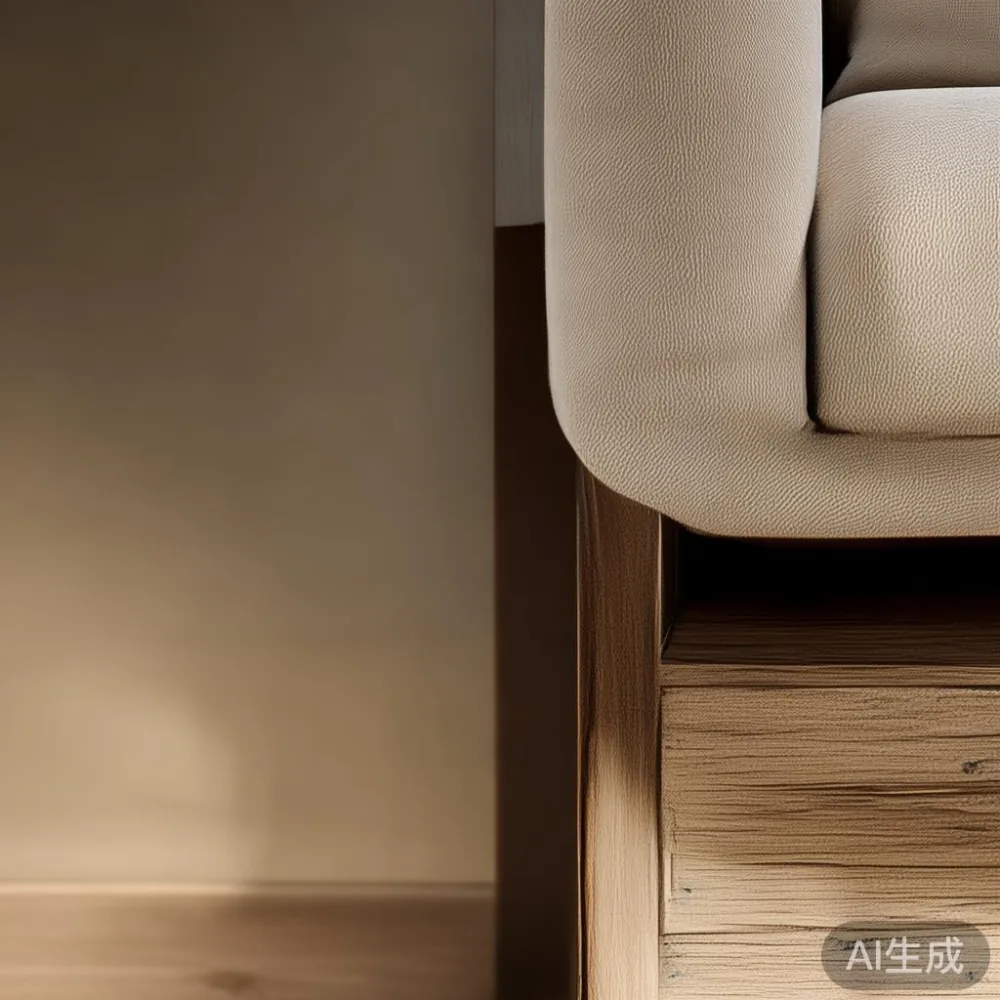
Singapore sits on average between 70% and 85% relative humidity year-round, with afternoon readings regularly pushing past 90% after a thunderstorm. Your solid wood sofa frame, your bed frame, your wardrobe panels, and even the timber edges of a marble table respond to it. This guide explains what moisture actually does to wood, which pieces are most at risk in HDB flats and condos, and how a small weekly routine keeps the wood finish on your furniture looking the way it did on day one.
What does humidity actually do to solid wood?
Solid wood is hygroscopic. That is a technical way of saying it absorbs and releases water vapour to stay in balance with the air around it. Every species has an Equilibrium Moisture Content (EMC) — the moisture percentage it settles at given a stable humidity. For a Singapore HDB living room running between 26°C and 28°C at 75% RH, the EMC for teak sits around 14%. For oak, around 16%. For rubberwood, closer to 13.5%. Each 1% change in moisture content causes a piece of solid timber to move roughly 0.1% to 0.3% across the grain. On a 200 cm dining table, that works out to 0.2 cm to 0.6 cm of seasonal expansion or contraction. That is why a perfectly flat table in October can cup or crown in February.
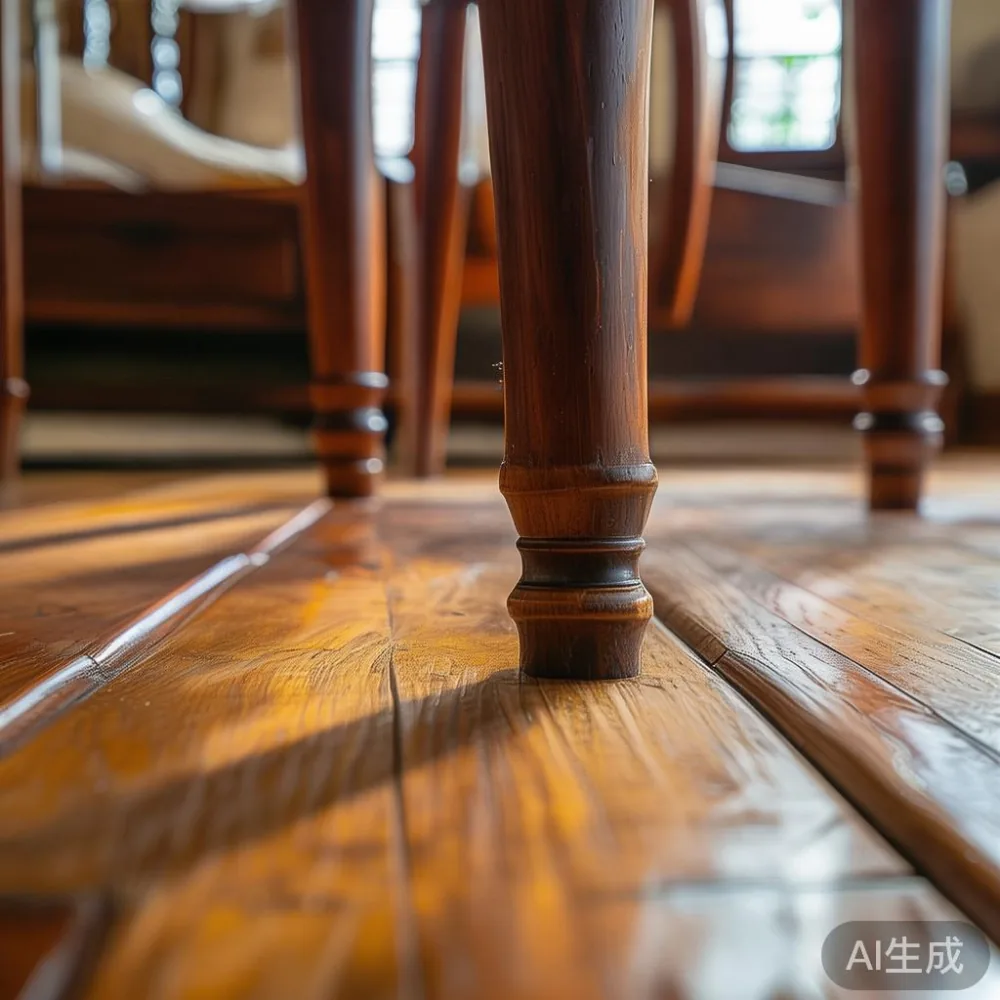
The four movements you will actually see in a Singapore home:
- Cupping — edges curl upward while the centre stays flat. Common on a 4 cm-thick dining tabletop when only the top surface is exposed to dry air-conditioned air and the underside sits in humid room air.
- Crowning — the opposite of cupping, the centre bows upward. Happens when the top surface absorbs moisture faster than the underside.
- Twisting — one corner lifts. Frequent on long, single-slab wardrobes over 180 cm tall if the back is sealed against a humid wall.
- Checking and splitting — small cracks along the grain. Almost always caused by the wood losing moisture too quickly after a dry air-conditioned period, then being left closed up.
The wood finish itself is not immune. A polyurethane or lacquer coating slows vapour movement but does not stop it. A wax-oil finish slows it even less. None of the above are bad on their own — wood has always moved — but uncontrolled movement in a 90% RH environment is what causes cosmetic and structural problems you can see and feel.
Why Singapore homes are a particular case
Three features of Singapore housing turn a manageable problem into a daily one.
1. HDB and condo air-conditioning cycles. The bedroom AC pulls humidity down to 40%–50% while you sleep. When you leave for work and switch it off, the room climbs back to 75%–85% by lunchtime. That 30 to 40 percentage-point swing, every day, is far harsher on solid wood than a stable 70% all week. A solid wood bed frame in a master bedroom sees more moisture cycling in a month than a similar bed frame in a London flat sees in a year.
2. Lift and corridor width. Singapore HDB lifts typically measure 1.1 m wide by 1.4 m deep, with a 2.1 m door height. Corridors run 1.2 m to 1.5 m wide. That limits the size of any pre-assembled piece. A 220 cm dining table or a 200 cm wardrobe usually arrives flat-pack or in two halves. Every joint is therefore a potential weak point when the panels move. This is one reason MIDHILL pre-fits mortise-and-tenon joints and ships wardrobe panels with a 2 mm expansion gap at the back — a small detail that prevents the back panel from buckling when humidity climbs.
3. Concrete walls and poor ventilation in newer BTOs. The boundary wall behind a wardrobe can run 2%–3% higher in RH than the room centre because concrete sweats inwards. Place a solid wood wardrobe flat against that wall and the back face sits in a microclimate closer to 90% while the front sits at 70%. The back panel absorbs more, swells, and pushes the wardrobe slightly out of square.
One last local factor: lift landings and service yards, where delivery crews often leave flat-pack boxes during a rain shower, can see surface moisture climb from 8% to 14% in twenty minutes. Wipe panels with a dry microfibre cloth before assembly.
Which pieces are most at risk, ranked
Not every piece in your home reacts the same way. From my own house calls across Bedok, Toa Payoh, and Bukit Batok over the past year, here is the order of vulnerability I see most weeks.
1. Solid wood dining tables (highest risk). The largest single piece of horizontal timber in most homes, exposed on top, shielded underneath. A 200 cm × 90 cm × 4 cm oak top can move 0.4 cm across its width across the year. Always leave at least 1.5 cm clearance from any wall on every side.
2. Wardrobe side panels and tall doors. Anything over 180 cm tall amplifies movement. A wardrobe door that fit perfectly in March can stick in July and have a 3 mm gap in December. European-style soft-close hinges compensate up to 2 mm; beyond that you need to plane the edge.
3. Bed frames with slatted bases. The slats shrink in dry AC air and can drop out of their holders. A small bead of food-safe silicone in the holder stops the rattle and holds the slat.
4. Solid wood sofa frames. Less movement than tables because frames are smaller in section, but the joinery is where the stress shows. Look for mortise-and-tenon or dovetail joints, not staples.
5. Nightstands and small cabinets. Low risk in absolute terms, but they sit closest to the bedside AC airflow, so they cycle the most.
6. Marble table tops with wooden bases. The stone does not move, but the timber sub-frame does. Use a 2 mm cork or rubber pad between stone and wood to allow independent movement.
How do I care for a dining chairs in humid weather?
Wipe the chair down with a dry microfibre cloth every evening, keep the seat 10 cm away from any air-conditioner vent so the wood does not dry on one side only, and run a dehumidifier set to 55% RH in the dining area for at least eight hours a day during the wet season.
Let me expand on that quotable answer, because a dining chair is the piece I get the most questions about. The seat absorbs sweat, food spills, and the humidity of the room, while the backrest absorbs mainly humidity. That asymmetric loading is why the tenon joints at the front of a chair loosen first. A weekly routine that takes under ten minutes will keep the wood finish on your chairs intact for years.
- Daily (2 minutes). Dry microfibre wipe-down after the last person sits down. Pay attention to the seat edges and the stretchers between the legs.
- Weekly (5 minutes). Check all four tenons by lifting the chair slightly and feeling for play. Any wobble means a joint has moved 1 mm or more.
- Monthly (10 minutes). Apply a thin coat of paste wax or hard wax oil, following the grain. Buff after 15 minutes. One 250 ml tin covers 8 to 10 chairs.
- Quarterly. Tighten any visible bolts to 8 Nm. Do not over-tighten — you can compress the wood fibre and make the loose joint worse.
If a joint goes loose, do not glue it. Glue sets the joint in the wrong position and the next humidity swing will crack the surrounding wood. Instead, knock the tenon out, plane 0.5 mm off, reassemble with a fresh hide-glue or polyurethane bond, and clamp for 24 hours. For a French light luxury dining chair with a carved backrest, take it to a furniture conservator — the carved details are not DIY-friendly.
A weekly routine that actually works
You do not need a full workshop to manage humidity in Southeast Asia. Here is the routine I run in my own home, where the RH sensor in the living room reads between 68% and 82% across the year.
Monday — Air check. A SGD 35 thermo-hygrometer from any DIY shop is the single best purchase you can make. Place it on the same wall as your wardrobe, not next to the window. If the reading is above 75% for more than three consecutive days, run a dehumidifier for six to eight hours.
Wednesday — Wipe-down. Dry microfibre only. No pledge, no silicone spray, no wet wipes. Household cleaners leave a film that traps moisture against the wood finish and dulls the sheen within a month.
Saturday — Wax. Paste wax on a small area, buff off, move on. A 250 ml tin costs around SGD 18 to SGD 28 and lasts four to six months for a four-chair dining set.
Monthly — Joint check. Lift each chair, look at each table leg, open each wardrobe door against the frame. Note anything that has shifted more than 1 mm.
That is 25 minutes a week. Across a year, fewer than 22 hours of effort. Compare that with a SGD 1,200 dining table that needs full refinishing in five years instead of fifteen, and the time math is simple.
What to do when something has already moved
Three situations come up regularly, and each has a fix that does not require replacing the piece.
Cupped tabletop. Light cupping of less than 1 mm over a 200 cm span usually flattens when humidity stabilises. If it persists, place the table in the most-used room (people, cooking, AC) for four weeks. The constant micro-dehumidifying effect of the AC will pull the top flat. For deeper cup, a furniture maker can re-plane the underside to match. Expect to pay SGD 80 to SGD 180 for a 200 cm top.
Sticking drawer. Rub the drawer sides with a white candle or a block of paraffin. The wax fills micro-gaps and lets the drawer slide. Reapply every three months.
Hairline crack on a wardrobe panel. Do not fill with wood filler. The crack is the panel's pressure-release valve. Fill it, and the next movement will appear as a bubble under the wood finish. Instead, leave it for one full humidity cycle (wet to dry). If it closes, leave it. If it stays open after a full cycle, a conservator can fill with a reversible shellac stick.
How to choose pieces that cope with Singapore humidity
Buying well solves 80% of the problem. Five checks before you place an order.
1. Species. Teak, white oak, and walnut are the standard performers for Southeast Asia. Teak has natural oils that resist moisture; white oak is dimensionally stable; walnut holds finish well. Avoid untreated pine and MDF cores for any piece wider than 80 cm.
2. Construction. Look for mortise-and-tenon, dovetail, or finger joints. Staples, brad nails, and dowels alone are red flags. A solid wood sofa should have a hardwood frame (not engineered wood), with the springs on the seat tied eight-way.
3. Finish. A proper wood finish is the first defence. Conversion varnish, marine-grade polyurethane, or hard wax oil all work. Ask the maker what finish is on the piece and how many coats.
4. Expansion gaps. Look at the back of a wardrobe or the underside of a table. A 2 mm gap at the back panel and a 1.5 mm gap around the top of a chest of drawers are signs the maker has accounted for movement. MIDHILL leaves these gaps as standard on every wardrobe and chest shipped from Foshan, because the factory has been building for tropical climates since 2008.
5. Hardware. Soft-close hinges rated for at least 100,000 cycles. Drawer runners in steel, not plastic. A warranty of ten years on structure is a strong indicator the maker expects the piece to last in conditions like Singapore.
Is a dehumidifier worth the SGD 400 to SGD 600 investment?
Yes, for any home with more than SGD 5,000 of solid wood furniture, and here is the math. A typical 12 L/day compressor dehumidifier costs around SGD 0.08 per hour in electricity. Eight hours a day, 200 days when you actively need it, is around SGD 128 a year. A dining table refinishing in Singapore runs SGD 350 to SGD 600; a wardrobe door re-felting is SGD 120 to SGD 220. Run the dehumidifier for three years and you have spent less than a single wardrobe repair. Set the target to 55% RH — low enough to protect the wood finish, high enough that the room does not feel like a cold store.
One note on placement: do not point a dehumidifier at the furniture. The cold outflow creates a localised dry zone on one side of the piece, which causes uneven movement. Point it across the room and let the air circulate.
Quick reference — what to do this week
If you have read the routine and the buying guide but want a single list to act on, here it is.
- Buy a SGD 35 thermo-hygrometer today and place it on a wardrobe wall.
- Check every chair and table leg for wobble. Note anything loose.
- Wipe all wood furniture with a clean dry microfibre cloth.
- Move any wardrobe pressed against an external wall 2 cm out, and put a cork pad behind it.
- If you are buying in the next three months, check the maker's expansion gaps, finish spec, and structural warranty. A ten-year warranty on joinery, lifetime refinishing for a fair service fee, and free shipping over US$350 on international orders are the markers of a maker that takes long-term performance seriously. MIDHILL ships from Foshan to Singapore in 18 to 28 days by sea, with GST and customs handled at the Singapore end.
Solid wood furniture will always respond to humidity in Southeast Asia — that is the material being honest with you. The point is not to stop the movement, it is to control the rate of change and give the wood room to move. A 2 mm gap here, a weekly wipe there, a dehumidifier through the wet season. That is all it takes to keep a dining table, a bed frame, a wardrobe, a nightstand, or a marble table looking the way it looked the day it arrived, even in Tampines, even in Bedok, even in Punggol.