Solid Wood vs Veneer Furniture: A 5-Year Cost Reality Check for Singapore Homes
Three weeks ago, I helped my colleague Priya unload a flat-pack dining table into her fourth-floor walk-up in Tiong Bahru. We wrestled the 142 cm board through a 90 cm corridor turn, and the corner chipped on the second attempt. The piece was veneer over particleboard — a sticker-thin wood finish laminated to compressed sawdust. By the second year of Singapore humidity, the laminate had bubbled along the edges and the legs started wobbling. That same month, I sat on a solid wood sofa in a Tampines HDB show flat and immediately felt the difference in mass, in joinery, in the way the wood finish absorbed sound rather than reflected it. This article is the cost comparison I wish I had shown Priya before she bought her table.
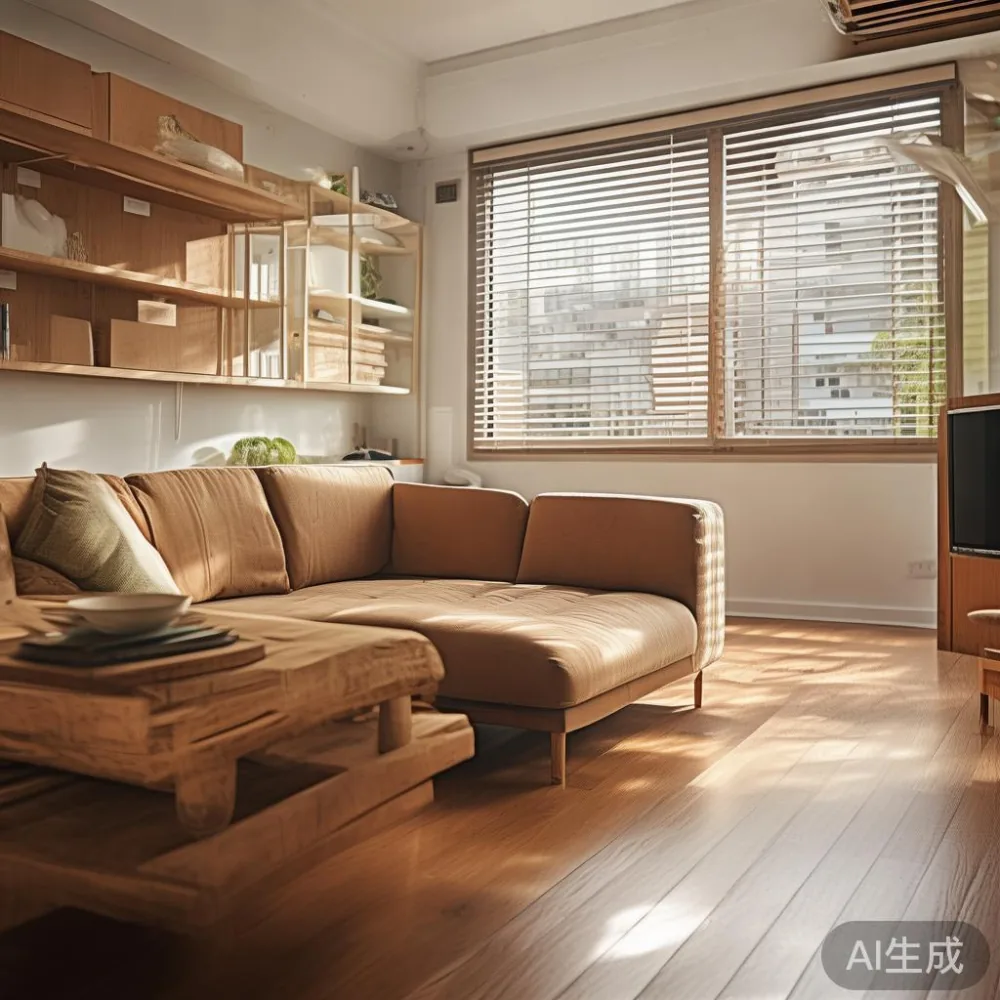
What does "veneer furniture" actually mean for a Singapore buyer?
Veneer furniture uses a thin layer — usually 0.5 mm to 2 mm — of real wood glued onto a substrate of MDF, particleboard, or plywood. The substrate does the structural work; the wood finish on top is purely cosmetic. A typical veneer dining table in Singapore retails from S$280 to S$650 at mass-market chains. A four-seater in light oak veneer (140 cm × 80 cm) sits around S$420, with a basic cushion chair pair at S$180 each. Delivery inside mainland Singapore adds S$40–S$80 depending on lift access. The sticker price feels reasonable. What the sticker does not show is the cost of replacement after Year 3, when the tropical humidity and daily air-conditioning cycling begin to lift the laminate edges.
By contrast, a solid wood dining table in comparable size (140 cm × 80 cm, ash or rubberwood) from a Foshan workshop like MIDHILL runs S$1,450–S$2,100 delivered, with GST (9% from 2024) included. The unit cost is roughly 3.5× higher. The question every Tampines or Punggol homeowner should ask is not "what does it cost today" but "what does it cost across five HDB lease years?"
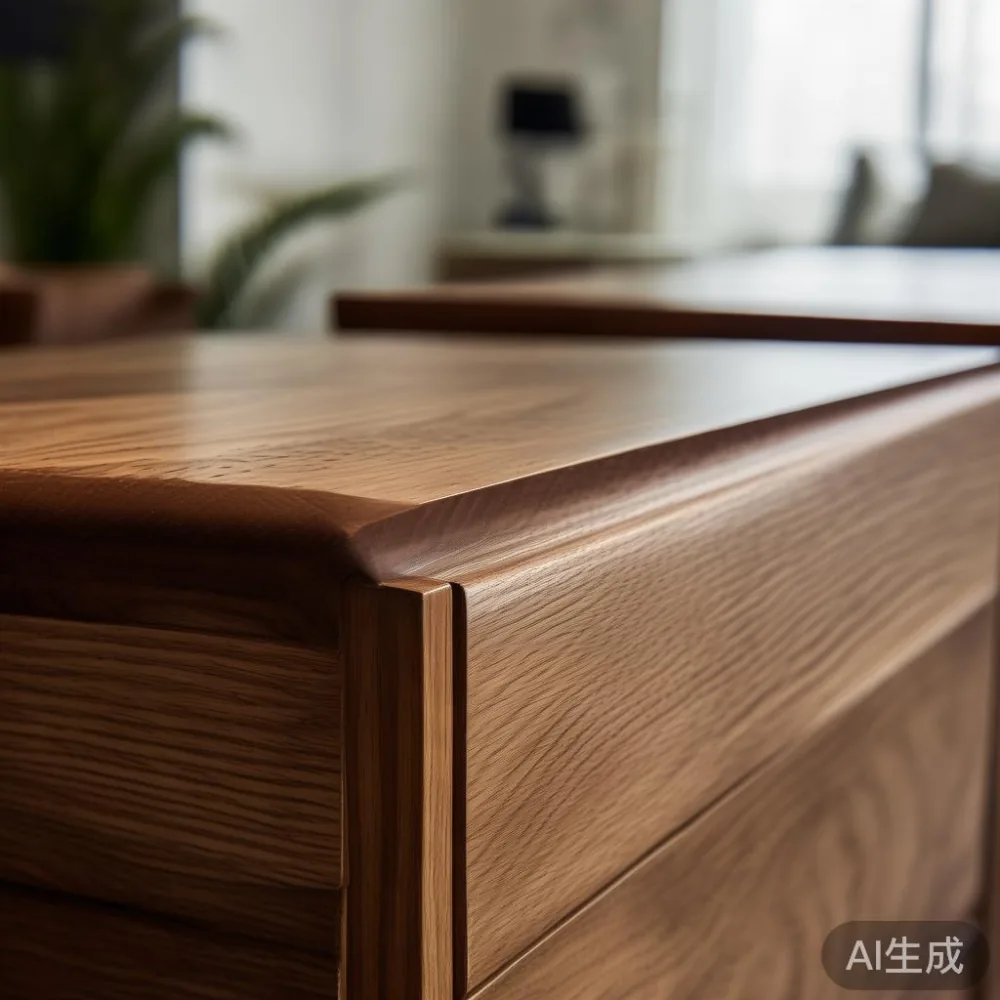
How do the upfront numbers stack up for a typical HDB three-room fit-out?
Let me price a realistic starter set for a 65 sqm Bedok flat: one dining table, four chairs, one bed frame, one 1.8 m wardrobe, one nightstand, and one 180 cm three-seater sofa.
Veneer bundle (mass-market, Singapore retail, January 2026 pricing):
• Dining table 140 cm: S$420
• Four dining chairs: S$180 × 4 = S$720
• Bed frame queen (veneer): S$550
• Wardrobe 1.8 m sliding: S$780
• Nightstand (2 pcs): S$120 × 2 = S$240
• Three-seater sofa (fabric over veneer frame): S$980
• Delivery & assembly: S$160
• Subtotal: S$3,850
• GST (9%): S$346.50
• Grand total landed: S$4,196.50
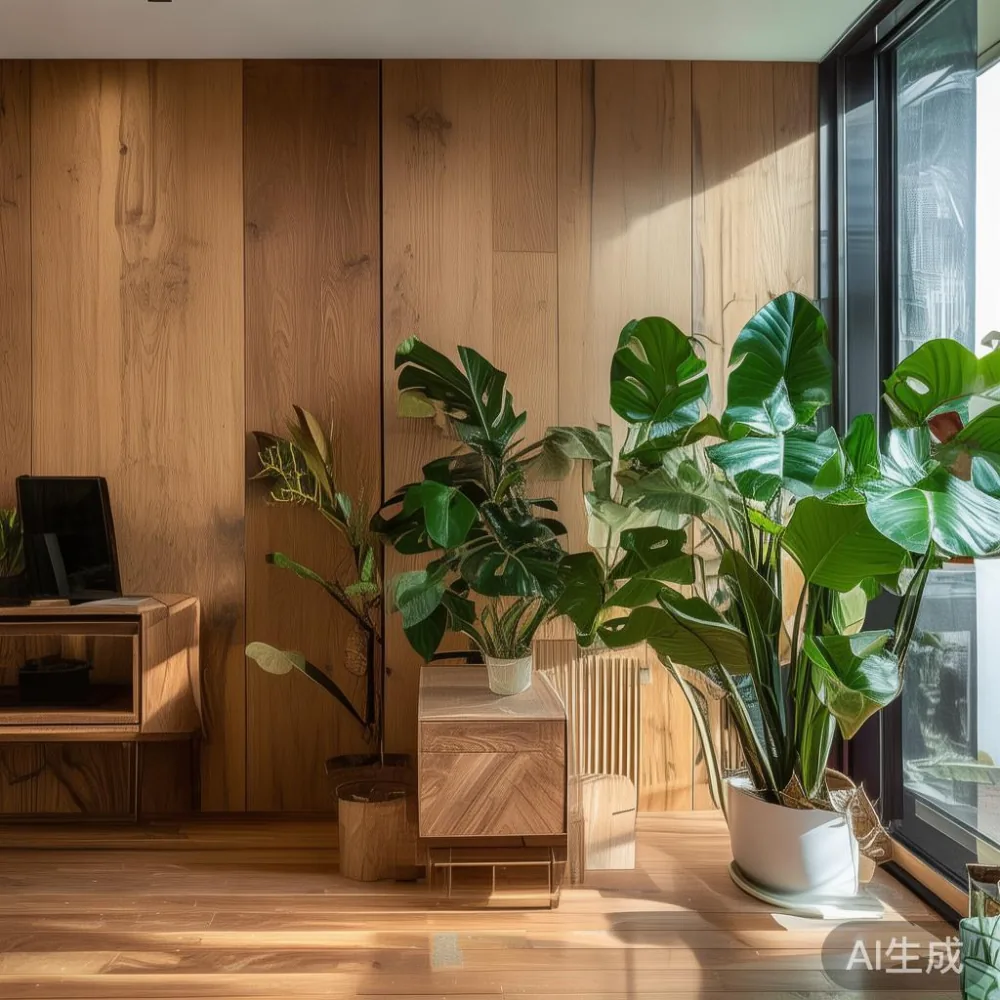
Solid wood bundle (Foshan direct, MIDHILL equivalent, January 2026):
• Solid wood dining table 140 cm ash: S$1,580
• Four dining chairs solid ash: S$260 × 4 = S$1,040
• Bed frame queen solid ash: S$1,480
• Wardrobe 1.8 m solid ash: S$2,250
• Nightstand solid ash (1 pc, second bought separately): S$420
• Three-seater solid wood sofa frame: S$2,650
• Delivery by ship to Singapore port + last-mile: S$480
• Subtotal: S$9,900
• GST (9%): S$891
• Grand total landed: S$10,791
Day-one delta: roughly S$6,594.50. That number is real and I am not going to pretend otherwise. Now follow the money.
How does each option behave across Years 1 to 5?
Year 1: Both look identical in a new home. Veneer furniture shows off its photographed wood finish in the HDB flat, and the solid wood pieces begin the slow curing process — small movements in the grain, surface micro-checks, none of which are defects. No spend on either side beyond the initial outlay.
Year 2: Veneer edges in air-conditioned bedrooms start lifting where condensation gathers. The wood finish begins to peel near the wardrobe's sliding track. A typical repair quote in Singapore is S$120–S$220 per panel, with a 2-week wait. Solid wood shows no structural change. A free refinishing voucher from MIDHILL covers any surface dulling.
Year 3: This is the year Priya's dining table started wobbling. Replacement cost for a new equivalent veneer dining set: S$1,300+ delivered. Solid wood owners typically refinish one or two pieces for S$80–S$150 per item locally, or ship back to the factory for full sanding and re-oiling at low cost.
Year 4: Veneer wardrobes in Punggol flats facing direct afternoon sun through west-facing windows show warping on doors. Replacement of one sliding door panel: S$280+. Solid wood frames show patina, which most owners in Singapore actually value.
Year 5: Veneer bundle is functionally at end-of-life. Most owners I speak with in Tampines and Sengkang have replaced at least the dining set and one bedroom piece. Total cumulative spend on veneer path: roughly S$7,200 (replacement of dining set, wardrobe doors, sofa frame once, plus repairs). Solid wood bundle: refinishing top-up of S$200–S$400 over five years, no replacements. Total cumulative spend: S$11,000–S$11,200.
Five-year delta narrows to roughly S$3,800–S$4,000 — about S$760–S$800 per year for an entire home's worth of case goods and seating.
How do I care for a sectional sofa in humid weather?
Wipe the frame with a dry microfibre cloth every Friday, run the dehumidifier to 55% RH, and rotate the cushions monthly so the foam dries evenly — that single habit extends a solid wood sectional sofa's life by years in Singapore's climate. For veneer sectionals, the same routine applies to the cushions, but you must add a quarterly inspection of every seam where the wood finish meets the substrate, because once the laminate lifts in 85% humidity, no household product will re-bond it permanently.
What about furniture weight and Singapore-specific logistics?
Weight matters more here than in landed housing. A HDB lift door measures roughly 80 cm wide by 200 cm tall, and corridor turns in older blocks like those in Queenstown or Toa Payoh can pinch to 95 cm. A solid wood dining table weighs 38–48 kg depending on species; a veneer equivalent weighs 18–24 kg. Both fit, but the heavier piece sits more stably on uneven HDB screed floors and does not drift when children climb on it. For larger pieces — a 2 m solid wood wardrobe at 95 kg or a marble table top at 60 kg — buyers should confirm with the seller that the lift can accommodate the crated dimensions. MIDHILL's Singapore consolidator uses a 110 cm-wide service trolley specifically for corridors under 1 m, which is common in 1990s-era HDB blocks.
Shipping time from Foshan to Singapore is 7–10 days sea, plus 2–3 days for customs and last-mile. Total transit from order to doorstep is typically 14–18 days, faster than many local warehouses that list 4–6 weeks for out-of-stock items. Free shipping kicks in above US$350 (about S$475), which most solid wood orders clear easily. For a beige ash wood storage bench, the consolidated pallet slot keeps landed cost roughly S$260 below the equivalent retail piece in an IMM or Punggol showroom.
Why does "light luxury" solid wood make sense in a 65 sqm flat?
Light luxury — whether French light luxury with cabriole silhouettes, American light luxury with shaker proportions, or post-modern light luxury with cleaner lines and matte brass pulls — works in compact HDB interiors because the pieces carry visual weight without bulk. A solid wood bed frame in ash with a 12 cm headboard reads as calm and grounded against a 2.7 m HDB ceiling, whereas a veneer bed frame in the same silhouette reads as flat. The wood finish on solid timber catches morning light differently than laminate; the grain reflects in bands rather than in a single mirror sheen. For homeowners choosing one hero piece — usually the dining table or a marble table in the living room — solid wood pays for itself in perceived value within the first year.
Is the warranty difference meaningful?
A 10-year structural warranty on joinery, dowels, and frame integrity covers the failure modes that actually occur in solid wood furniture: cracked tenons, warped load-bearing panels, loose corner blocks. The lifetime refinishing commitment covers the failure modes that owners fear most: scratched tops, sun-bleached patches near windows, water rings from forgotten coasters. Veneer furniture rarely carries more than a 12–24 month warranty, and Singapore consumer law on wear-and-tear disputes tends to favour the retailer. I have watched two friends in Woodlands and Clementi try to claim on bubbled laminate at the 18-month mark; both were offered 30% store credit rather than repair.
What is the realistic five-year verdict for a Singapore homeowner?
If budget is the only constraint and the piece will be replaced when the next HDB upgrade happens, veneer has a defensible role as a 2–3 year stop-gap. If the same home will be lived in for 5+ years — which describes most BTO and resale owners in their late thirties — solid wood wins on cost, on resale value at the point of moving out, and on the daily experience of living with the wood finish. The five-year spread of roughly S$3,800 works out to about S$64 per month for an entire fitted home of dining, bedroom, and living pieces. That monthly number is what I show Priya now when she asks about her next purchase. Her replacement table, due this March, will be solid ash.