Veneer vs Solid Wood Furniture: A 5-Year Cost Comparison for Singapore Homes
Last month I visited a friend's new 4-room Build-to-Order flat in Punggol. She had spent S$1,650 on a glossy dining table that looked like walnut. Eighteen months later, the edges near the corridor-facing window had begun to peel. A 60cm strip of paper-thin laminate had bubbled where the afternoon sun hits between 2pm and 4pm. She showed me the quotation she had kept from a Tampines furniture showroom: the same shape in solid ash was S$2,400. She had chosen the cheaper piece because, in her words, "they all look the same in the first year." That sentence is the reason I sat down to write this piece. Over five years, they rarely look the same, and they almost never cost the same.
Veneer and solid wood are sold side by side in every Singapore furniture mall from Sungei Kadut to the Anchorpoint showrooms, and the price gap can be 30% to 55% on a like-for-like silhouette. For an HDB or condo buyer working against a 99-year lease, a tight renovation timeline, and a lift that limits what you can actually carry up to the 12th floor, the choice matters more than it does in a landed house. This article walks through the real five-year cost picture, using Singapore conditions: 9mm corridor doors, 1.1m to 1.3m lift doors in most HDB blocks, a 9% GST stack on top of every dollar, and a humidity that drifts between 65% and 85% across the year.
What is the actual difference between veneer and solid wood furniture?
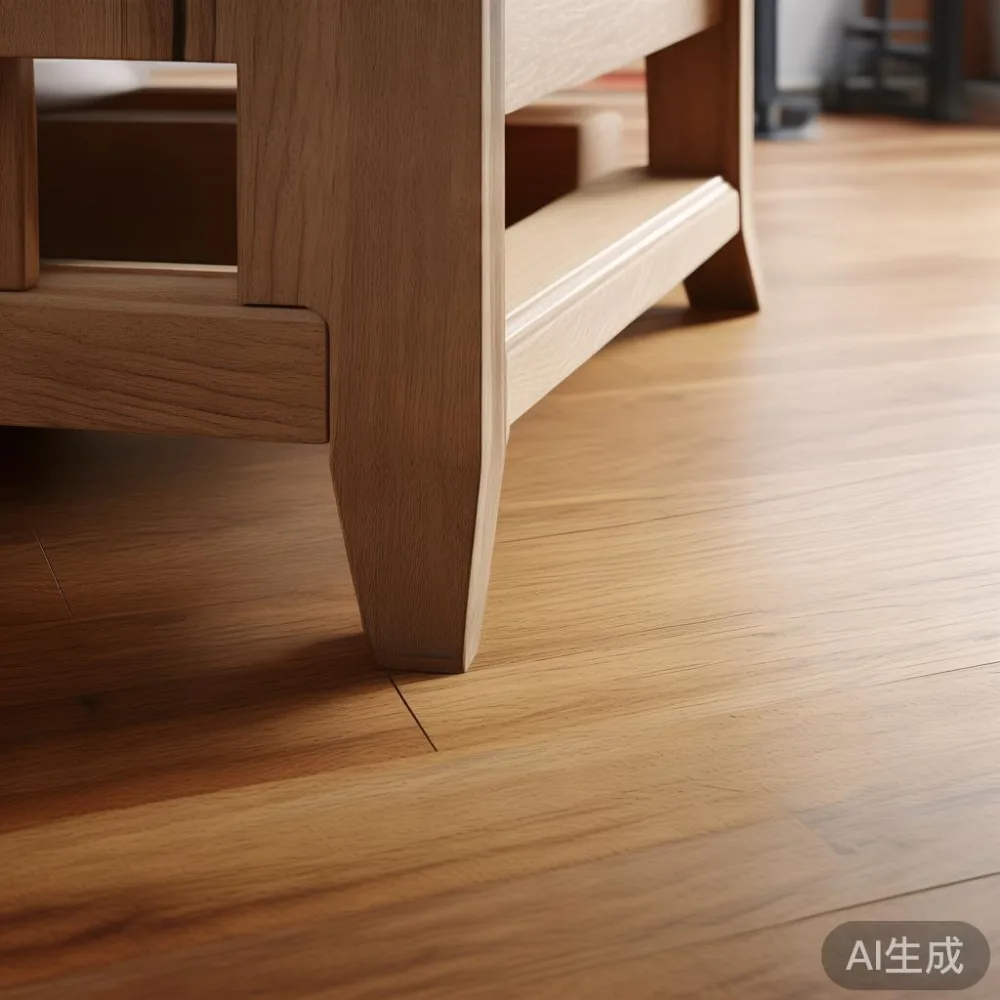
Veneer is a 0.6mm to 2mm slice of real wood glued onto a substrate, usually medium-density fibreboard (MDF), plywood, or particleboard. The wood grain you see is real, but the structural piece below is engineered. Solid wood is cut from the trunk of a tree and used in its full thickness, typically 18mm to 25mm for case goods and 30mm to 40mm for dining table tops. Both can carry a wood finish, but the way that wood finish behaves under daily use is fundamentally different. On veneer, the finish sits on a thin slice that cannot be sanded back more than once or twice. On solid wood, the same finish can be sanded and re-applied multiple times across a decade.
How do I budget realistically over five years for a Singapore home?
Start with the sticker price, then add three Singapore-specific line items most people forget. First, GST at 9%, applied to the full purchase price. Second, delivery fees, which run S$80 to S$180 per trip for landed deliveries and S$120 to S$250 for high-floor HDBs requiring a small lorry and a porter because the service lift cannot take a 2.4m sofa. Third, disposal of the piece you are replacing, which costs S$50 to S$120 per item with a licensed e-waste or bulky item collector. Over five years, a bedroom set bought cheap and replaced once can quietly out-cost a solid set that simply gets refinished.
Take a wardrobe. A 180cm-wide three-door veneer wardrobe from a local flat-pack brand runs about S$900 to S$1,400 landed in your flat. Add 9% GST (S$81 to S$126), delivery (S$120), and old-wardrobe disposal (S$90). Real five-year cost if you keep it: S$1,191 to S$1,736. A solid wood wardrobe in the same footprint from a Foshan-made range runs S$2,200 to S$3,000. With the same GST, delivery, and disposal add-ons, the year-one cost is S$2,683 to S$3,640. The spread on day one is roughly S$1,500. Read on, because that spread narrows.
What are the typical failure points of each material in HDB conditions?
Singapore humidity is the quiet killer. I have inspected pieces in Bedok and Toa Payoh flats where MDF-veneer bedside tables have swollen along the back panel by 4mm to 6mm after two wet seasons, because the panel was placed against an exterior wall without a 20mm airflow gap. The wood finish on the surface looked fine; the substrate underneath had quietly expanded. Particleboard under solid walnut veneer is a particular combination to avoid for nightstands, which sit close to open windows and bathroom doors.
Solid wood moves too, but it moves differently. A 200cm dining table top made from a single slab of ash or oak will cup 1mm to 2mm across the width when the indoor humidity swings from 70% in January to 85% in June. This is normal, and a well-made table is built with slotted brackets that let the top float on the base. The surface can be sanded flat and re-oiled. A veneered top cannot be sanded flat because the 0.6mm layer is already at the limit of what glue can hold under tension.
Common veneer failure points over five years in Singapore homes:
- Edge banding lifting on the front of wardrobes and bedside tables, usually within 24 to 36 months.
- Sun fade on dining tables placed within 1.5m of a west-facing window; visible colour shift in 12 to 18 months.
- Swollen back panels on units pushed against HDB service-yard walls, visible in 18 to 30 months.
- Chipped corners on MDF-core TV consoles, especially in homes with young children.
Common solid wood failure points over the same period are far fewer: minor surface scratches, light cupping on wide tabletops, and occasional small dents. All of these are repairable.
How do I style a Mid-century modern furniture in a small apartment?
Style a Mid-century modern furniture in a small apartment by choosing two or three solid wood anchor pieces in a warm honey or walnut wood finish, keeping the walls in a soft off-white, and limiting visible legs and tapered edges to maintain the open floor feel that compact HDB layouts need. The reason this works is that Mid-century lines rely on visible joinery and honest material, which is the opposite of what veneer imitation pieces deliver, so the styling reward is highest when the substrate is real.
In a 65 sqm two-bedder in Punggol or Sengkang, the strongest Mid-century formula I have seen uses a 160cm solid wood dining table with tapered legs, a low-profile solid wood bed frame on a slatted base, and one statement piece such as a Modern light luxury armchair korea inspired lounge chair in boucle or leather, placed at the window. The whole room then reads as curated rather than crowded, and you do not need a 7m wall to carry the look. Keep the marble table for the dining area or a console; heavy stone belongs at ground level on a stable base, not on a chest of drawers.
Is solid wood actually cheaper when you measure a five-year horizon?
For most high-use pieces, yes, and the maths is straightforward. Run the numbers for a dining table meant to seat four to six people in a typical HDB dining area of about 1.8m by 1.2m.
Veneer or engineered dining table at S$850, plus S$77 GST, plus S$120 delivery, plus S$80 disposal of a unit bought at the same time: year-one cost S$1,127. Expected life under daily family use: 3 to 4 years before the top shows lifting or swelling. Replace once during the five-year window: add another S$1,127 minus disposal, call it S$1,127 again. Five-year total: S$2,254.
Solid wood dining table at S$2,100, plus S$189 GST, plus S$150 delivery, no disposal needed. Year-one cost: S$2,439. If you use it for five years and never refinish, the all-in cost is still S$2,439, which is S$185 more than the veneer path. If you refinish the wood finish once at the three-year mark for S$220, the five-year cost is S$2,659, a S$405 premium for a piece you can keep using for another five to ten years.
Now widen the lens to a full set: one bed frame, one dining table, one wardrobe, and two nightstands. The five-year all-in numbers I have seen from real customer quotes in Tampines and Bedok, comparing flat-pack veneer sets against Chinese factory-direct solid wood sets, land within S$600 to S$1,100 of each other once refinishing and one replacement are factored in. The premium for solid wood is real but smaller than the sticker suggests, and it buys you a piece that survives the move into your next flat.
Which pieces are worth the solid wood premium, and which are fine in veneer?
Not every piece needs to be solid. The Singapore home, with its narrow corridors and lift restrictions, benefits from a mixed approach. Pieces that earn the solid wood premium because they see daily load, moisture, and touch:
- Dining table: solid wood, ideally 28mm to 38mm top, with a hard-wax oil wood finish rather than polyurethane.
- Bed frame: solid wood for the side rails and headboard; plywood or metal slats are fine for the slatted base.
- Wardrobe frames in dry zones: solid wood or high-grade plywood with a real wood veneer; avoid MDF back panels.
Pieces that are perfectly acceptable in well-made veneer or laminate, and where the savings can be redirected:
- Nightstands that sit inside air-conditioned bedrooms with low humidity swings.
- Bookshelves and display cabinets used for lightweight items.
- Bedroom chests of drawers that will not be moved more than once or twice.
Marble table tops, which sit in their own category, are worth considering for console and dining use if the base is solid wood; the combination keeps weight manageable and the look grounded.
What about light luxury styles, and do they change the cost equation?
Light luxury styling, whether French light luxury with its slim brass-tipped legs and soft curves, American light luxury with wider upholstery and warmer wood tones, or post-modern light luxury with its mixed-material play, tends to expose veneer weaknesses faster. These styles use thin profiles, tapered legs, and exposed joinery that read as deliberate design choices on solid wood but read as cost-cutting on veneer. A solid wood sofa frame, for instance, carries the tailored look across five years because the joinery stays tight. A veneered sofa frame in the same silhouette can loosen at the corners within 18 to 24 months.
For Singapore buyers shopping post-pandemic, the aesthetic premium is real. A Foshan-made solid wood bed frame in a light luxury finish, imported directly to a Singapore warehouse, lands around S$1,800 to S$2,600 depending on size and wood species. The same brief from a local reseller with a glossy retail floor can be S$2,800 to S$4,200. The factory-direct path is where the five-year economics tilt clearly toward solid wood, because you skip one layer of margin and apply the saving toward a better wood finish.
What should I check before buying, regardless of material?
Five checks that take 10 minutes in the showroom and save five years of regret:
- Ask for the substrate under any veneer. MDF and particleboard behave differently in Singapore humidity. Plywood core with a wood finish layer is more stable than MDF core.
- Measure the lift door and the corridor turning radius at your block. Most HDB service lifts accept a 2.2m length on the diagonal; anything longer needs a hoist, which adds S$250 to S$450 per item.
- Look at the underside of tables and the inside of wardrobes. If the inside is a different colour or material from the outside, the visible surfaces are wrapped.
- Ask about the joinery. Mortise and tenon, dowel, and slotted breadboard ends are good signs. Staples and small brad nails alone are not.
- Confirm the warranty in writing, including what counts as a structural failure. A 10-year structural warranty is now common from established Foshan makers exporting to Singapore, and lifetime refinishing support is offered by a small number of suppliers. MIDHILL, for example, ships solid wood bedroom and dining sets from Foshan with a 10-year structural warranty and lifetime refinishing support for pieces bought through its Singapore channel, which is unusual at this price tier and worth weighing against the upfront saving of a flat-pack brand.
How long does delivery and returns actually take in Singapore?
From a Foshan factory to a Singapore HDB doorway, realistic timelines run 30 to 45 days by sea for made-to-order pieces, with 7 to 14 days for in-stock items already in a Singapore warehouse. Free shipping above a sensible threshold, often around US$350, is standard among direct-from-factory exporters, and 14-day returns on unused pieces are common. Confirm the return policy covers the wood finish as displayed, since colour variation between showroom samples and the delivered piece is a frequent dispute. Read the clause that describes acceptable colour tolerance, usually expressed as a delta E rating or a hand-swatch comparison.
So which material should a Singapore buyer actually choose?
If the piece is a dining table, bed frame, or wardrobe that will live more than four years in the same flat, solid wood earns its premium through refinishing, lower replacement frequency, and stable behaviour in humidity. If the piece is a nightstand, a console, or a bookshelf that lives in an air-conditioned room and is likely to be replaced when the next renovation comes around, a well-made veneer piece is the rational choice. The five-year cost gap between the two paths is smaller than the day-one sticker suggests, often within S$1,000 across a full bedroom and dining set, and the gap narrows further once refinishing is priced in. For Singapore HDB and condo owners watching every renovation dollar, the smartest move is to spend solid on the two or three pieces that take daily abuse, save on the rest, and pick a supplier whose wood finish and joinery you can inspect on a swatch before you commit.