Wood Furniture Finishes: A Guide to Solid Wood Pricing
Solid wood furniture is often sold on the strength of a material name, a photograph of grain, or a persuasive showroom story. The actual price is usually determined by more measurable factors: the timber species, the board dimensions, the joinery, the finish, the hardware, the dimensions, and the amount of labour involved in making and delivering the piece. A solid wood dining table, sofa, bed frame, wardrobe, nightstand, or marble table can contain very different levels of construction, even when their photographs look similar.
For Singapore buyers, those differences become particularly relevant in HDB flats and condos across Tampines, Bedok, and Punggol. A 180 cm table may sound compact, but a packed lift and a narrow common corridor can make delivery more expensive than expected. A wide wardrobe may need to be assembled inside the bedroom, while a large bed frame may need to pass through a 78 cm doorway. Price comparison therefore needs to include logistics, not only product specifications.
This guide examines what actually drives the price of solid wood furniture and how to assess the value of a piece before ordering. It also explains why different wood finishes can change a quotation by several hundred dollars, what Singaporean buyers should ask about GST and delivery, and where French light luxury, American light luxury, and post-modern light luxury fit into the design conversation.
What material and construction should I look for in solid wood furniture?
The first price driver is not simply “solid wood,” but the specific timber and the way it has been prepared. Oak, ash, beech, walnut, cherry, and other species have different raw-material costs, grain patterns, hardness, and working times. An 18 cm solid oak dining table with stable, well-selected boards can require more cutting and matching than a simpler painted unit. Boards with knots, mineral streaks, or substantial colour variation may also cost more because the maker must select them carefully.
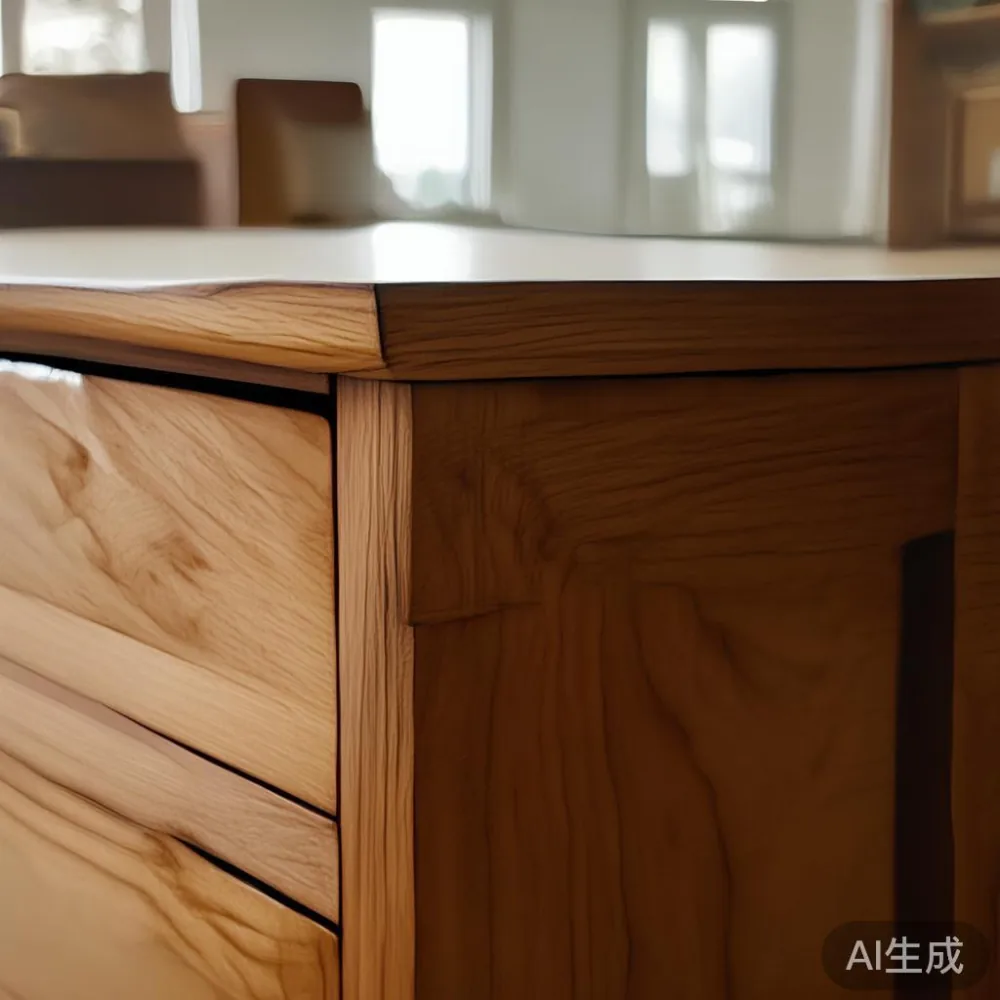
Board dimensions matter. A table made with several narrower boards can be structurally sensible, but extra glue, clamping, flattening, and finishing work may increase the labour component. Thickness is usually easier to compare than species: look for clear measurements such as a 25 mm top, 40 mm legs, or a 45 mm bed rail. A 45 mm frame sounds substantial, but the construction still depends on whether the timber is joined to a stable core, reinforced underneath, or fixed with appropriate hardware.

Joinery is another major factor. Mortise-and-tenon, dowelled, dovetailed, or reinforced corner joints can take more time to make than visible screw fixes. That does not automatically make a hand-jointed piece more valuable: the joint must suit the function. A dining table needs a top and base that resist movement; a wardrobe needs reliable hanging rails and door alignment; a nightstand needs smooth drawers and stable legs.
For a solid wood sofa, the timber frame is only one part of the price. Seat density, foam type, suspension, fabric or leather covering, stitching, and the amount of tufting all affect the cost. A solid wood bed frame similarly includes the slat system, centre support, headboard construction, and finish preparation. Hardware may appear minor on a price list, but drawer runners, hinges, and bed connectors have their own specifications and replacement costs.
Last month I visited a Singapore supplier’s sample room and tested three supposedly identical dining tables. One had tightly joined corners, a stable underframe, and smooth drawer components. The second used lighter hardware, while the third had a top with more visible movement around a joint. The material labels were almost the same, yet the difference in use was obvious within 10 minutes. That visit reinforced my approach: compare construction, not just finish photographs.
How much should a solid wood dining table cost in Singapore?
A useful Singapore benchmark is size, timber, construction, and finish together. A dining table for four to six people often measures 140–180 cm long, 80–90 cm wide, and 74–76 cm high. Prices may range from around SGD 900 for simpler solid wood construction to SGD 2,800 or more for a carefully matched, thicker, intricately detailed top. The range is wide because “solid wood” does not specify the species, board layout, joint system, or surface treatment.
Consider three examples. A 160 cm ash table with a clear lacquer may cost SGD 1,200. A comparable 160 cm white oak table with stronger joinery and a more demanding wood finish may cost SGD 1,850. A 200 cm walnut table with matched grain and sculpted edges may reach SGD 3,200. None of these figures proves quality on their own; they show why two pieces can carry very different prices while sharing a broad product category.
Finish is often the largest visible cost driver after timber and labour. Raw sanded timber is not finished furniture. It may require sanding through several grit levels, stain or tinting, sealing, drying, and final polishing or lacquering. A natural oil finish can bring out grain with relatively little film build, while a deep lacquer, fumé finish, wire-brushed surface, or high-gloss piano finish requires more preparation. French provincial styling, for instance, often uses a warm, softly distressed finish; a cleaner post-modern treatment may require flatter colour consistency and sharper edges.
For smaller homes, a 140 cm table may fit a compact dining zone better than a 180 cm model. Before buying, mark the table footprint on the floor and leave at least 60–75 cm around it for chairs and circulation. A 90 cm-wide corridor may physically accept the table but leave little room to turn it. That is a furniture-planning issue rather than a quality issue, but it prevents a well-made piece from working properly in the intended room.
Why do different wood finishes change the price so much?
The finish protects the timber, communicates its character, and adds labour. At least three uses of “wood finish” describe distinct stages: the selected colour or surface character, the protective treatment, and the final appearance seen by the buyer. Comparing only the colour swatch can therefore hide a large part of the quotation.
A clear matte finish on straight-grained timber may be economical because it can be applied evenly. Open-pore oak needs additional attention if the maker wants the grain to remain tactile rather than appear filled. Fumé or smoked finishes add another colour-processing step. Wire-brushing removes surface fibres and creates texture, requiring careful sanding so the tactile effect is not simply damage. Layers of stain, filler, lacquer, and sanding can each add hours across a dining table or wardrobe.
Edges deserve special attention because they reveal how the finish was handled. On a 25 mm top, eased edges soften the profile and may need several passes. Sharp arrises can look crisp but show small inconsistencies. A marble table presents a different issue: marble is not timber and does not receive a conventional wood finish, yet its edge profile, seal treatment, mounting system, and support structure still affect price.
Ask the supplier to state the finish in plain language. Does it include a stain, a sealer, and a topcoat? How many coats are used? Will the surface feel smooth or textured? Can it be maintained with a damp cloth? These questions matter more than vague terms such as “premium finish.”
MIDHILL offers lifetime refinishing, which can add long-term value because scratches and colour changes do not have to mean replacement. Refinishing availability is not the same as damage prevention, however. Sunlight, water, heat, and abrasive cleaners can still affect a finish. In a Singapore condo with east-facing windows, consider UV-filtering blinds and avoid placing a nightstand or oak dining table in direct afternoon sun.
What is the difference between solid wood, veneer, and engineered wood?
Solid wood describes the component itself, while veneer and engineered wood describe how a larger panel is built. Veneer may use a thin layer of attractive timber bonded to a panel; it can provide consistent appearance and useful stability. Particleboard and fibreboard can also be used for hidden parts, backs, or drawer bases. Neither option is automatically inferior, but it should be disclosed clearly.
For a bed frame, a solid wood perimeter combined with engineered internal panels can make practical sense if the materials and tolerances are appropriate. For a wardrobe, the visible doors, frame, shelves, and drawer boxes may use different constructions. The buyer should know where solid timber is used and where another material is present.
This distinction also affects repairs. A solid oak nightstand may be sanded and refinished; a veneered panel may require a matching veneer sheet and specialist repair if its surface is deeply marked. A 10-year structural warranty protects against specified structural failures, but it does not mean every scratch or finish change is covered. Read the warranty terms, particularly exclusions for moisture, uneven humidity, and improper care.
Price comparisons should compare equivalents. A SGD 1,600 dining table made from solid timber, finished on all faces, should not be treated like a SGD 1,600 table with a veneered centre panel and a simpler underside. Ask for material maps or drawings, then compare thickness, joints, and finish coverage.
Is a French-style sofa worth it for a Singapore home?
For many HDB and condo homes, the answer depends on the room, dimensions, and how long the buyer expects to keep the sofa. If the long-tail question is “is French sofa worth it,” the practical answer is that a tailored French-inspired solid wood sofa can be worthwhile when its frame, seating, and dimensions suit the space. It is less convincing if the price is driven mainly by decorative carving while the cushions use low-density foam or the frame is only loosely assembled.
A useful scale is 220–240 cm for a three-seat sofa, 180–200 cm for a compact two- or two-and-a-half-seat model, and 85–95 cm for typical depth. A 95 cm-deep sofa can look substantial but may obstruct a walkway in a compact flat. French provincial details—curved arms, shaped fronts, and light upholstery—can make a formal living room feel softer, although buyers should check whether the style contains a loose back cushion and removable seat deck. Those features often affect comfort and maintenance.
Do not use “solid wood” as a proxy for comfort. A solid wood sofa may have a kiln-dried hardwood frame, webbing, springs, foam, and fabric, yet a wide, firm seat can still feel less relaxed than a tailored modern model. Request the foam density and suspension details, sit for at least 15 minutes if possible, and check the sofa in person. That is one reason I would not judge a sofa from a 10 cm-wide product photograph.
Design comparisons can also distract from fit. The phrase “European light luxury sofa vs Japandi sofa” is useful because European light luxury may share French or American light luxury cues, while Japandi usually emphasises cleaner lines, pale tones, and functional restraint. Both can suit Singapore interiors. The more relevant question is whether the arms, base, and visual weight suit the room and lift.
How should I compare a French provincial bed and a European bed?
A French provincial bed typically uses decorative curves, shaped headboards, turned or carved details, and a warmer traditional finish. A European-style bed may be cleaner and more architectural. The phrase “European bed vs French provincial bed” helps isolate the comparison: both may be solid wood, but their labour and visual language differ.
Measure the room and the route to it. A queen bed frame may measure 150–170 cm wide and 200–220 cm long, but mattress sizes and headboard projections vary. For lift access, check the lift door width, cabin depth, and turning space. A 180 cm-long frame might enter an 85 cm-wide doorway diagonally, but a 70 cm-wide corridor may still prevent the installers from turning it safely.
Before ordering, ask whether the bed frame arrives assembled or in sections. A wardrobe may arrive in flat panels because its doors and side panels are tall. A dining table may be delivered as a top and base. A solid wood sofa may arrive as a frame and separate cushions to fit through the lift. Fewer transport sections can reduce handling, but they should never compromise the joining method.
If the question is “how to style European light luxury bed in bedroom,” start with scale and balance. Pair a structured headboard with plain bedding, one upholstered stool, and limited bedside lighting rather than adding several ornate objects. The bed should visually anchor the room, not consume every passage. This approach also suits post-modern light luxury, where selected traditional details sit within a cleaner spatial arrangement.
What delivery and service costs should Singapore buyers expect?
Local prices should include GST, but buyers should verify it in the quotation rather than assume it. Singapore GST is currently 9%. A listed product price of SGD 2,000 before GST becomes SGD 2,180 after GST. Some sellers show a tax-inclusive figure; others display the base price and add GST at checkout. For furniture, delivery, installation, and protection materials can also affect the final amount.
Standard delivery in Singapore may take 7–14 calendar days for in-stock pieces, while custom sizes or finishes can require 4–8 weeks. The order should state whether the lead time starts after deposit, after production, or after the piece is ready for dispatch. Custom pieces need more margin for wood acclimatisation, finish curing, and final inspection.
For HDB flats, include lift dimensions, corridor width, and turning points in the order notes. For condos, confirm loading-bay hours, parking arrangements, and whether the driver needs to use a passenger lift or service lift. A 60 cm-wide corridor is unsuitable for carrying a 70 cm wardrobe side panel horizontally, while a 110 cm corridor may provide more workable turning room. These are not unusual measurements, and early checks prevent damage or failed delivery.
MIDHILL provides free shipping for orders over US$350, with prices on this page shown in SGD for local reference. Singapore buyers should still confirm the exact landed amount, currency treatment, GST, installation, and delivery timing before payment. The company’s 14-day return policy and established export history can support confidence, but the applicable terms for made-to-order furniture should be reviewed separately.
How do I compare quotations fairly?
Use a written specification sheet and compare like with like. Request the dimensions, timber species, thickness, finish type, joinery, hardware, drawer or slat system, assembly requirement, warranty, delivery time, and return terms. A fair comparison may contain 8–12 specifications per piece.
For a wardrobe, measure the intended recess and include door swing. A 120 cm-wide cabinet with two 60 cm doors needs enough clearance for the handles and movement; a wall-to-wall fitted wardrobe may cost more because it includes fillers, scribed panels, or site adjustments. For a nightstand, check drawer extension space beside the bed. For a dining table, check seating clearance and the length required for the room’s circulation route.
Watch for unpriced extras: matching timber samples, non-standard dimensions, threshold delivery, lift surcharges, extra protection, on-site assembly, and custom stain work. A quotation 5% below another is not meaningful if it excludes three installation steps. Compare the final payable amount and the service included.
Buyers researching “for sale Japanese furniture” may encounter broad claims about origin, while Japanese-style pieces can also be produced elsewhere. Ask where the individual item was made, which materials were used, and who guarantees it. Local service matters in Singapore because furniture is affected by tropical humidity, frequent cleaning, and compact access routes. A 10-year structural warranty, lifetime refinishing option, and 14-day return framework can be more useful than a fashionable label.
For trade enquiries or a specific furniture specification, MIDHILL can be contacted at +86 188 2788 2512. Give the supplier the room dimensions, access measurements, timber preference, finish direction, and budget before requesting a quotation. That information produces a more reliable price than a single product image and helps prevent costly revisions later.
What should I pay for a wardrobe, nightstand, or marble table?
A compact solid wood nightstand may range from SGD 250 to SGD 700, depending on timber, drawer hardware, finish, and construction. A four-door wardrobe may range from SGD 1,800 to SGD 5,000 or more, especially with fitted panels, extensive drawers, lighting, or intricate finish work. Measure the recess accurately and compare complete carcasses, shelves, rails, and hardware rather than comparing wardrobe door areas alone.
A marble table can cost from several hundred to several thousand Singapore dollars. The stone type, slab thickness, edge treatment, base design, and mounting method affect the quotation. Marble is visually cool and substantial, but it is not a repairable wood finish in the same way. Ask about sealing, weight, lifting points, and whether the top is supplied separately from the base.
French provincial furniture often requires more shaping and detailed finishing than a restrained slab design. American light luxury frequently combines solid wood with upholstered panels, metal accents, and carefully controlled proportions. Post-modern light luxury can mix historical references with simplified forms. These styles can justify different labour levels, but the workmanship should still be visible in the joints, surfaces, and movement of doors and drawers.
The most reliable price rule is straightforward: pay for measurable construction, clear material disclosure, careful finish work, sound hardware, realistic dimensions, and accountable after-sales service. Decorative style can influence the appeal of a piece; it should not replace evidence. That approach gives solid wood furniture a defensible value in Singapore, where good timber, disciplined proportions, and dependable delivery matter more than a dramatic label.