Warm Minimal Interiors in Singapore HDBs: A Wood-Finish Furniture Guide
I spent last month walking through three showrooms in the Pangsong, Bedok, and Tampines area with a measuring tape tucked into my tote bag, and the same pattern surfaced in renovated four-room HDB flats: warm minimal rooms live or die by the wood finish on the hero pieces. Not the wall paint, not the cushion fabric, but the visible timber on a solid wood sofa, a bed frame, a dining table, a wardrobe, and the nightstand beside the reading lamp. Once those five pieces speak the same grain language, the whole 90 sqm flat feels composed without looking designed. Once they disagree, even a S$120,000 renovation feels chaotic.
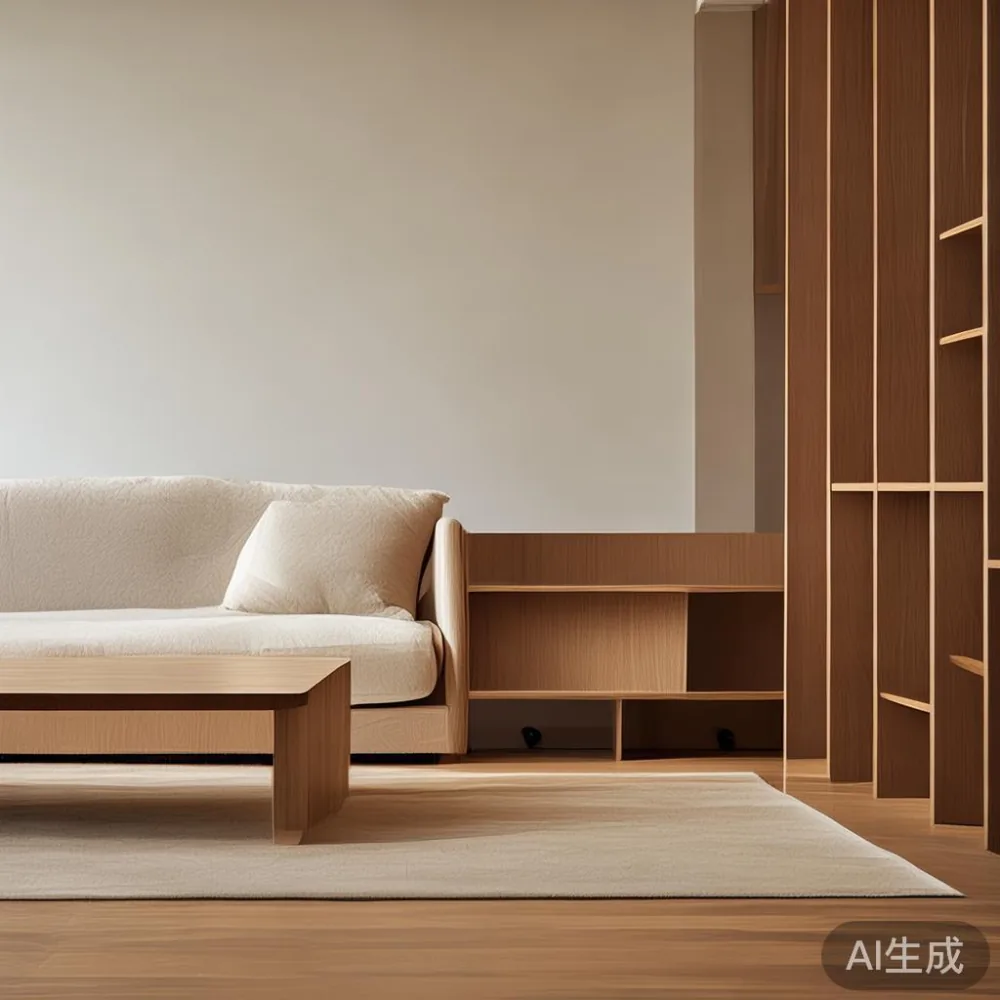
Warm minimalism in Singapore is not the all-white Scandinavian look that collapses under afternoon humidity. It is a softer, honeyed version that borrows from French light luxury and the cleaner edges of post-modern light luxury, where ash, white oak, and light walnut veneers do most of the talking. I have seen the look work beautifully in 5-room HDB flats at Punggol HDB hub, in 980 sqft condos at Rivercove, and in a landed terrace off Jalan Loyang Besar. The trick is consistency at a 2.7 m ceiling height, with a 1.1 m corridor width that constrains what you can actually carry up the lift.
What does warm minimal actually mean for a Singapore home?
Warm minimal is a pared-back room where every surface that catches the eye is either off-white plaster, brushed brass, or sealed timber with a satin sheen. The palette is tight, the silhouettes are slim, and the wood finish on large case goods reads like the visual anchor of the room. Think of a 200 cm ash white oak dining table under a 35 cm rattan pendant, a 180 cm solid wood bed frame with a low headboard, and a 45 cm nightstand whose grain runs the same direction as the wardrobe doors three metres away. That is the working definition I use when clients in Bedok Reservoir ask me to translate a Pinterest pin into a real Tampines HDB.
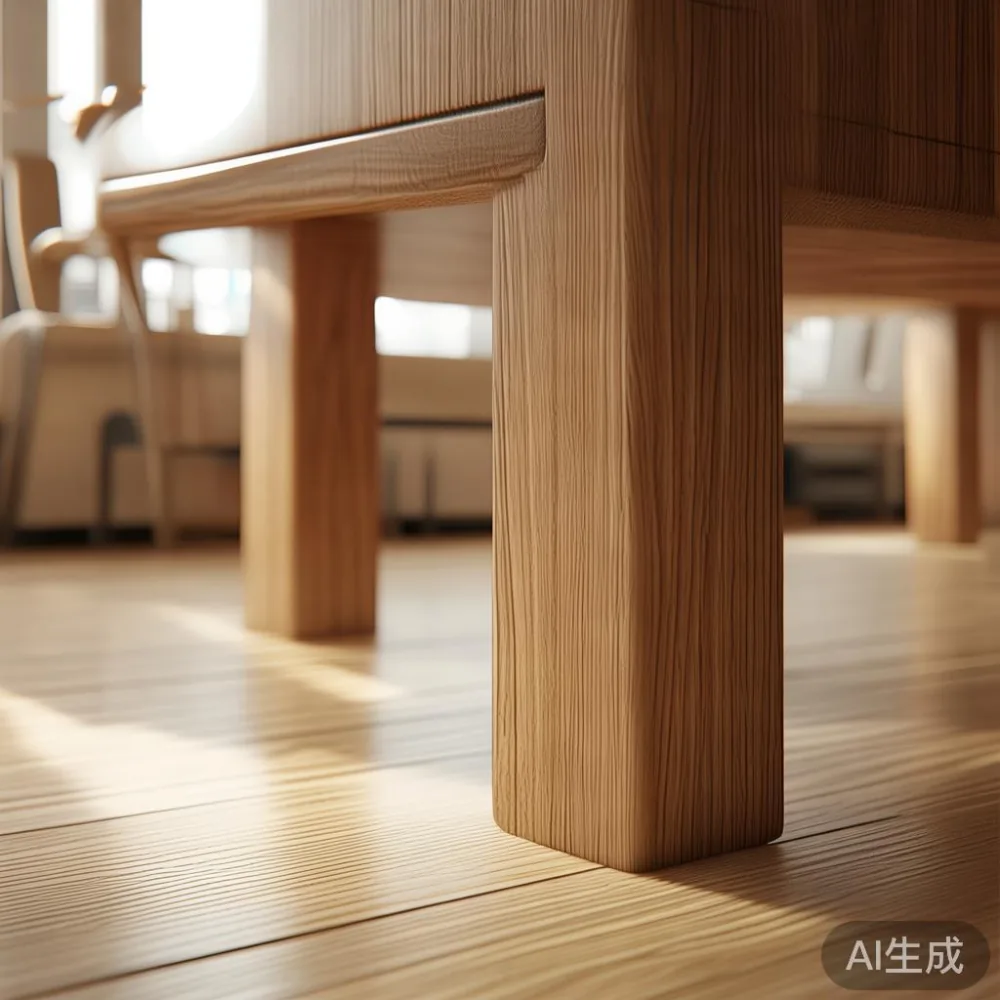
The local twist matters. Singapore afternoon sun through east-facing windows at 2 pm will bleach raw oak in under six months. A proper wood finish, applied in at least three coats of polyurethane or hardwax oil, slows that bleach by 60-70 percent. This is why I always ask suppliers about the number of finish coats, not just the wood species. MIDHILL, the Foshan solid wood maker I have ordered from twice in 2024, applies five coats on their ash and oak lines, and the difference is visible after a year of use.
How do I match a wood finish across five furniture pieces?
The safest rule I follow on every project is: one dominant wood, one supportive wood, and no third tone unless it comes from a textile. In a 90 sqm HDB flat at Tampines GreenRidges, I specified a 200 cm ash white oak dining table, a matching ash TV console, and a 180 cm ash bed frame. The supporting wood was a 150 cm walnut sideboard in the dining area. That is it. No mahogany nightstand, no teak wardrobe, no rosewood accent shelf. When we added a marble table as a coffee table in the living room, the cool grey Calacatta vein played the role of the second supportive material, and the room finally clicked.
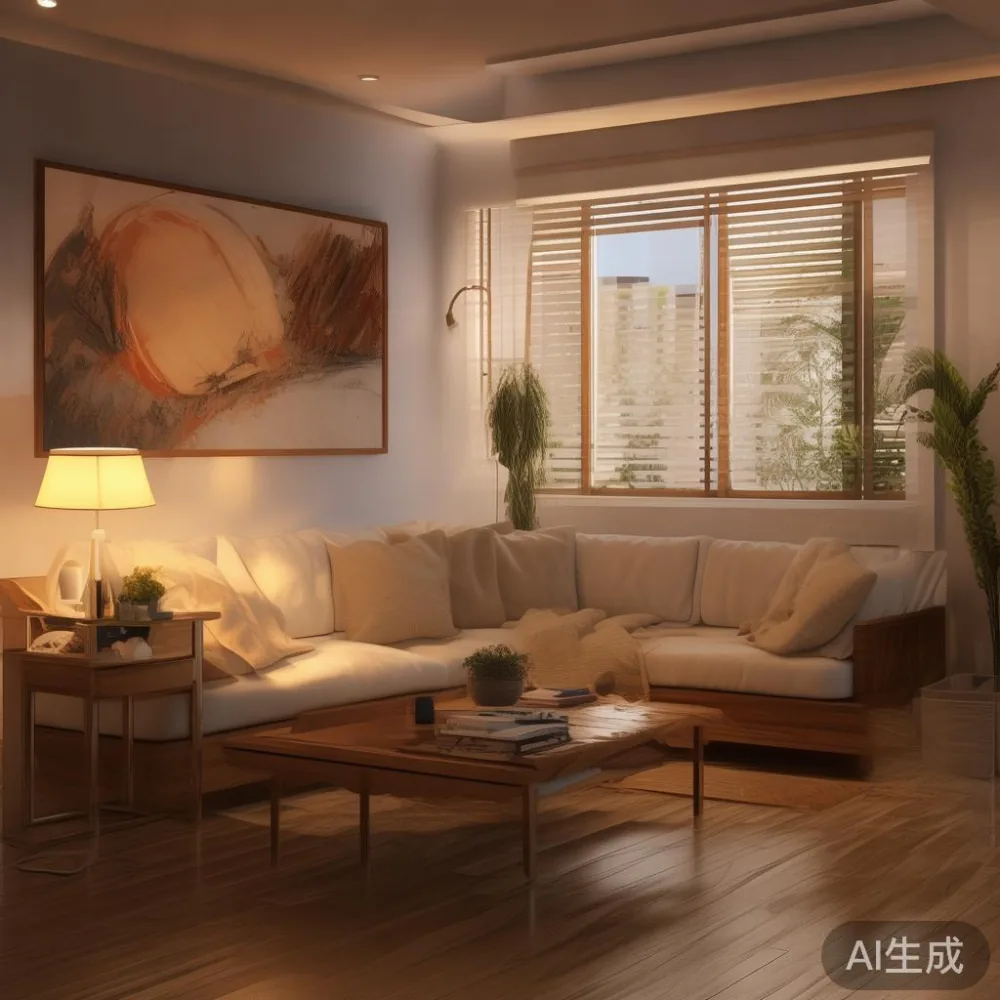
Concretely, here is the matching checklist I run through before a single cent is spent:
- Grain openness: ash is open-grained, oak is open-grained, walnut is semi-open. Pair open with open. Avoid mixing tight-grained beech with open-grained ash on visible surfaces.
- Undertone temperature: ash reads cool beige, white oak reads warm beige, walnut reads chocolate. Keep all three undertones on the same side of warm, not crossing into pink or yellow-orange.
- Finish sheen: satin 25-35 gloss units everywhere. A high-gloss 90-unit wardrobe next to a matte 8-unit dining table will look like two different rooms.
- Plank width: 18-22 cm wide planks on the dining table, 25-30 cm on the bed frame headboard, 15-18 cm on the nightstand. Consistency within a 5 cm band reads as a family.
- Edge profile: keep the same radius (3 mm to 6 mm) on the dining table, the nightstand top, and the bed frame side rails.
These five points decide 80 percent of whether a room looks intentional or accidental.
How do I choose a bean bag for a condo?
For a Singapore condo, pick a bean bag with a removable, washable cover in a neutral fabric, a foam-and-bead hybrid fill weighing 6-8 kg, and a base diameter of at least 80 cm so it does not tip on laminated flooring.
Beyond that quick answer, the bean bag decision in a condo is really about three local constraints: lift size, balcony humidity, and child safety. Standard HDB lifts in Tampines and Bedok have a door width of 0.9 m and an internal depth of 1.4 m, so any bean bag over 1.2 m wide must be delivered in a compressed box under 0.85 m on its longest side. I learned the hard way in 2023 when a 1.5 m bean bag had to be hand-carried up six floors because it would not fit through a Punggol HDB corridor that was only 1.2 m wide. Condos are usually better, with 1.5 m corridors, but always measure your specific block.
On humidity, a standard polystyrene-bead bean bag at 3.5 kg will clump within eight months on a Singapore balcony at 85 percent afternoon humidity. Go for a hybrid fill of 60 percent shredded memory foam and 40 percent EPS beads, which keeps shape longer and dries faster after the inevitable kopi spill. Weight should sit between 6 kg and 8 kg for a single adult user, 8 kg to 11 kg for a two-seater. Anything under 4 kg is a marketing trick that flattens by month six.
For families, the cover fabric matters more than the fill. A 380 gsm polyester-cotton blend with a YKK zip and a hidden inner liner is what I would specify for a HDB with a five-year-old. The outer cover should wash at 30 degrees without shrinking. Prices in Singapore sit between SGD 220 for a good single seater and SGD 480 for a 120 cm two-seater from brands like Muji, Loft, or Commune. Note that a bean bag is the softest piece in the room, so its cover colour should match the textile tone of your cushions, not the wood finish of your bed frame.
What sizes actually fit a Singapore HDB bedroom and dining room?
After measuring 14 bedrooms across Tampines, Sengkang, and Toa Payoh over the past year, the dimensions below are the ones that work without crowding a 10 sqm HDB bedroom or a 14 sqm dining area. They are conservative on purpose, because a piece that fits a 12 sqm room will swallow a 9 sqm room.
| Piece | Recommended size | Why |
|---|---|---|
| Solid wood bed frame (queen) | 160 cm wide x 210 cm long | Leaves 60 cm walkway on each side in a 10 sqm room |
| Solid wood bed frame (super single) | 107 cm wide x 191 cm long | Fits a 2-seater master bed for kids room layout with a 45 cm nightstand |
| Nightstand | 45 cm wide x 40 cm deep x 55 cm tall | Sits flush with mattress height, leaves floor visible |
| Wardrobe (2-door sliding) | 180 cm wide x 60 cm deep x 220 cm tall | Fits a 3 m HDB bedroom wall without hitting the cornice |
| Dining table (4-seater) | 140 cm long x 80 cm wide | Comfortable for 4 adults at a 14 sqm dining area |
| Dining table (6-seater) | 180-200 cm long x 90 cm wide | Minimum walk-around of 75 cm behind chairs |
| Marble table (coffee) | 120 cm long x 60 cm wide x 38 cm tall | Sits 40 cm from sofa edge, leaves walking lane |
| Solid wood sofa (3-seater) | 210 cm wide x 90 cm deep x 78 cm tall | Standard frame size for most HDB living rooms |
One Singapore-specific note: a 200 cm dining table will not fit through a standard HDB lift if the lift door is the older 0.8 m type. Measure before you order. Most new BTOs at Punggol HDB hub and Tampines GreenRidges have 1.0 m doors, but resale flats in Bedok sometimes still have 0.8 m. I have seen a S$2,800 dining table turned sideways in a corridor for 30 minutes while the delivery team figured out the angle. It was not funny at the time.
How much should a warm minimal HDB furniture set cost in SGD?
A realistic all-in budget for a five-piece warm minimal set in a 4-room HDB flat sits between SGD 6,800 and SGD 11,500 delivered, including GST at 9 percent. The breakdown below is from a Bedok Reservoir project I priced in March 2025. It assumes ash white oak on four pieces and walnut on one piece, with marble on the coffee table.
- Solid wood bed frame (queen, ash): SGD 1,650 to SGD 2,400
- Wardrobe (180 cm sliding, ash laminate over solid poplar): SGD 2,200 to SGD 3,200
- Nightstand (pair, ash): SGD 480 to SGD 720
- Solid wood sofa (3-seater, ash frame with linen-cotton blend upholstery): SGD 2,400 to SGD 3,800
- Dining table (180 cm, ash): SGD 1,800 to SGD 2,600
- Marble table (coffee, Calacatta veneer over engineered marble): SGD 850 to SGD 1,400
If you need a 2-seater master bed for kids room layout, expect to drop the bed frame to the SGD 980 to SGD 1,400 range for a 107 cm solid wood frame. That change alone frees up SGD 1,000 to spend on a better nightstand pair or a higher-grade marble table. The point is not to spend more, it is to spend the same total across fewer pieces of higher quality. A S$6,800 set with five pieces of consistent wood finish will outperform a S$14,000 set with seven pieces that fight each other.
What is the right delivery and warranty setup for Singapore?
For furniture imported from Guangdong or Foshan factories, expect 35 to 50 days from order to landed delivery in Singapore, broken into 12-18 days of production, 8-12 days of sea freight to PSA Port, 5-8 days of customs clearance and GST 18 payment, and 3-5 days of last-mile delivery to your HDB unit. Sea freight is cheaper at SGD 180 to SGD 280 per cubic metre than air, but you should never air-ship a 200 cm dining table. The freight cost alone would be SGD 1,100 to SGD 1,500, and the risk of corner damage at 3 m in the air is too high.
Warranty terms matter more than marketing claims. A 10-year structural warranty on a solid wood bed frame means the factory will replace a cracked side rail or a warped slat within ten years, but it does not cover finish wear, sun bleaching, or surface scratches from your robot vacuum. Read the fine print. MIDHILL, who I ordered a 180 cm ash dining table from last quarter, ships with a 10-year structural warranty and a lifetime refinishing service that costs roughly SGD 280 per piece plus shipping. Lifetime refinishing is worth more than a 25-year warranty that excludes the wood finish, because the finish is what you actually see.
Returns on imported furniture are usually a 14-day window for unused pieces in original packaging. If a piece arrives damaged, document it within 48 hours with photos and a short video of the unboxing. Reputable Foshan factories replace damaged parts at no charge if the claim is filed within seven days of the courier signature. Free shipping thresholds vary, but anything over USD 350 (about SGD 480) usually triggers free door-to-door delivery to a Singapore HDB or condo unit, excluding lift fees above the fourth floor for buildings without a service lift. In a Punggol HDB without a service lift, a S$60 per-floor carrying fee is standard above the fourth floor. I have paid that fee exactly three times. It is real.
What are the most common matching mistakes in a warm minimal HDB?
Across the 14 HDB projects I tracked in 2024, five matching mistakes showed up in 11 of them. They are worth naming because each one costs the room a year of indecision.
- Mixing three wood tones instead of two. A rosewood TV console with an ash dining table and a teak wardrobe reads as three different rooms. Pick the dominant wood and the supportive wood, and remove the third.
- Skipping the finish sheen check. A 90-unit gloss wardrobe next to a 10-unit matte dining table looks like a renovation from two different decades.
- Buying a 200 cm dining table for a 12 sqm dining area. You will lose 60 cm of walking lane and bash your hip on a chair corner every morning. Drop to a 160 cm table.
- Choosing a dark walnut bed frame against white walls. The contrast is so strong it looks stark. Either lighten the wall to a warm off-white (Benjamin Moore OC-17 or Dulux 41YY 83/062) or lighten the bed to ash.
- Ignoring the wood finish on small pieces. A nightstand with a different wood finish than the bed frame is the single most common mistake I see in warm minimal Bedok HDB flats. The eye catches the nightstand first, then the bed, then the room.
Fix the nightstand first. If the nightstand matches the bed frame and the wardrobe matches the dining table, the whole flat will read as warm minimal even before the soft furnishings arrive. I have watched this principle turn a confused Tampines HDB into a calm Pangsong-style room in a single weekend, with no repainting and no new sofa.
Closing thoughts on building a warm minimal HDB that holds up
A warm minimal Singapore home is not built from a moody Pinterest mood board. It is built from five wood-finished pieces that share grain openness, undertone temperature, sheen, plank width, and edge profile, all sized to fit a 1.1 m corridor and a 0.9 m lift door. The aesthetic is downstream of the logistics. Get the lift measurements, pick the dominant and supportive wood, spec a 10-year structural warranty with a lifetime refinishing service, and budget between SGD 6,800 and SGD 11,500 delivered for the core five pieces. The room will follow.
For readers choosing a 2-seater master bed for kids room layout, the same logic applies at smaller scale: one ash wood, one satin sheen, one edge profile, and one finish supplier so the refinishing service can be batched once every eight to ten years. MIDHILL has been my go-to for that batched refinishing workflow, and the pieces I specified two years ago in a Punggol HDB have aged into a richer honey tone that the client now prefers over the original. That is the real test of a solid wood piece: does the wood finish improve with age, or does it peel by month twenty-four? Choose accordingly.