Cost Drivers of Solid Wood Furniture in Singapore Homes Unveiled
I still remember the afternoon I spent at a Tampines HDB flat, watching a delivery crew wrestle a 2.4-metre ash dining table through a 1.1-metre corridor. They had to stand it almost vertically, scrape the plaster on two walls, and promise the owner a touch-up job. The table itself cost S$2,180. The owner told me, point blank: I thought I was paying for wood. I was actually paying for wood that could survive my lift. That sentence has shaped how I think about every price tag on solid wood furniture since, and it is the lens I want to use for this guide.
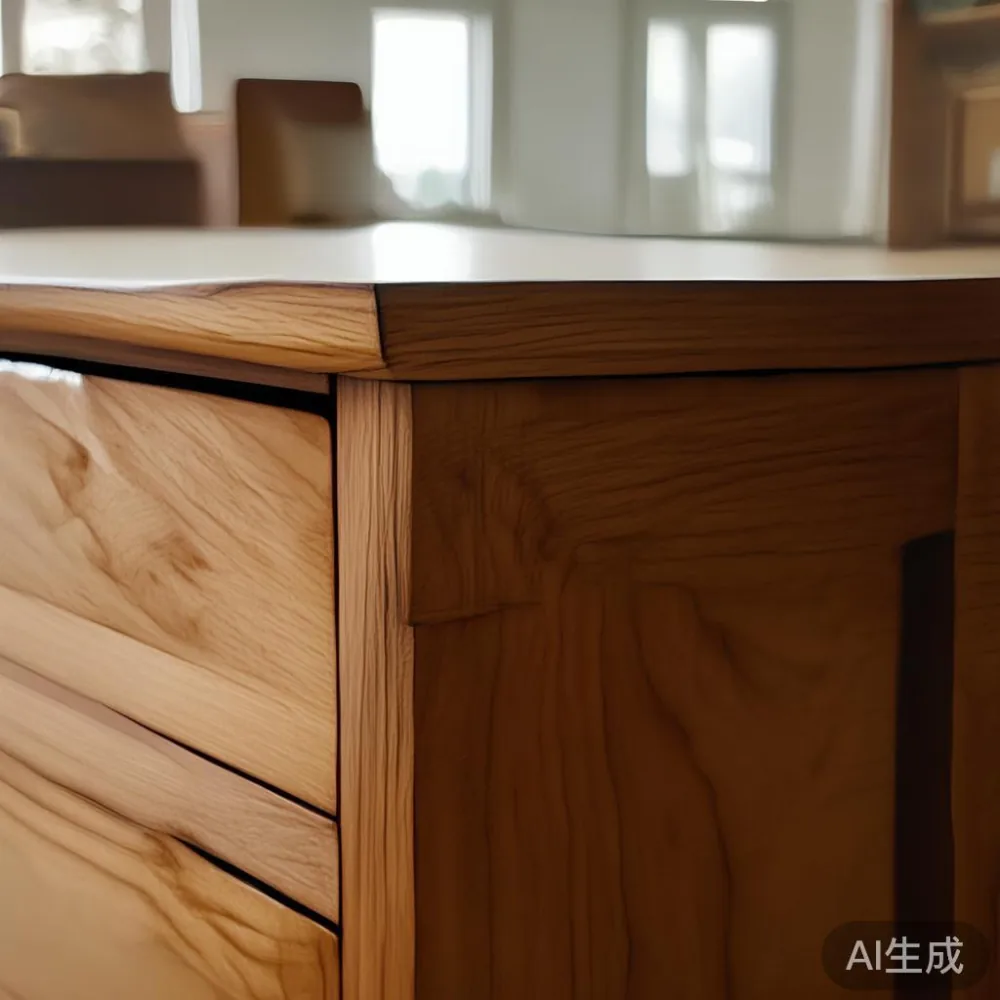
Why does the same dining table cost S$1,400 at one shop and S$4,200 at another?
Because the sticker reflects seven different decisions, and most of them are invisible at first glance. Species, thickness, glue line, joinery, wood finish, hardware, and logistics each add or subtract hundreds of dollars. When I compare two apparently identical 1.6-metre solid wood dining tables in a Bedok showroom, the cheaper one usually loses on three of those seven. The more expensive one is rarely charging for a logo; it is charging for a kiln-dried top, mortise-and-tenon legs, and a wood finish that survives three HDB moves.
1. Wood species and how much of it is actually solid
Rubberwood, ash, oak, walnut, and teak sit on different rungs of the price ladder, but the gap between them is smaller than most buyers assume. A 1.8-metre solid wood dining table in rubberwood runs S$1,400 to S$2,000 in Singapore retail; the same size in white oak typically lands between S$2,800 and S$4,200. Walnut pushes higher, S$4,800 to S$6,500 for a comparable top. Teak is a separate conversation entirely, with old-growth boards commanding five-figure sums per slab.
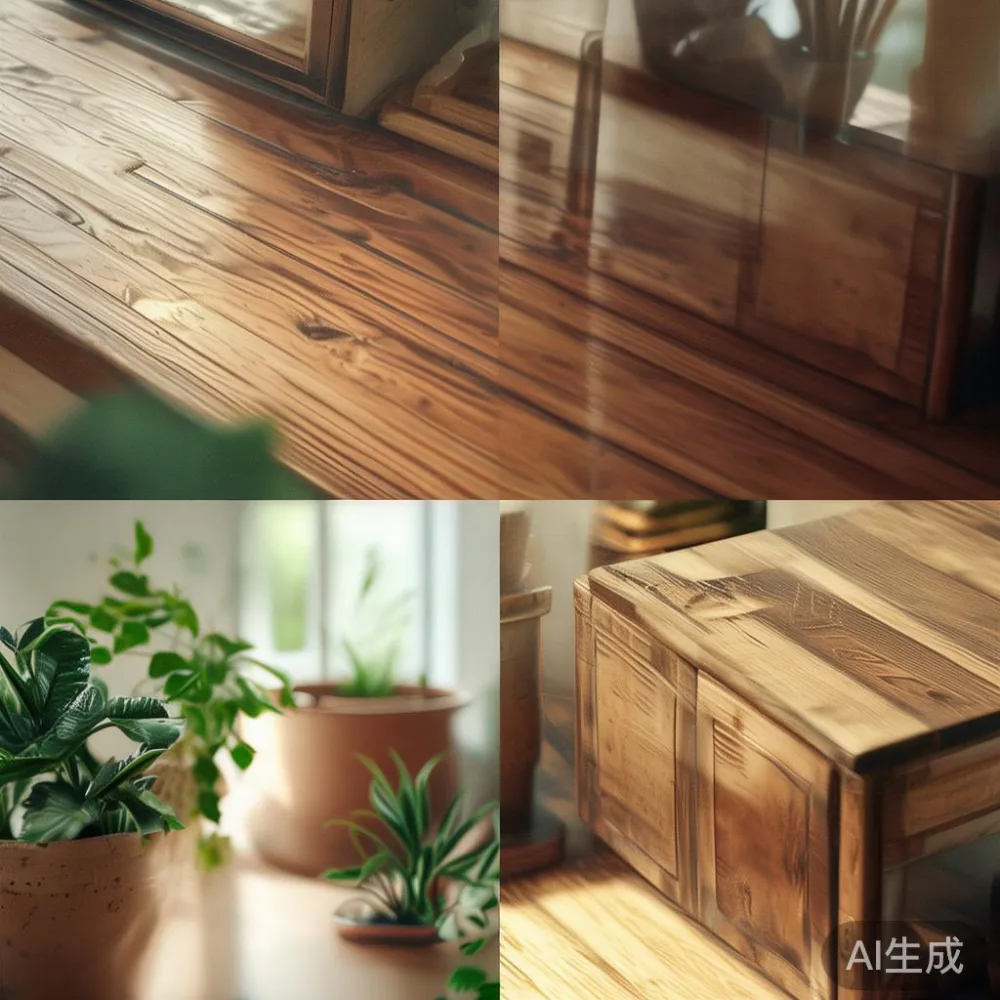
Species is only half the story. The other half is whether the panels are solid throughout, veneered over a plywood core, or built as a thin solid face over particleboard. True solid wood furniture uses boards that are 18 mm to 40 mm thick on every visible face, with continuous grain on the edges. Veneered pieces can be 60 to 70 percent cheaper, and they move, crack, and peel in ways solid boards do not. When a salesperson says wood top, ask whether the underside is the same species and thickness. That single question sorts 80 percent of misleading listings I have seen in Punggol and Sengkang showrooms.
2. Kiln drying, moisture content, and Singapore's 80 percent humidity
Singapore sits at roughly 80 percent relative humidity for nine months a year, with indoor air often hovering between 28°C and 31°C. Solid wood is hygroscopic; it absorbs and releases moisture until it reaches equilibrium with its environment. Boards that were kiln-dried to 8 to 10 percent moisture content in a European factory will swell by 3 to 5 percent in their first six months here. Furniture makers who export to 15 or more countries, including tropical markets like ours, adjust their drying schedule accordingly. Those who only ship to temperate climates often do not.

That is why a S$3,200 bed frame from a tropical-aware maker can outperform a S$2,400 bed frame from a cold-climate maker within a year. The former's boards are dried closer to 12 percent, the wood finish is built to flex with seasonal movement, and the joinery leaves room for the panels to expand without splitting. Last month I visited a Jurong warehouse where two identical-looking oak wardrobes sat side by side. One had cupped doors; the other was flat. Same factory, different drying protocol, six-month age difference. The flat one cost 18 percent more at wholesale. It will also last three times longer in a non-aircon corridor.
3. Joinery and structural hardware
Look underneath any solid wood sofa, bed frame, dining table, or nightstand. The joints tell you almost everything. Mortise-and-tenon, dovetail, and finger joints cost more in labour but hold for decades. Butt joints with staples and wood glue cost almost nothing and fail within five to seven years, especially in a condo where the air-conditioner runs 14 hours a day and the wood constantly cycles between dry and damp.
Hardware matters as well. Soft-close drawer runners from Blum or Hettich add roughly S$60 to S$120 per drawer versus generic runners; on a six-drawer wardrobe, that is S$400 to S$700 of upgrade cost. French light luxury and American light luxury aesthetics both lean on heavy, full-extension runners because the visual and tactile payoff is immediate. Mid-range pieces skip them, and the difference is felt every morning for the next fifteen years.
4. The wood finish: lacquer, oil, wax, or hardwax
The wood finish is the most misunderstood line item on a solid wood invoice. Lacquer (nitrocellulose or conversion varnish) creates a sealed, glossy film on top of the wood. It is durable against spills and looks consistent across a dining set, but it chips when struck and is hard to repair locally. Oil finishes soak into the grain, feel warmer, and can be refreshed every 18 to 24 months with a 30-minute wipe-on application. Hardwax oils sit between the two: a surface film with oil penetration, popular in post-modern light luxury lines because they showcase the grain while resisting coffee rings.
For Singapore households, the practical choice depends on use. A dining table that hosts daily homework, laptop work, and hot-pot nights benefits from a catalyzed conversion varnish or a high-quality hardwax oil; a bed frame or wardrobe that sees less abrasion can live happily under a penetrating oil. A marble table, by contrast, is sealed with a different chemistry entirely, usually a penetrating stone sealer topped with a wax, because marble is alkaline and reacts poorly to acid-cured lacquers. Asking which wood finish system was applied, how many coats, and whether it can be locally refinished is worth at least S$300 to S$800 of price difference over a product's life.
5. Marble, hardware, and the small upgrades that quietly compound
A solid wood dining table with a marble inlay or a marble table entirely is a hybrid piece, and the marble line item alone can swing the price by S$1,000 to S$3,500. Carrara marble from Italy runs higher than Guangxi white from China; Calacatta gold veining sits at the top of the range and is priced per slab, not per square metre. Thickness matters too: 18 mm marble tops feel substantial, 12 mm tops flex and crack under heavy cookware.
Beyond stone, small choices accumulate. Solid brass hinges cost S$18 to S$35 each versus S$2 to S$4 for zinc alloy. A dovetailed drawer box adds roughly S$40 over a stapled one. Adjustable levellers under each leg of a wardrobe (four to six of them) add S$25 total but protect an HDB floor from point loading. None of these line items move the needle by themselves; together they explain why two visually similar products sit S$800 apart.
6. Logistics: HDB lifts, corridors, and GST
Singapore's older HDB lifts measure 1.1 m wide by 1.4 m deep, with doors around 0.9 m. Newer BTOs in Punggol and Tengah trend larger, but a 2.4-metre headboard or a fully assembled 2.0-metre wardrobe will not fit through most of them. That forces one of three outcomes: knock-down packaging, on-site assembly, or hoisting through a service window with a crane. Each carries a cost, and each shows up on your invoice.
A reasonable Singapore furniture purchase above S$350 ships free from most direct-from-factory sellers; below that threshold, delivery runs S$60 to S$120. Lift-access deliveries in Tampines, Bedok, and Woodlands typically complete in a single 60-to-90-minute slot. Walk-up corridors above the 7th floor add S$40 per floor without a lift. GST at 9 percent applies to the full landed price, including delivery, and is included on the tax invoice you should always ask for. MIDHILL and a handful of other Foshan-based factories I have visited quote landed prices that already factor in GST, which removes a common surprise at checkout.
7. Warranty, refinishing, and the lifetime math
A 10-year structural warranty is the floor you should accept on any solid wood sofa, bed frame, dining table, or wardrobe above S$1,500. Lifetime refinishing is rarer, but it matters: a dining table that can be sanded and re-oiled at year 8 for a nominal fee is a table you keep for 25 years instead of replacing at year 12. Most importers do not offer refinishing because they do not own the workshop; the factory does. Direct relationships with Foshan workshops (MIDHILL being one example I have toured) tend to include refinishing as part of the original contract.
Returns also deserve a paragraph. A 14-day return window is standard, but the question to ask is whether return shipping is free, whether a restocking fee applies, and whether custom sizes are returnable at all. A bespoke 2.6-metre dining table sized to fit a specific HDB dining nook is almost always final sale, even when the catalogue lists 14-day returns. Read the fine print before signing the delivery note.
How do I choose a nursery furniture for a entryway?
Choose a nursery piece for an entryway by prioritising a compact solid wood frame (under 45 cm deep), a rounded-edge nightstand or slim console, a low-VOC hardwax oil or water-based lacquer wood finish, and a height that matches your existing console so the entryway reads as one calm line. Entryways in Singapore condos are narrow, often 90 cm to 110 cm wide, so anything deeper than 45 cm will block the corridor and trip the lift-mirror rule most HDB managements enforce. Solid wood is worth the premium here because the entryway sees wet umbrellas, school bags dripping with rain, and constant abrasion from shoes; a veneered piece will delaminate within two monsoon seasons.
What does Modern marble assembly difficulty look like in real life?
Modern marble assembly difficulty shows up most clearly when a marble tabletop ships separately from its solid wood base, which is now the default for cross-border flat-pack shipping because marble is too heavy and brittle to survive a full container assembled. A 1.4-metre marble top can weigh 65 kg to 90 kg, and the base may add another 25 kg to 40 kg. Two fit adults can complete the assembly in 25 to 40 minutes if the base has pre-drilled threaded inserts and the top has matching inserts with protective rubber gaskets. The problems start when inserts are misaligned by 2 mm to 3 mm, when the rubber gasket is missing, or when the marble top has no handling indentations and must be carried flat. Ask the seller whether the marble and base ship in matched crates, whether assembly hardware is included, and whether a video call with the factory's after-sales line is part of the purchase. MIDHILL, for instance, pre-aligns inserts at the Foshan workshop to within 1 mm and includes a printed torque chart, which cuts the realistic assembly time to under 20 minutes for most customers.
Putting the numbers together on a real Singapore purchase
Take a representative scenario: a 1.8-metre solid wood dining table in ash, with a small marble accent strip, delivered to a 12th-floor HDB in Punggol. At the budget tier, expect rubberwood with a sprayed lacquer finish, knock-down legs, and a 3-year warranty in the S$1,400 to S$1,800 range. At the mid tier, expect kiln-dried ash with a hardwax oil wood finish, mortise-and-tenon joinery, and a 10-year warranty around S$3,200 to S$3,800. At the upper tier, expect European ash or European oak, full dovetail drawers if it is an extending table, a hand-applied wood finish, lifetime refinishing, and a price between S$5,200 and S$7,400. The mid tier is where most Singapore families land, and it is where the price-to-life ratio is usually best. Above that, you are paying for provenance, slab selection, and design signature, all of which are real costs but harder to amortise over 20 years of weekday dinners.
A short checklist before you pay
Before you sign for any solid wood furniture, run through six questions. Is every visible face solid, and what thickness? What is the moisture content at delivery, and how was it dried? What joinery holds the frame together, and what hardware runs the drawers? Which wood finish was applied, how many coats, and can it be locally repaired? What does the warranty cover, and what does it exclude (especially for marble and moving parts)? What is the realistic total cost including GST, delivery, lift access, and assembly? A piece that answers these questions clearly is usually a piece that will outlast its cheaper siblings by a decade, and that is the real answer to why solid wood costs what it costs.