Solid Wood Furniture Costs: Singapore's Expert Breakdown
A solid wood dining table can quote at SGD 1,280 from one workshop and SGD 3,900 from another. A solid wood sofa may retail for SGD 2,490 or SGD 6,800, yet both listings show solid timber in the specifications. The difference is rarely explained with a simple “more premium” label.
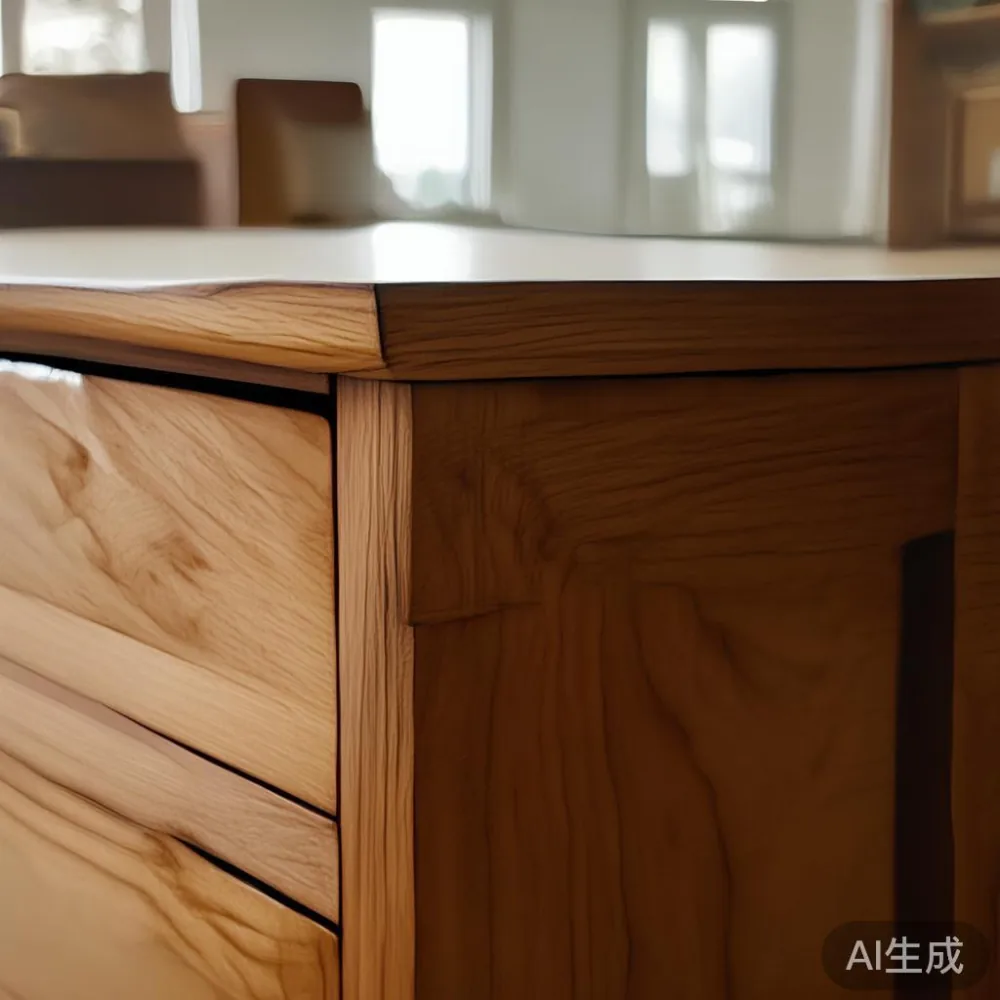
Price is driven by measurable inputs: the species and grade of timber, the amount of solid wood, joinery, dimensions, finish complexity, hardware, labour, quality control, packaging, delivery, and warranty support. Singapore shoppers also face GST, building-access constraints, and the practical question of whether a 220 cm table can pass through an HDB lift.
At MIDHILL, a Foshan manufacturer established in 2008 and exporting to more than 15 countries, we build solid wood furniture around this kind of cost transparency. The company’s 10-year structural warranty, lifetime refinishing service, 14-day returns, and free shipping above US$350 indicate that the final price covers more than an attractive object at checkout.
This guide explains where money goes, where it does not need to go, and how to compare quotations without relying on vague language. It applies equally to a solid wood sofa, bed frame, dining table, wardrobe, nightstand, or marble table, although natural stone introduces separate pricing variables.
What determines the price of a solid wood dining table?
Start with timber. Solid oak, ash, beech, walnut, and other qualifying hardwoods have different raw-material costs, but species alone does not determine quality. Board width, grain selection, defects, moisture content, and certification all matter.

A 200 cm solid oak dining table with 8 cm-wide boards may require more premium material than a smaller table made from narrower strips. Veneered construction can use a different cost structure, so “solid wood” should not be treated as a complete specification. Ask whether the tabletop, apron, legs, drawer components, and back panels are solid timber, and where any plywood or MDF appears.
Numbers help. A dining table for 6 people commonly measures 180–200 cm long and 85–90 cm wide. An 8–10 cm clearance is usually needed around chairs, so a 100 cm-wide table may strain a compact Tampines dining zone even if it fits physically. A 90 cm table can seat 6 with careful spacing. This is one reason a properly sized SGD 1,980 table may offer more value than an oversized SGD 2,880 model that crowds the room.
Joinery also carries a price. Mortise-and-tenon joints, dowelled aprons, and reinforced corner connections take more time and skill than simple concealed screws. A table rated for 120 kg may use larger fasteners, a stronger substructure, and closer quality checks than a decorative occasional table rated for 40 kg. Look for the stated load rather than assuming all solid wood tables support the same weight.
For a Boho for dining room scheme, people often want a warm timber surface, rounded edges, and relaxed proportions. Rounding the corners of a 200 cm table requires templates, sanding, and finishing across additional edges. Those operations add labour, but they should be reflected in the specification rather than hidden behind a style label.
How much does the wood finish really cost?
The wood finish is one of the clearest areas to interrogate because it can add 5–20% to a furniture project. A factory-applied matte lacquer may be economical. Open-pore oil, multiple sanding and staining stages, hand-rubbed wax, and a high-resistance matte coating require different preparation, equipment, drying time, and labour.
Count the layers. A documented finish system might include sanding to 120, 180, and 240 grit, stain or colour matching, sealing, 2–4 finish coats, and final inspection. The exact sequence depends on the timber and coating. Ask what sheen level is delivered: matte around 5–10 GU, eggshell around 15–30 GU, and satin higher. These ranges help ensure that the physical sample matches the production order.
Colour matching also affects cost. Standard oak, walnut, and natural finishes can use established stain recipes. A custom blue, black, or smoky finish needs test panels because each behaves differently on open-grain wood. Two tables with the same timber and structure can differ by SGD 300–700 because one uses a standard finish and the other a multi-stage custom process.
Compare care and repair, too. MIDHILL offers lifetime refinishing, which means a damaged or worn piece can return for service rather than being replaced immediately. In a humid Singapore environment, the finish should still be wiped dry, protected from standing water, and kept away from direct air-conditioner vents. A wood finish cannot make furniture moisture-proof, but a sound coating slows everyday wear.
Is solid wood automatically more expensive than engineered wood?
Not always. Solid wood can cost more when the design requires wide boards, long grain matching, thick legs, or high-grade timber. Engineered wood can be economical for concealed panels, curved parts, or very large sheets that are difficult to source in solid form. It can also perform well when its layers and adhesives are properly specified.
The important distinction is use. A wardrobe with a 2.2 m tall side panel may combine solid timber framing with plywood or MDF interior panels. That does not make it false solid wood; it makes it a mixed construction designed for stability and practical weight. The price should reflect each component, not a misleading total-area calculation.
Ask for a material map. For a solid wood bed frame, confirm the headboard, side rails, slats, legs, and centre supports. A queen bed normally measures about 150 × 190 cm in Singapore, while a king is around 180 × 190 cm. An HDB bedroom measuring 3 × 3 m may fit the queen but leave only 55 cm along the sides if the frame is 190 cm wide. Door and lift dimensions can be equally decisive: a 205 cm wardrobe may not clear a 200 cm corridor turn without tilting or disassembly.
For a practical comparison, consider how to style Japandi wardrobe in bedroom ideas without filling the room with visually heavy cabinetry. Light oak, pale ash, handleless sections, and a reduced depth of 55–60 cm can create breathing space. Savings created by omitting unnecessary drawers can offset a more durable finish on frequently touched areas.
Why do hardware, labour, and quality control affect the price?
Hardware is visible and measurable. A wardrobe may use 12–30 hinges, drawer runners, cams, adjustable feet, and locking mechanisms. Soft-close runners can cost several times more than basic metal slides. For a solid wood sofa, the frame may include kiln-dried hardwood, webbing, foam, fibre wrap, and down-like fibre or feather components. The timber is only one layer of both cost and performance.
A solid wood sofa with a 220 cm width, 95 cm depth, and 82 cm seat height may require more material than a 180 cm loveseat. If the frame is knock-down, the packaging must be engineered so the parts arrive without damage. Lifting a 60–90 kg assembled section up a corridor is harder than carrying flat cartons to a HDB unit.
Quality control takes time. Inspecting moisture, checking joints, matching grain, verifying gaps, testing drawers, and ensuring the surface is free from colour defects require people who understand production tolerances. A quote that omits these steps may appear lower until an order arrives with uneven gaps, inconsistent colour, or damaged corners.
American light luxury often appears in solid wood sofa, bed frame, and occasional furniture designs with clean profiles, tailored upholstery, and restrained detailing. American sofa set design should not be used as a pricing substitute. A deep 98 cm seat, layered cushioning, and carefully aligned stitch lines take more labour than a basic bench or platform sofa.
The same principle applies to a nightstand. A 45 cm-wide unit with one drawer, a 20–25 cm depth, and solid timber sides can be efficient. Carving, marquetry, mitred corners, exotic veneer matching, or a marble top adds material and handling time. A marble table may use a 15–20 mm slab, with natural variation in veining and thickness. Stone weights must be checked against floor loading and installation access.
How should Singapore shoppers compare delivery and installation costs?
The online product price is rarely the entire landed cost. For Singapore orders, GST of 9% applies where applicable. Delivery to the lobby, delivery into the unit, carrying upstairs, assembly, and removal of packaging may be separate. Ask for each amount in SGD rather than accepting an undefined “delivery” line.
Measure the route before ordering. Common HDB lift door widths are around 80–90 cm, but internal dimensions and building rules vary. Corridors can narrow to 90 cm, and turning corners can reduce effective clearance. A 180 cm wardrobe cannot necessarily enter an 85 cm lift simply because it fits diagonally in theory.
For pieces such as a dining table, flat-pack delivery can reduce freight and damage risk. It may also lower carrying effort, though assembly can take 45–90 minutes with the correct tools. A bed frame may arrive in 3–5 cartons and take 60–120 minutes to assemble. Larger wardrobes can take half a day or longer when levelling, aligning doors, and fixing wall anchors.
Delivery time matters as much as cost. A standard Singapore order might be dispatched within 15–30 days, with transit and scheduling adding roughly 3–7 days. Production queues, peak periods, custom finishes, and remote-area deliveries can extend the timeline. A clear quote should distinguish the promised production period from the actual arrival window.
MIDHILL provides free shipping above US$350, 14-day returns, a 10-year structural warranty, and lifetime refinishing. Those are service commitments with real operational costs. They should be considered alongside timber, joinery, finish, and hardware—not treated as complimentary extras detached from the price.
What makes light-luxury furniture worth its price?
Light luxury is not defined by a gold label, oversized dimensions, or a marble table in every room. French light luxury can use pale oak, walnut accents, elegant profiles, linen-like upholstery, and curved details. Post-modern light luxury may mix materials, geometry, and restrained contrast. In both cases, the price should correspond to proportion, material performance, and execution.
Useful comparisons require equal specifications. Compare one 180 cm solid wood dining table with the same timber, finish, joinery, load rating, warranty, and delivery terms. Do not compare a flat-pack table at SGD 1,490 with a fully assembled, custom-finished table at SGD 4,200; they are different products.
Researching the top 10 European light luxury furniture lists can reveal recurring features: tapered legs, softened corners, integrated storage, tactile fabrics, and carefully controlled finishes. It cannot reveal the factory cost. For example, a Minimalist for small living room project may need a 160–180 cm sofa rather than a 220 cm model. The smaller piece can feel more considered, use less timber and foam, fit the lift, and leave a 60–75 cm circulation route around a compact coffee table.
Mid-century modern for guest room schemes can use a 120–140 cm daybed or guest bed, slim-profile nightstand, and compact storage. The correct size may reduce material while improving function. A 140 cm bed with a 35 cm-deep nightstand may suit a 3 × 3 m room better than a 150 cm bed with bulky side furniture, even if the smaller set looks less substantial in a showroom.
What should I ask before paying for a solid wood furniture set?
Ask for the full specification: species, solid-wood component list, board dimensions, moisture target, joinery, finish layers, hardware brand, load rating, assembled or flat-packed format, dimensions, weight, delivery timing, installation, and warranty coverage. A seller able to answer all 12 points is giving you information; a seller repeating “premium quality” is giving you a slogan.
Request clear photographs of the actual finish under daylight, together with close-ups of joints and undersides. For a custom order, approve a sample or sign-off image. Natural timber may vary in colour and grain, so define acceptable variation rather than demanding a texture that resembles printed paper.
For a dining set, test chair clearance. Sit at every position and check for 8–10 cm of knee space and 60–75 cm behind the chair. For a wardrobe, measure the door, lift, corridor, turning points, and final installation position. For a sofa, check that its packed cartons can enter the lift and that the assembled width does not block a HDB corridor.
Confirm the return process in writing. MIDHILL’s 14-day returns policy provides a defined window, while a 10-year structural warranty and lifetime refinishing address longer-term ownership. Keep the order confirmation, care instructions, and delivery record.
Questions by email can be sent to midhillco@gmail.com. The useful request is simple: “Please quote the solid wood components, finish system, dimensions, packed carton sizes, net weight, delivery lead time to Singapore, GST, assembly charge, and warranty terms.” Specific answers make prices comparable.
The price of solid wood furniture is not one hidden number. It is the sum of raw timber, efficient design, skilled construction, controlled finishing, dependable hardware, inspection, protective packaging, logistics, and after-sales support. The lowest quotation may omit something from that list. The strongest purchase is not automatically the most expensive one; it is the one whose specification matches the room, the daily use, and the service commitments you actually value.