How to Care for a Lacquered Wood Finish in Singapore
Lacquer can give a solid wood sofa, bed frame, dining table, wardrobe, or nightstand a refined, light-luxury appearance, but Singapore’s heat, humidity, salt air, and daily family use demand a measured care routine. In a compact HDB flat or condo, correct preparation also matters because dining spills, corridor scuffs, and tight lift manoeuvres can damage a finish long before the timber itself shows wear.
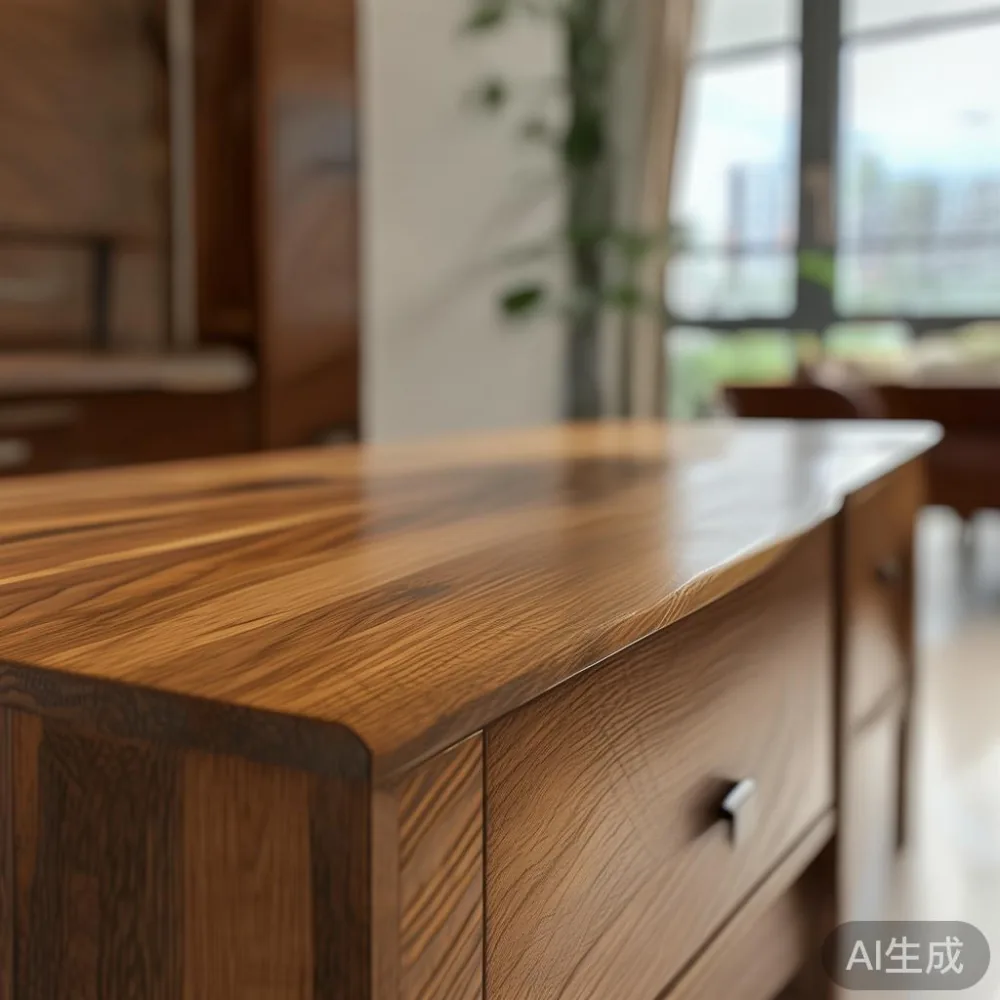
This guide explains how to clean, protect, inspect, and restore lacquered wood without stripping it unnecessarily. Care periods below refer to lacquer that has been professionally applied to sound timber and used indoors; furniture exposed on open balconies needs closer checks.
What makes tropical lacquer care different?
Lacquer is a protective surface layer, not a waterproof membrane. Singapore’s outdoor temperatures commonly sit near 31–34°C, while relative humidity can rise above 80% during monsoon periods. A lacquered dining table near a west-facing window may experience larger daily movement than a nightstand inside an air-conditioned bedroom.
Timber responds by expanding and contracting across its grain. A finish that is sound may tolerate this movement, but sharp edges, joints, and pore lines can show checking sooner. A wardrobe door that feels slightly tight during a humid afternoon may loosen as air conditioning lowers the room to about 24–26°C.
Use these practical limits as maintenance prompts:
- Wipe lacquer at least once every 7 days in a dining area.
- Inspect a sunny piece every 30 days and after heavy rain.
- Keep lacquered furniture at least 60 cm from a window, fan, or air-conditioning vent where layout permits.
- Move a tall wardrobe only with at least 2 people, even when its listed weight is below 50 kg.
- Allow new lacquer to cure for 14–21 days before placing ornaments or using the surface heavily.
Temperature alone does not determine the finish rating. Lacquer formulation, film thickness, timber species, preparation, and application conditions all matter, so ask the supplier for the finish specification rather than relying on a colour name.
What should I use to clean a lacquered wood finish?
Begin with a dry, white microfibre cloth. It removes ordinary dust without introducing moisture. For weekly cleaning, lightly dampen a second cloth with plain water, wring it until no water drips out, and wipe in sections. Follow immediately with a dry cloth. A 1 metre square should take about 30 seconds, and pooled water should never remain along a joint or edge.
A mild solution of 1 teaspoon of clear dish soap in 1 litre of lukewarm water can handle fingerprints, but use it only after plain water has failed. Test a concealed 5 cm area for 24 hours, especially on pale, aged, or repaired lacquer. Avoid ammonia, bleach, alcohol, vinegar, degreasers, silicone sprays, abrasive pads, and furniture polish containing wax or oil.
Do not “clean until the mark disappears.” Repeated pressure can burnish the lacquer and create a dull patch. Work gently, allow the surface to dry for 10–15 minutes, and reassess. Grease on a kitchen-adjacent dining table may need several passes rather than stronger chemicals.
For spills, remove liquid within 1 minute if possible. Blot from outside the spill toward the centre. Do not rub a stain, because grit can scratch the film. A soft, clean artist’s brush can lift loose dried particles before damp cleaning.
Cleaning preserves appearance, but it does not replace physical protection. Use a mat at least 40 cm wide under a desk, a 60 cm runner under a dining table, and felt pads beneath a nightstand. Replace saturated pads every 6–12 months.
How can humidity, UV light, and heat damage lacquer?
The common signs are a cloudy surface, fine cracks parallel to the grain, lifting at an edge, or a change in sheen. Cleaning products can cause clouding; direct ultraviolet exposure can fade the colour and embrittle the film; repeated heat can soften it or encourage adhesive failure.
In an HDB flat, keep large lacquered panels away from the balcony doorway when possible. If direct sunlight is unavoidable, install solar film that blocks at least 99% of UV radiation and clean the interior glass every 14 days. Measure the lux level at the furniture surface during the brightest hour. Below about 10,000 lux is preferable; above 25,000 lux calls for better shading.
Aim for indoor relative humidity between 40% and 65%. In a compact Tampines, Bedok, or Punggol unit without whole-house dehumidification, place a hygrometer beside the piece rather than against a wall. A compact dehumidifier can help if one room regularly exceeds 70%, but it must drain correctly and maintain at least 20 cm clearance.
Keep a dining table away from a hot-air vent. Food should not be placed on a surface above approximately 50°C, and hot pans should never be set directly on lacquer. Protective coasters rated for at least 80°C provide a sensible barrier.
During delivery, inspect the furniture before accepting it. In many HDB lift lobbies, door openings are only about 80–90 cm wide, while larger wardrobes may require door- or lift-removal. Compare the cabinet dimensions, not just its assembled weight. A 35 kg bed frame still needs controlled handling to prevent lacquer scratches.
How do I treat scratches, stains, and peeling?
Match the repair to the defect. A white T-shirt rubbed gently across lacquer can often reduce a superficial scuff, but 20–30 firm strokes are the limit. Excess rubbing creates a shine patch that is visible under side lighting.
For a shallow scratch, use a lacquer-safe touch-up product in the exact sheen and colour. Apply with a size 0 brush to a hairdryer card, not a cotton bud, which can shed fibres. Keep each coat below 0.5 mm and allow at least 2 hours between coats. A 1 cm repair may require 3 thin coats, yet extensive sanding can remove the surrounding film.
Stains need different treatment:
- Water marks: Let the area dry for 24–48 hours, then use a clean cloth and a product approved for the exact lacquer type.
- Ink or permanent marker: Try a barely damp white cloth for 10 seconds. Do not soak the timber.
- Paint: Leave it for a furniture conservator when more than 1 cm² is involved.
- Peeling: Stop using the surface and obtain an inspection. Peeling across 5 cm² or extending into visible wood signals a larger adhesion problem.
MIDHILL offers lifetime refinishing for qualifying furniture, with a 10-year structural warranty, but coverage and freight depend on the order and condition. Repairability is part of the product story, not permission to ignore damage.
If a lacquered marble table is included in a project, separate its care routine. Use a pH-neutral stone cleaner and never transfer an oily wood treatment to the marble. This distinction matters because acid can dull the stone even when the adjacent wood looks unaffected.
How often should lacquer be maintained in a tropical home?
A simple calendar prevents over-maintenance. Dust high surfaces weekly, clean touch zones every 7–14 days, and inspect edges every 30 days. During humid months, check behind wardrobes and under bed frames every 60 days. Look for lifting, trapped moisture, insect debris, or a musty odour.
Create a care record with the purchase date, timber species, lacquer code, sheen level, batch information, and repair history. Photograph the piece from 4 angles in daylight. Keep the first set, then add a photograph after every treatment. This makes a repair estimate more accurate and prevents accidental colour matching.
A polished lacquer should not feel tacky after 20 minutes in a conditioned room. If it does, stop cleaning and call a finisher. Oil trapped beneath the film can migrate outward during heat and create a sticky halo.
Annual maintenance depends on use rather than age alone. A wardrobe with almost no hand contact may need only an inspection, while a dining table used daily should receive a detailed check every 3 months. For coastal-facing units, review sealants and furniture edges twice each year.
Avoid relying on household sprays with vague labels. Ask for the lacquer manufacturer, solvent, compatibility statement, coverage, cure time, and sheen. “Food safe” is also not proof that a product is compatible with wood lacquer. If a repair product needs 7 days to cure, place the piece out of use during humid afternoons.
Can Chinese furniture fit European and American light-luxury interiors?
Yes. Precise proportions, restrained profiles, natural timber, and carefully controlled finishes can translate across international styles. A solid wood sofa with slender arms and a pale oak or walnut-toned lacquer can support French light luxury, while a cleaner geometry and deeper tone can sit within an American light-luxury scheme.
When comparing a French sofa vs Nordic sofa, think about visual weight rather than origin. French forms often use curved arms, shaped legs, and richer contrast; Nordic forms tend toward straight lines, pale upholstery, and more visual space. A 210 cm sofa suits a living room with at least 300 cm of clear wall length, while a 240 cm model needs roughly 330 cm.
For search terms or purchase planning, the phrase where to buy coffee table from MIDHILL appears in design guides, and requests for the best Vintage sofa for 2026 often focus on frame construction, comfort, and maintainable upholstery rather than a temporary trend. The wording “best” is not a substitute for checking dimensions and warranties, and the final selection should follow room measurements.
A suitable design reference is the MIDHILL French provincial sofa, especially when paired with curved arms and balanced, traditional detailing. Keep surrounding pieces simpler so the light-luxury effect remains clear. A marble table can add contrast, but its hard surface should not overpower a softly upholstered sofa.
For storage, the question of how to style European light luxury wardrobe in bedroom involves proportional doors, aligned handles, warm lighting, and a limited material palette. Allow at least 90 cm in front of drawers and check whether a wardrobes panel can enter the lift. For sleeping areas, guidance on how to choose Japanese bed should include platform clearance, slat support, mattress dimensions, ventilation, and the floor-to-frame height.
MIDHILL was established in 2008 and exports to more than 15 countries. For a local project, ask about Singapore delivery timing, GST, assembly, and warranty documents before payment. Online references may list midhillco, while quotation amounts should be confirmed in SGD.
How should MIDHILL lacquered furniture be delivered and inspected?
Plan furniture delivery after checking every route. Lift doors may be about 80–90 cm wide, and turns can require more room than the opening itself. Measure the lift car, landing, corridor, stair corners, and bedroom doorway. Add 10 cm working clearance for turns. For a 55 kg dining table, use 3 trained people and padded moving blankets; for a 75 kg wardrobe, use 3–4 people.
Protect the wood finish during transit. Wrap lacquered panels separately with soft non-abrasive padding, secure loose doors, and keep hardware in a labelled bag. Do not place tape directly on lacquer because adhesive can lift the coating. Carry items upright where the design allows and never drag a solid wood bed frame across a corridor.
Inspect before the delivery team leaves. Check 6 areas: the top, 4 sides, and underside. Use a torch held at a shallow angle to reveal scratches that daylight may hide. Confirm door alignment, drawer travel, finish colour, and stable joints. Photograph any defect before the protective wrapping is removed.
Singapore orders can require 7–21 delivery days depending on stock, production, and building access. Free shipping over US$350 applies under MIDHILL’s stated shipping policy, while local checkout should show any GST and access charges clearly. Fourteen-day returns are available under the applicable terms, so retain packaging and avoid unapproved treatment during the return period.
My colleague inspected a lacquered dining table in a Tampines HDB flat last month. The route was only 4.2 m from the lift to the dining area, but the 78 cm lift door and one tight turn required removing the door. The table weighed 42 kg. That modest extra preparation prevented 2 small edge marks and kept the handover within the scheduled 45-minute access window.
The safest approach is preventative, measured, and compatible with the exact wood finish. Dust gently, control moisture, block ultraviolet light, use heat-resistant mats, and repair small defects early. A lacquered wardrobe, bed frame, dining table, solid wood sofa, nightstand, or marble table can retain its character for decades when tropical conditions are treated as part of routine ownership rather than an occasional concern.