Wood Furniture Cost Analysis: Price Drivers
Solid wood furniture is often described simply as “made of wood,” yet two pieces with similar dimensions can differ in price by several hundred Singapore dollars. The difference usually comes from timber species, board construction, joinery, finish, hardware, design complexity, and logistics—not from the word “solid” alone.
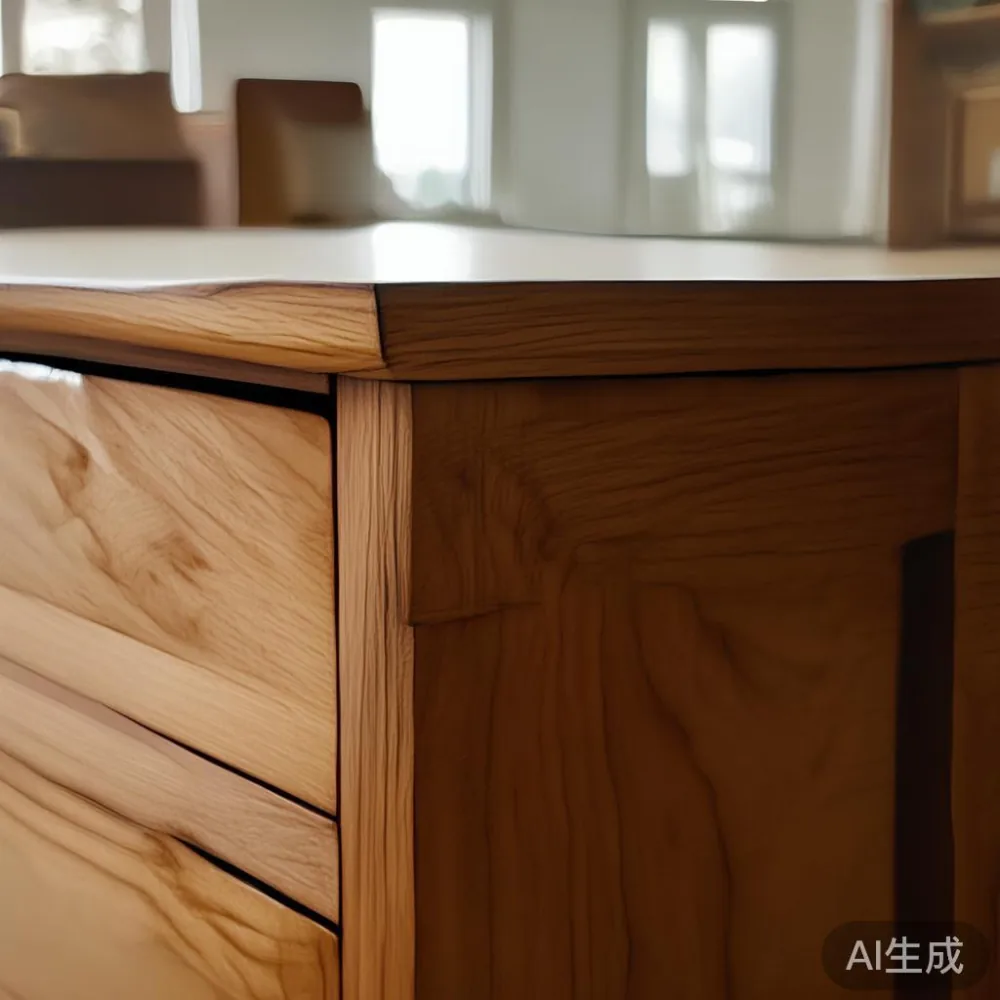
For Singapore households, those differences matter because HDB flats and condos impose practical limits. A dining table must clear a lift, turn through a corridor, and fit around a compact kitchen. A wardrobe must reach a bedroom wall without damaging the floor, while a bed frame must pass through a doorway. A high-quality piece that cannot enter the home offers little value, however attractive its specification sheet appears.
This guide explains the factors that genuinely move the price of solid wood furniture, with prices shown in SGD. It also considers how French light luxury, American light luxury, and post-modern light luxury affect design costs, and how MIDHILL approaches material selection, delivery, and long-term ownership.
Is a solid wood dining table automatically expensive?
No. Price depends on the species and the way the timber is prepared. A dining table built from rubberwood, pine, or poplar can cost about SGD 700–1,400, while oak or ash versions commonly fall around SGD 1,600–3,200. Walnut-look or walnut constructions may range from SGD 2,400 to beyond SGD 5,000, depending on whether the surfaces are solid timber, veneered, or printed.
The construction method can be more revealing than the timber name. A solid top of 20–25 mm uses more material than an 18–30 mm hollow-core top with timber rails. Thick edges, corner blocks, and visible mortise-and-tenon joints add strength, but they also increase cutting, machining, and assembly time. A 200 cm table seating 6 people may weigh 45–80 kg; an oversized 260 cm table can exceed 100 kg. That weight raises freight cost and makes delivery planning important.

For smaller Singapore rooms, a 140–160 cm table can still seat 4 people with 55–60 cm per place setting. It is easier to move through common lift lobbies and may cost SGD 900–1,800. Before ordering, measure the lift door, internal depth, landing, and the narrowest turn in the corridor. Allow at least 10 cm of clearance beyond the packaged dimensions.
The wood finish also affects the total. A clear matte finish may add SGD 80–180, while a smoked, fumed, or hand-brushed finish can add SGD 200–500. Dark finishes conceal some grain variation but require careful preparation because pores behave differently across the board.
What makes a solid wood sofa cost more than an upholstered alternative?
A solid wood sofa derives much of its cost from the frame rather than the visible cushions. Kiln-dried hardwood rails, properly spaced supports, corner blocks, and a stable seat platform must withstand 5–10 years of daily use. A frame finished only with thin veneer may be lighter and less expensive, but it is not a solid wood frame in the structural sense used by many quality makers.
Fabric and filling can add SGD 700–2,000. Removable covers, higher-density foam, down-blend cushions, and tailored piping increase labour. A three-seat frame may measure 210–230 cm wide and 85–95 cm deep, with a packaged weight of 55–90 kg. In a compact Tampines or Punggol flat, the sofa’s depth should be checked against a 90–100 cm circulation path.
Design language changes labour costs too. The best Modern sofa for 2026 may use clean lines, reduced frames, or engineered comfort, but “modern” does not mean inexpensive. Slim arms, concealed support, and integrated timber details require precise fabrication. A curved back adds another 10–20% to frame production compared with a rectangular profile.
French provincial furniture often introduces carved aprons, shaped legs, padded arms, and decorative hardware. Those details can raise a matching set by SGD 600–1,800 per major item. American light luxury usually balances scale, comfort, and restrained ornament, often with generous proportions. Post-modern light luxury can add asymmetry or mixed materials, but each material junction needs careful planning. For buyers comparing appearance with practicality, the European light luxury sideboard is another case where internal storage, finish, and joinery matter more than a decorative label.
How should you choose an Italian light luxury wardrobe?
When considering how to choose Italian light luxury wardrobe, start with the available wall space and the route into the bedroom. Standard Singapore HDB bedroom doors can be only 80–85 cm wide, so a 90–120 cm wardrobe may need to be assembled inside the room or tilted through the opening after removing the door panels safely.
Interior planning affects the price more than ornate exterior styling. A 180 cm-wide wardrobe with two hanging sections, shelves, drawers, and a ventilated compartment may cost SGD 1,600–2,800. Adjustable shelving, soft-close runners, push-latch doors, and integrated handles can add SGD 250–700. Full-height wardrobes measuring 220–240 cm provide more storage but are harder to install and may require fixing to the wall.
Solid wood doors are heavier than lacquer or membrane-finished doors. A pair of 240 × 60 cm doors can add 35–60 kg to the weight. European hinges rated for 15–25 kg per leaf, adjustable hanging rails, and anti-tip fittings add useful safety. The European light luxury nightstand is a smaller comparison: a solid oak unit at 45–55 cm wide may cost SGD 320–680, with drawers, a soft-close mechanism, and a matching finish accounting for much of the difference.
GST is included in displayed Singapore retail prices, so a SGD 2,200 wardrobe is not converted from an overseas tax-exclusive figure. It is also sensible to budget for delivery rather than treating delivery as a minor accessory. A lift surcharge may apply, while a staircase carry or full-room placement can cost SGD 80–220.
Does the wood finish explain a large price difference?
Often, yes—but only if the comparison uses similar timber and construction. The wood finish protects the surface, controls colour, and changes how the grain reads under light. It should also be described accurately. Lacquer, oil, wax, stain, and open-pore treatments have different maintenance requirements and repair options.
A low-sheen clear lacquer may add SGD 90–200 to a dining table, while multi-stage toning with hand-rubbed edges can add SGD 250–600. Fumed finishes require controlled work, and deep walnut tones can show dust and fingerprints. White or pale finishes demand careful sanding to avoid revealing joints and pores. In humid Singapore conditions, a stable finish with proper edge sealing matters more than a fashionable sheen.
Finish samples should be viewed in the room’s daylight and evening lighting. A sample no larger than 10 × 10 cm can miss the appearance of a 180 × 90 cm tabletop because reflection changes across a broad surface. MIDHILL provides finish references so customers can judge colour before production, while its lifetime refinishing policy offers a different form of long-term value: the surface can be renewed rather than replaced.
One practical example: my colleague and I visited a workshop last month to compare untreated oak, clear-lacquered oak, and a smoked oak panel under the same 4000K lights. The untreated surface looked dry and pale, the clear version revealed sharper grain contrast, and the smoked sample looked warmer but showed dust more readily. The sample board also weighed 8.6 kg, so any finish decision should be made on timber large enough to represent the finished piece.
What do drawers, hardware, and joinery add to a nightstand?
Hardware can add SGD 70–300 per drawer or door, but inexpensive hardware can also undermine the furniture. A nightstand may use 35–45 cm slides; full-extension slides cost more but improve access to the rear of the drawer. Dovetail joints indicate stronger drawer boxes, while dowels and screws remain common in lighter constructions.
Solid wood is not merely a visual material. Movement with humidity requires sound joinery, and a drawer that binds after 18 months is a defect, not a character. Premium options include solid-brass pulls, leather-wrapped handles, and hand-cut dovetails. Each component also has to match the finish. Filling a joint with a contrasting filler can make a premium piece look patched, while a well-matched filler becomes almost invisible.
The European light luxury nightstand may look simple, but its price can still rise through proportion, grain matching, edge profiles, and hardware. A three-drawer unit in solid oak may cost SGD 550–950; a compact solid wood bedside table with one drawer and an open shelf may cost SGD 280–520. The timber species, dimensions, and finish should be compared together, not as separate line items.
How does marble change the price of a marble table?
A marble table introduces several additional costs. The slab must be cut, supported, and matched to the base. Natural veins mean that no two marble tables are identical, and darker or more selective stone can cost several times more than a standard pale marble. Stone also requires template-making and careful handling because it is less forgiving than timber.
A 120–140 cm marble table may cost SGD 1,900–4,500, depending on marble type and base. A matching dining table may range from SGD 2,800 to SGD 7,000. Top thickness commonly measures 18–30 mm, while some statement designs use 40–60 mm. A 140 × 80 cm stone top may weigh 70–120 kg, so lift dimensions and floor loading should be checked.
For Singapore homes, a marble coffee table may be better suited to a condo living room than a narrow HDB room. It should sit at least 40–45 cm from a sofa for comfortable circulation, and dining chairs need enough room to pull back 60–70 cm. If the requirement is a wood surface with a stone appearance, the specification should state whether the material is real marble, porcelain, or sintered stone.
Why do delivery, assembly, and warranty affect value?
Furniture pricing includes more than the visible product. Packing a solid wood bed frame, dining table, sofa, wardrobe, nightstand, or marble table safely can require foam, cardboard, edge protection, and custom crating. A crated dining table may be delivered in 10–18 days after production, while an in-stock simpler model may arrive in 3–7 days. Longer lead times should be confirmed before the deposit is paid.
Singapore delivery within a normal lift landing may be quoted around SGD 60–120. Additional floor carries, a non-lift building, or narrow corridor handling may add SGD 80–180. White-glove placement and assembly can add SGD 150–350. Customers should measure the lift car and doors: a common lift car is only about 100–140 cm deep and 90–110 cm wide, but older blocks and newer condos vary.
MIDHILL was established in 2008 and exports to more than 15 countries, so its production controls and export packing are relevant to every order. Its 10-year structural warranty covers long-term frame stability, while lifetime refinishing supports the wood finish. Free shipping is offered on orders above US$350, and the 14-day return policy provides a defined window for reviewing the furniture at home. These service commitments are part of the product’s value because replacement and recovery are less disruptive when the supplier already has a documented process.
What should you compare before paying for solid wood furniture?
Compare the specification, not the headline. For timber, ask whether the visible surfaces and structural components are solid wood, what species are used, and whether panels are veneer or solid boards. Check the thickness in millimetres, the dimensions in centimetres, the weight in kilograms, and the moving parts. For a dining table, confirm the number of seats and the clear space needed around it. For a wardrobe, measure the doorway, lift, and installation position. For a bed frame, confirm the mattress size and the space needed to make the bed.
Price comparison becomes clearer when each offer is normalised. Add GST only if a seller quotes without it, record delivery and assembly separately, and calculate the cost per year over a 10-year ownership period. A SGD 2,400 table used daily for 10 years represents SGD 240 per year before maintenance, while a SGD 900 table may require refinishing sooner. Neither figure alone determines quality, but the exercise exposes where money is actually being spent.
Style is worth considering within the same framework. Minimalist for dining room designs may favour clean profiles, pale timber, and compact proportions, which can reduce material use and suit a 90–110 cm HDB dining zone. French light luxury may add carved detail and warm finishes. American light luxury often prioritises comfort and scale, while post-modern light luxury uses form as a central design statement.
Ultimately, the price of solid wood furniture is driven by a chain of decisions: material source, drying, machining, joining, finishing, hardware, packaging, and delivery. The smartest purchase is the one where those costs are visible, the dimensions suit the home, and the supplier stands behind the piece for years—not simply the one carrying the longest description.