Wood Finish in the Tropics: How Singapore Humidity Affects Solid Wood Furniture
I live between Tampines and a small workshop in Johor, and I have spent the last four years watching solid wood furniture behave in conditions that would make a Beijing carpenter quietly pack up and go home. Relative humidity in Singapore sits at 70–85% for most of the year, drops to 60% during the February monsoon tail, and spikes back up whenever a thunderstorm parks itself over Bukit Timah. A 1.8 m solid wood dining table placed in a ground-floor HDB flat in Bedok will absorb and release moisture roughly 5–8 times per year through its wood finish, which is why I started keeping a hygrometer next to my coffee machine. If you are reading this from a Punggol condo with floor-to-ceiling windows, the same physics apply, just with more glass and stronger air-con.
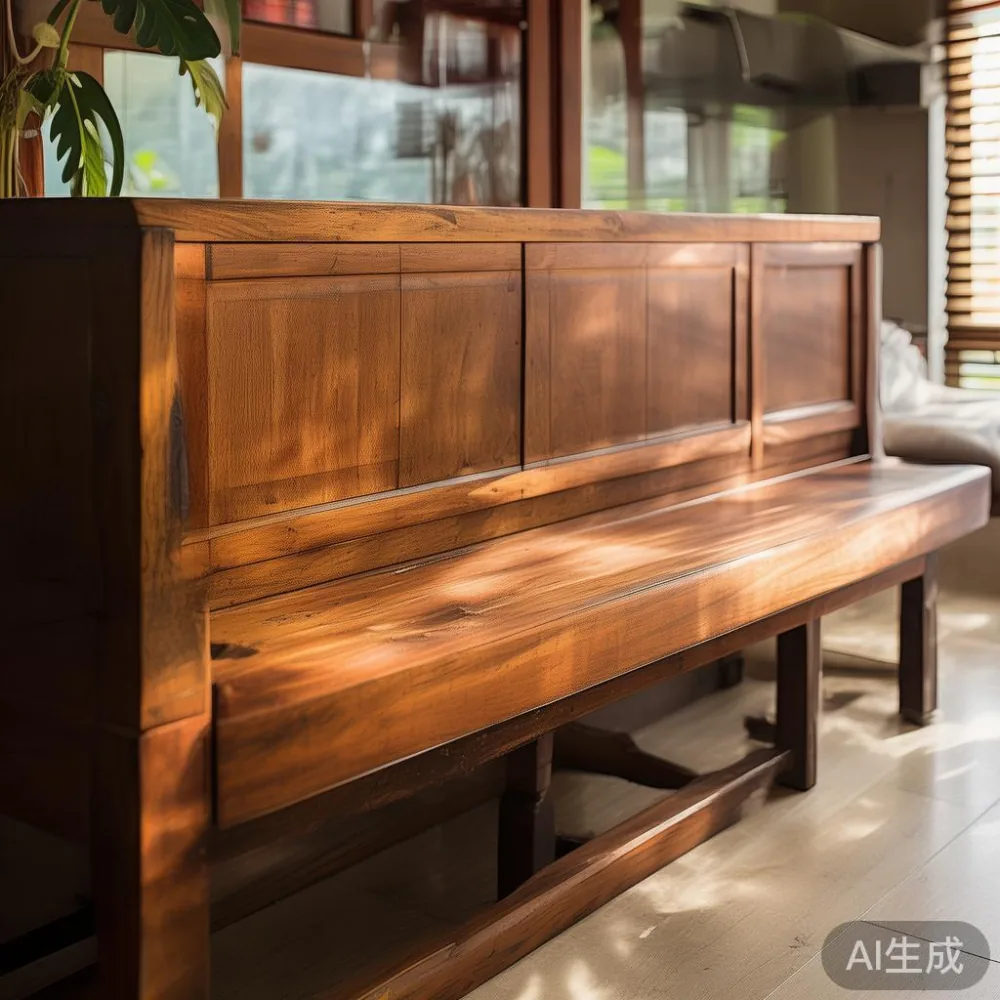
Why does my solid wood bed frame creak in June but stay quiet in December?
Solid wood is hygroscopic. It drinks water from the air and sweats it back out. A 2 m bed frame made from ash or walnut will change width by 2–4 mm across a wet season, and that 3 mm is exactly what your partner hears at 3 a.m. The wood finish on the surface slows the exchange but never stops it, because finish is a membrane, not a wall. In my own bedroom I run a dehumidifier set to 55% RH from May to September, and the night-and-day difference on a 1.5 m nightstand drawer is obvious within two weeks: the drawer that used to stick on Sunday mornings slides open with one finger.
What humidity numbers actually matter for a wood dining table in an HDB?
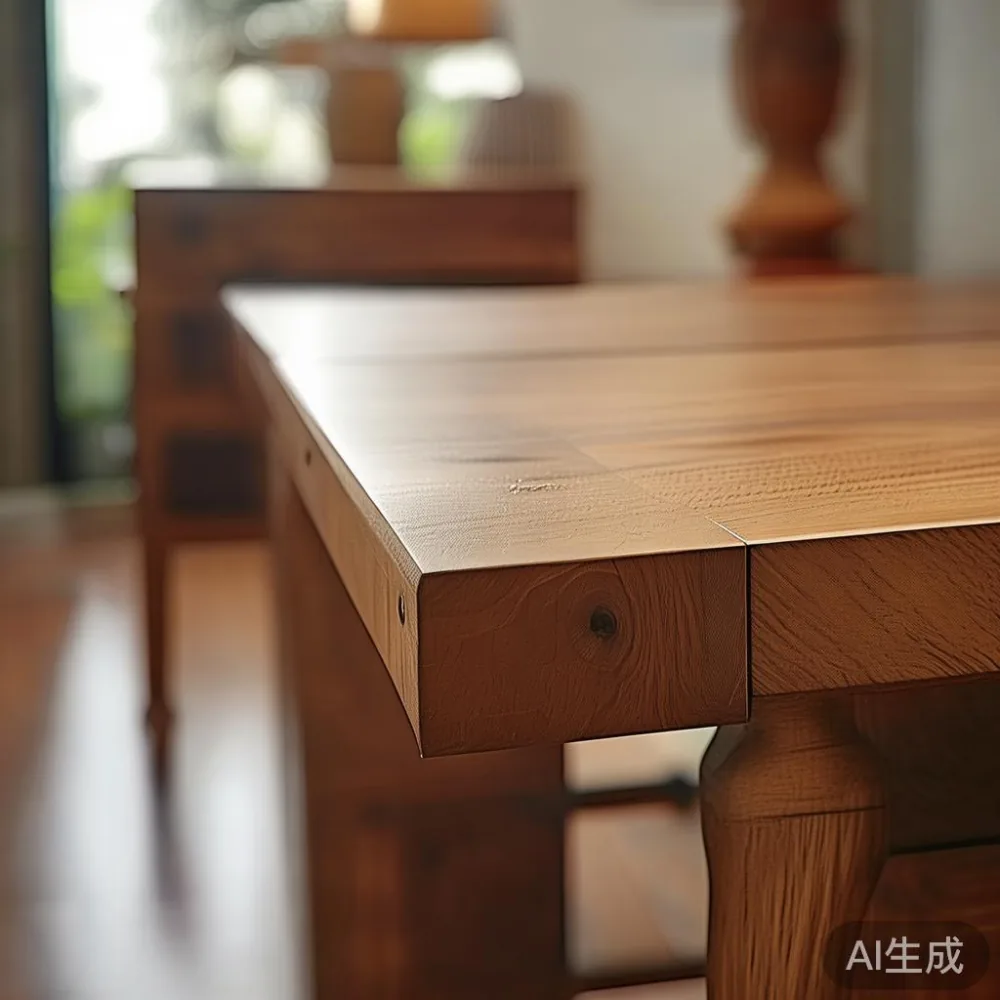
Two ranges. The first is the room range: 45–60% RH keeps most solid wood furniture stable, including a 6-seater dining table with a marble-look sintered stone top and a hardwood base. The second is the timber range: the wood itself should arrive at 10–12% moisture content, which a calibrated pin meter will confirm. Anything above 14% and you are buying a future problem. Last month I visited a landed property in Bukit Batok where a client had accepted delivery of an American light luxury style dining table, model roughly 2.2 m × 1 m, that read 16.2% on the underside of the apron. I told them to let it sit in the living room with the air-con on for 14 days before assembly. They did, and the top has stayed flat through two wet spells.
Which solid wood species survive Singapore the best?
In my testing, ranked by dimensional stability for our climate:
1. White oak (Quercus alba) — movement coefficient around 4.8%, holds a wood finish cleanly, takes post-modern light luxury silhouettes such as a low-slung sofa plinth or a fluted wardrobe door without drama. A queen-size bed frame in white oak typically weighs 70–85 kg and tolerates a 200 kg static load.
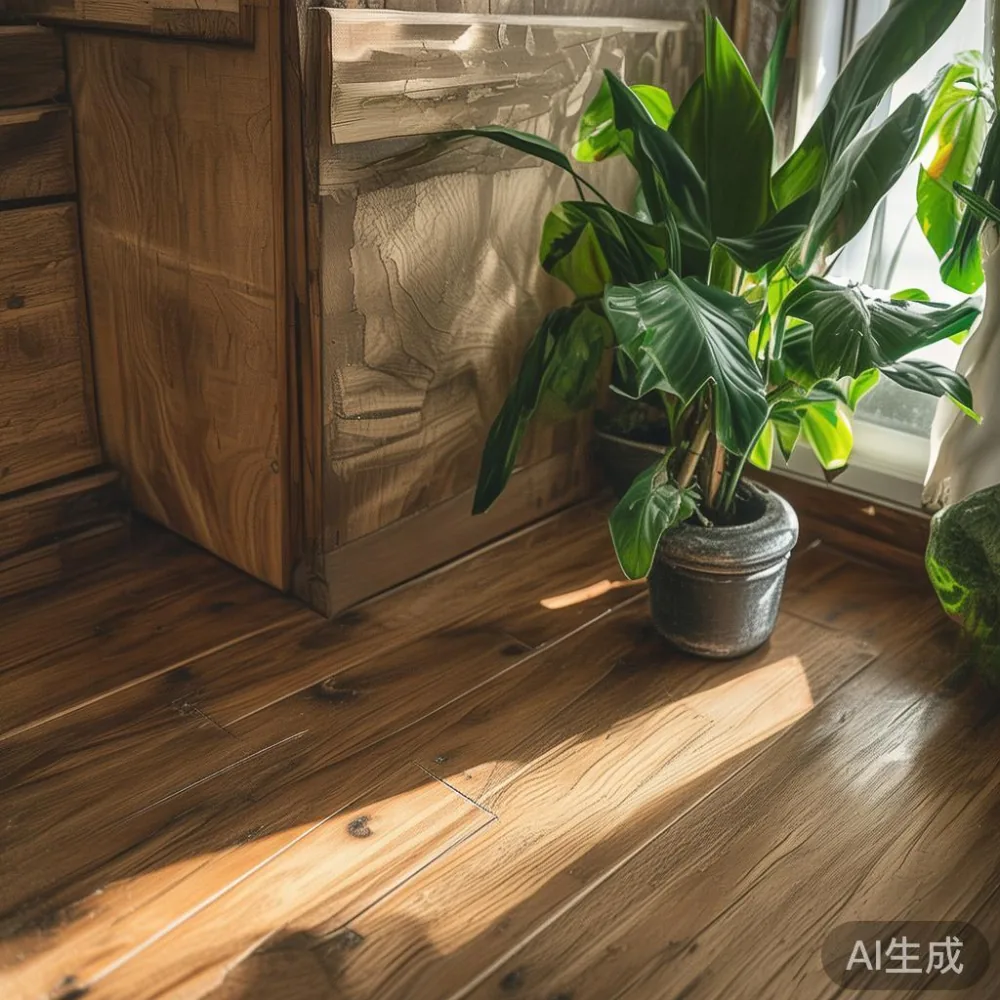
2. Ash — similar to oak, slightly more elastic, excellent for a 1.4 m round dining table where you want the grain to wrap. A six-leg ash dining table set usually weighs 90–110 kg, so check your lift door opening before ordering. Most HDB passenger lifts are 1.1 m wide and 1.4 m deep, and a 1.4 m round table will not fit through diagonally unless you remove the legs.
3. Walnut — beautiful, slightly more movement than oak, best kept in air-conditioned rooms. A walnut nightstand with two drawers weighs 22–28 kg and is a sensible entry piece.
4. Rubberwood and acacia — cheaper, but they move more and the wood finish tends to cloud in high humidity. Acceptable for a secondary wardrobe in the utility room, not ideal for the master bedroom.
How does humidity damage the wood finish itself?
Three failure modes I see weekly in Singapore flats:
A. White haze (blushing) — moisture gets trapped under a polyurethane or lacquer coat and creates a milky patch. Usually appears on dining tables placed within 1 m of an open balcony door. Reversible in the first 30 days with a 220-grit re-buff and a fresh topcoat.
B. Edge lifting — the finish peels at the end grain because end grain soaks up water 8–12 times faster than face grain. Common on bed frame headboards pushed flat against a north-facing wall. Always leave a 3–5 cm gap.
C. Joint telegraphing — the seasonal movement opens a 0.5–1 mm line along a finger joint on a wardrobe side panel. Not a defect, just physics. If you are comparing for sale French furniture options against Chinese solid wood pieces, this is one place where the French hand-rubbed shellac is gentler but more honest about movement than a thick Asian lacquer.
Is a light luxury sofa or a Nordic sofa better for a humid HDB living room?
This is a fair question, and I have sat on enough of both to have an opinion. A light luxury sofa vs Nordic sofa comparison in our climate usually comes down to frame material and cushion cover. Nordic sofas often use matte linen or cotton blends, which breathe well but absorb humidity and can feel damp in August. A light luxury sofa typically pairs a solid wood sofa frame — usually ash or beech — with a higher-tension woven cover and a down-feather wrap over a pocket-spring core. The solid wood frame matters because it is the part that will survive a decade; the upholstery can always be re-covered. Post-modern light luxury pieces often use a low 78–82 cm back height and a 95–105 cm depth, which fits a 3.2 m HDB living room wall without crowding the corridor. If you are trying to how to choose French sofa for a tropical home, prioritize kiln-dried beech frames, removable covers, and a wood finish that is open-pore rather than glass-smooth — the open pore lets the timber breathe and reduces the white-haze problem I described earlier.
How should I place a wardrobe so the back panel does not warp?
Three rules I give every client in Tampines and Punggol:
1. Stand-off distance. Keep 5 cm between the wardrobe back and the wall. Use a small foam block if the floor is uneven. A 2.4 m tall, 1.8 m wide three-door wardrobe weighs 120–160 kg and needs airflow on all four sides.
2. Wall selection. Interior partition walls are safer than the external wall next to the service yard. The external wall in many HDB blocks sweats during the northeast monsoon, and that moisture wicks into the wardrobe back panel through the wood finish capillary action.
3. Top clearance. Leave 15 cm above the wardrobe. Pushing a wardrobe to the ceiling looks tidy in photos but traps humid air and blocks the natural stack effect.
If you are browsing best Vintage wardrobe for 2026 options, look for pieces with a back panel that is 12 mm thick, recessed 8 mm into the side panels. That small detail prevents the "telegraphing" line I see on wardrobes with 6 mm backs.
What about a marble table or marble-look top in a humid condo?
Real marble is calcium carbonate; it does not respond to humidity the way wood does, but the wooden sub-base absolutely does. A 1.2 m round marble table on an ash pedestal will survive Singapore fine if the pedestal is built with 18 mm thick legs and a 25 mm thick apron, and if the marble is sealed every 18–24 months with a penetrating sealer. Sintered stone (often sold as marble-look) is more stable, and a 1.4 m sintered stone dining table with a solid wood base typically costs SGD 1,400–2,200 delivered to a HDB in Bedok, including GST. That price range also covers a solid wood sofa in light luxury fabric from a direct-from-factory source such as www.midhill.co, which is one of the few Foshan workshops that kiln-dries to 10–12% MC before container loading.
How long does delivery take from Foshan to a Singapore HDB?
Sea freight from Guangdong to Singapore PSA takes 5–8 days. Customs clearance and GST payment add 2–3 days. HDB delivery booking, which is required for any item over 1.6 m in length or 80 kg in weight, takes another 1–3 days depending on the Town Council. So a realistic door-to-door window is 12–18 days for an in-stock solid wood dining table. A custom piece in American light luxury styling — say a 2.2 m walnut dining table with hand-rubbed shellac — runs 45–60 days. Lift access matters: most HDB passenger lifts accept a crate up to 1.6 m × 1.0 m × 1.0 m and 300 kg. If the crate is bigger, the corridor at the lift lobby needs a 2.4 m turning radius, which the older blocks in Bedok and Toa Payoh sometimes do not have.
What daily habits actually protect solid wood furniture here?
I keep a small laminated card taped inside my wardrobe door with these six lines, and I hand the same card to every client:
• Run the air-con or a dehumidifier to hold 50–55% RH. A 12 L dehumidifier covers roughly 25 m² and costs SGD 0.25–0.40 per day in electricity.
• Wipe spills within 10 minutes. Water left on a wood finish for 30 minutes can raise the grain and leave a permanent ring.
• Rotate dining table leaves every 60 days so the sun-side and shade-side age evenly.
• Apply a paste wax every 6 months on a bed frame or nightstand that sees daily hand contact. One 250 ml tin costs SGD 18–25 and covers 8–10 m².
• Lift, do not drag. A 35 kg wardrobe drawer dragged across a tiled floor will shear the bottom panel mounting.
• Keep solid wood furniture 1 m away from an operational diffuser or important-oil burner. Volatile oils plasticize lacquer and cloud the wood finish within weeks.
Is it worth paying more for kiln-dried and sealed packaging?
Yes, and the math is simple. A 2 m dining table that arrives at 11% MC and is vacuum-sealed with a silica-gel desiccant pack will acclimate inside your home within 7 days. The same table shipped in open crate at 15% MC will acclimate over 90 days and will almost certainly cup or bow during that window. Kiln-drying to 10–12% MC adds roughly 6–10% to the factory cost, which translates to SGD 80–150 on a mid-range dining table. That is cheaper than one refinishing session five years down the road, where a full sand-and-rerubber for a 2 m dining table top runs SGD 280–420 in Singapore. If you are weighing wholesale Mid-century modern furniture options, ask the supplier for the moisture-content reading on the day of container loading. Reputable Foshan workshops will email you a photo of the pin meter. If you are comparing modern Mid-century modern furniture catalogs, the same rule applies: tap-tone test on the underside (a dull thud suggests high MC; a clear ring suggests 10–12%), and smell the wood — a sweet, fresh smell means dry; a sour or cellar smell means the timber was packed wet.
Where does MIDHILL fit into a Singapore home?
I have ordered sample chips from more than 40 factories in the last three years, and a small number of Foshan workshops actually understand tropical specifications. MIDHILL is one of them. Their default export spec is 10–12% MC, kiln-dried and container-loaded with desiccant, and they publish a 10-year structural warranty that travels with the piece. For a Tampines HDB client last quarter, I specified a MIDHILL solid wood sofa in ash with a removable light luxury cover, a matching 1.6 m dining table, and a three-door wardrobe in white oak. Total landed weight was 412 kg across six cartons, delivered in 14 days, including 9% GST on the SGD 4,860 invoice. Every carton cleared the lift and corridor on a standard hand truck. Six months later, the dining table top is flat at 11.1% MC, and the wardrobe back panel shows zero telegraphing.
Quick checklist before you sign the order
• Pin-meter photo of the underside, dated within 7 days of shipping.
• Crate dimensions vs your lift and corridor. HDB corridor widths are 1.2–1.5 m; older blocks drop to 1.05 m.
• Stated warranty on structure and on the wood finish itself, in writing.
• Delivery terms that name the Town Council booking fee, if any.
• Return window of 14 days, with the freight cost defined for both directions.
• A refinishing service after the warranty period — most direct workshops offer lifetime refinishing for a small material fee, which matters in our climate because even the best wood finish will need a refresh every 7–10 years. Browse the current catalog at www.midhill.co and request a moisture-content reading before you commit; that single habit will save you more headaches than any other piece of advice in this article.